'Semiconductor Expert' Candidate Lee Jong-ho Explains Patent Disputes, CB, and Myopia Allegations (Comprehensive)
Minister Nominee Lee Jong-ho of the Ministry of Science and ICT
Submitted Written Responses Ahead of Hearing on the 3rd
Private Sector Focus... AI, 6G, Semiconductor, and Nuclear Power Development
Draws Line on Semiconductor Patent Disputes
Forfeits Stock Conversion Option in CB Investment
Refutes Myopia Controversy During Military Service
![Minister of Science and ICT nominee Jong-ho Lee is arriving at the office set up at Gwanghwamun Post Office in Seoul on the morning of the 11th of last month. <br>[Image source=Yonhap News]](http://www.asiae.co.kr/news/img_view.htm?img=2022050209422451769_1651452144.jpg)
Minister of Science and ICT nominee Jong-ho Lee is arriving at the office set up at Gwanghwamun Post Office in Seoul on the morning of the 11th of last month.
[Image source=Yonhap News]
[Asia Economy Reporter Minyoung Cha] On the 3rd, Lee Jong-ho, the nominee for Minister of Science and ICT, emphasized "private sector" and "creativity" in his written responses submitted ahead of the ministerial confirmation hearing. He also drew a clear line on questions from lawmakers regarding vision problems during his military service, semiconductor patent disputes, and conflicts of interest related to GCT Semiconductor, a semiconductor and telecommunications company he invested in through convertible bonds (CB) in the past. While he is recognized as a semiconductor expert, he faces criticism for lacking experience and insight to cover the entire science and technology sector, raising expectations for rigorous scrutiny of both his personal qualifications and overall policies.
Fostering Semiconductors and Nuclear Power Alongside AI and 6G
According to the National Assembly on the 2nd, Lee stated in his written responses submitted to the National Assembly's Science, ICT, Broadcasting and Communications Committee, "I will systematically respond to the era of technological hegemony and digital transformation through science, technology, and ICT innovation together with the private sector." He added, "I plan to establish a science and technology system where private sector demand is faithfully reflected, projects are carried out jointly with the private sector, and achievements naturally spread throughout society." He emphasized fostering digital new technologies such as artificial intelligence (AI), software (SW), 6G, metaverse (extended virtual world), and cloud based on private sector creativity, aiming to realize a digitally shared prosperous society.
Regarding questions about the Moon Jae-in administration's failures, he acknowledged, "Foundations for responding to the 4th Industrial Revolution, such as the Digital New Deal and 5G commercialization, have been established," but also evaluated that "due to COVID-19 and other constraints, the revitalization of the private sector was insufficient."
Lee, widely recognized as a semiconductor expert, assessed that while South Korea leads in memory semiconductors, it is lagging in system semiconductors. He stated, "To develop the semiconductor industry overall, we need to apply South Korea's strengths and know-how in memory semiconductors to the system semiconductor field and expand the training of high-level talent."
In response to criticism about weak competitiveness in the space industry, he presented a government-led industrial development roadmap, saying, "We will secure independent space technology and actively invest in space security and exploration," and added, "We plan to prepare a national mid- to long-term space strategy with related ministries and announce it in the second half of the year." He also emphasized his commitment to fostering the nuclear power industry. Lee pointed out, "Small Modular Reactors (SMRs) are game changers in the future nuclear power market and core technologies for achieving carbon neutrality," and said, "Upon taking office, I will take an interest in and actively support R&D related to SMRs."
Regarding complaints about 5G communication quality, he took a fundamental stance. On the 5G coverage controversy, Lee said, "Continuous efforts such as quality evaluation, tax support, investment inspection, and encouragement are necessary to ensure nationwide network construction proceeds without issues." He agreed with criticism about the underutilization of the 5G 28 GHz band and responded that he would work to expand its use. On disputes over network usage fees with overseas content providers (CPs) such as Netflix, he avoided a direct answer, stating, "After taking office, I will gather opinions from stakeholders and experts and review the matter." Regarding the reorganization of science and technology organizations, he said, "It is not appropriate to mention reorganization plans at this point," but added, "Strengthening functions such as a science and technology/digital-based control tower or coordinator is necessary."
Verification of Personal Qualifications... Three Key Issues

Minister of Science and ICT nominee Lee Jong-ho is attending the press conference announcing the appointment of ministerial candidates for eight ministries of the Yoon Suk-yeol administration at the Presidential Transition Committee in Tongui-dong, Jongno-gu, Seoul, on the afternoon of the 10th, responding to reporters' questions. Photo by Transition Committee Press Photographers Group
View original imageIn addition to policies, verification of Lee's personal qualifications and eligibility is also a major issue in the confirmation hearing. The first issue concerns bulk FinFET technology, in which Lee holds patents. He transferred the technology to KAIST, which has filed domestic patents. According to Assemblyman Cho Seung-rae's office, KAIST filed a damages lawsuit against KIP at the Milwaukee County Circuit Court in Wisconsin, USA, in March. The reason is that KIP, a KAIST patent management subsidiary, allegedly embezzled $24 million in bulk FinFET patent royalties from KAIST. Assemblyman Cho raised concerns that if Lee becomes Minister of Science and ICT, KAIST, the defendant in the KIP lawsuit, would be under his jurisdiction, potentially causing a conflict of interest. In response to Assemblyman Jeong Pil-mo's question about measures regarding the dispute between KAIST and KIP, Lee said, "The nominee is not a party to the lawsuit but an inventor receiving part of the income such as invention compensation from both institutions," and added, "This lawsuit is a civil case regarding mutual contracts between KAIST and KIP, and the parties involved should independently and autonomously make judgments. Government-level intervention is unnecessary."
Regarding questions from Assemblywoman Kim Sang-hee about the acquisition of convertible bonds (CB) from GCT Semiconductor, which has applied for preliminary KOSDAQ listing review, Lee explained, "It is a company founded by a junior from graduate school, and I invested trusting capable juniors," and added, "I gave up the stock conversion option on April 18 and currently hold it as bonds." CBs are corporate bonds convertible into stocks. GCT Semiconductor is a U.S. affiliate of Anapass, a semiconductor specialist company, and applied for listing review at the Korea Exchange on the 29th of last month.
Hot Picks Today
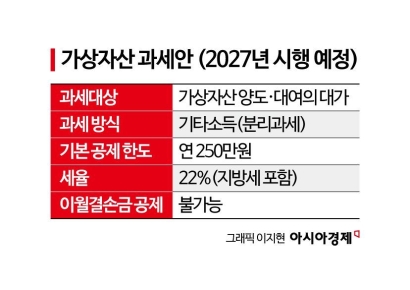 "Stocks Are Not Taxed, but Annual Crypto Gains Over 2.5 Million Won to Be Taxed Next Year... Investors Push Back"
- "Not Jealous of Winning the Lottery"... Entire Village Stunned as 200 Million Won Jackpot of Wild Ginseng Cluster Discovered at Jirisan
- "Even With a 90 Million Won Salary and Bonuses, It Doesn’t Feel Like Much"... A Latecomer Rookie Who Beat 70 to 1 Odds [Scientists Are Disappearing] ③
- "Rather Than Endure a 1.5 Million KRW Stipend, I'd Rather Earn 500 Million in the U.S." Top Talent from SNU and KAIST Are Leaving [Scientists Are Disappearing] ①
- "How Did an Employee Who Loved Samsung End Up Like This?"... Past Video of Samsung Electronics Union Chairman Resurfaces
He also denied allegations related to myopia during his military service. Lee was classified as Grade 4 supplementary service in 1986 and reportedly reclassified as Grade 5 wartime labor service two years later. In response to Assemblyman Lim Byung-heon's question, "Did myopia that did not exist in 1986 develop in 1988?" Lee said, "Even in the initial conscription examination in 1986, I was classified as supplementary service (Grade 4) due to ophthalmologic abnormalities, indicating poor vision," and added, "Later, while preparing to establish the Seoul National University Semiconductor Joint Research Center, my vision worsened due to frequent overnight work designing test chips for integrated process development, and I received hospital treatment." According to Lee, his myopia was measured at -6.5 in 1986, and in 1988, his right eye had myopia of -9.5 and astigmatism of -8.5, and his left eye had myopia of -8.75 and astigmatism of -7.5.
© The Asia Business Daily(www.asiae.co.kr). All rights reserved.







