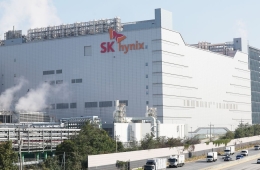
China's fierce semiconductor rise... Samsung Electronics without Lee Jae-yong, investment 'all stop'
Samsung's Investment and M&A Halted Due to Leadership Vacuum
Semiconductor Crisis Deepens... Business Community "Special Pardon Needed for Vice Chairman Lee"
Meanwhile, China's Offensive Advances... "New Government Policy Support Required"

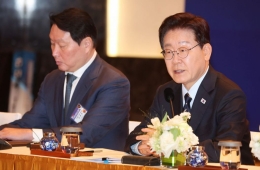
Lee Jae-yong, Vice Chairman of Samsung Electronics. / Photo by Moon Ho-nam munonam@
View original imageAs Samsung Electronics Vice Chairman Lee Jae-yong's management activities are restricted, hindering the securing of a K-semiconductor super-gap, the latecomer China is emerging prominently in the 'semiconductor rise' backed by aggressive government support. This is why voices are rising that the future of Korean semiconductors is becoming uncertain due to Lee's prolonged absence.
◆ Samsung Electronics Halts Investment and M&A = According to the industry on the 25th, unlike semiconductor competitors making large-scale investments, Samsung Electronics is alone in a state of 'stillness in motion.' The reason is analyzed to be that Vice Chairman Lee, who can decide on large-scale investments costing at least several trillion to tens of trillions of won, remains unable to take the lead in management despite being released from prison.
In fact, since the approximately 20 trillion won investment decided at the end of last year for the semiconductor factory in Taylor City, USA, Samsung Electronics has not presented any significant semiconductor investment plans. Corporate mergers and acquisitions (M&A), another pillar for securing future growth engines, are also practically difficult. This is because Lee is still on parole. From the perspective of global companies, there is a high risk in M&A involving a CEO with legal risks. There is also a high possibility that this issue could arise during reviews by major competing countries. Samsung Electronics has not conducted any large-scale M&A exceeding one trillion won since 2017.
For these reasons, there is growing demand that Lee be included in the 'special pardon' to be implemented on May 8, ahead of Buddha's Birthday. Especially, it is pointed out that the recent semiconductor crisis should be taken into account more than ever. An industry insider said, "Under the current management structure focused on short-term performance, Samsung Electronics inevitably finds it difficult to decide on large-scale investments," adding, "Considering national interests, Lee must be included in this special pardon."
◆ While Korea Hesitates, Latecomer China Advances = As the status of K-semiconductors is declining in the Chinese market, China is sweeping up global semiconductor production equipment to raise its semiconductor self-sufficiency rate.
According to the Semiconductor Equipment and Materials International (SEMI), global semiconductor production equipment sales surged 44% last year to reach $102.6 billion. This is the result of semiconductor companies worldwide aggressively investing to increase production. In particular, China, which spent $13.11 billion on semiconductor equipment purchases in 2018, spent more than double that amount last year at $29.6 billion, ranking first in the world for equipment purchases for two consecutive years.
China's semiconductor self-sufficiency rate was only 15.8% in 2020, but it is pushing forward the semiconductor rise with the goal of raising it to 70% by 2025. In fact, China's semiconductor imports in the first quarter of this year decreased by 9.6% year-on-year due to increased domestic semiconductor production driven by the semiconductor rise policy.
Although China is a latecomer ranked 6th globally in semiconductor sales last year (sales of $34 billion, 6.1% share), it is rapidly growing thanks to the government's unprecedented policy and capital support. China's top foundry SMIC announced a new investment of $5 billion (about 6.16 trillion won) in February to expand semiconductor production capacity, and the second-largest company, Hua Hong Semiconductor, raised about 15 billion yuan (about 2.9 trillion won) through a secondary listing on the Shanghai Stock Exchange to secure investment funds.
Hot Picks Today
 Chilling Timing "Did They Know Again?"... $640 ...
- Trump: "Iran in a Crazy Situation... Orders to Fire on Mine-Laying Vessels in th...
- "I Spent Money in a Truly Meaningful Way"... How an SK hynix Employee Donated 10...
- "If You Have This at Home, Remove It Immediately"... 'This Item' Is as Harmful a...
- Foreign Vessels Once Swept Up the Seas Every Season... Now Face Fines of Up to 1...
Kim Bong-man, head of the Federation of Korean Industries' International Headquarters, advised, "As major countries such as the United States, China, Europe, and Japan are mobilizing national capabilities to build autonomous semiconductor ecosystems and accelerate supply chain restructuring, the new government launching in May must strengthen policy support such as R&D investment and tax benefits for semiconductor companies to secure a global super-gap for K-semiconductors."
© The Asia Business Daily(www.asiae.co.kr). All rights reserved.