The War-Driven Low Growth and High Inflation Complex Crisis... Yoon Administration Faces a Crucial Test
IMF Projects South Korea's Growth Rate at 2.5% This Year, Down 0.8%P in 6 Months
Global Economic Growth Also Lowered by 0.8%P to 3.6%
Uncertainties Rise Due to Prolonged War, Supply Chain Disruptions, Raw Material Price Increases, and Inflation Expansion
Concerns Over Conflict Between 50 Trillion Won Supplementary Budget Pledge and Interest Rate Hikes in Fiscal-Monetary Policy Tools

[Asia Economy Sejong=Reporter Kim Hyewon, Washington (USA)=Reporter Kwon Haeyoung] The aftermath of Russia's invasion of Ukraine has brought a complex crisis to the South Korean economy, which was struggling to recover from COVID-19. The war tsunami struck amid global supply chain disruptions caused by the pandemic, resulting in a reality of soaring prices amid economic recession. While the domestic consumer price inflation rate has risen to the 4% range, marking the highest inflation in 10 years, the recovering economy shows clear signs of retreating to a growth rate of around 2%. Facing the triple challenges of ‘high inflation, low growth, and high debt,’ the Yoon Seok-yeol administration, set to launch in about three weeks, is deepening its dilemma between conflicting policy measures such as supplementary budgets and interest rate hikes.
The International Monetary Fund (IMF) on the 19th (local time) presented a 2.5% economic growth forecast for South Korea this year in its ‘World Economic Outlook (WEO).’ This is 0.5 percentage points lower than the 3.0% forecast in the revised report released in January. In October last year, the IMF had projected a 3.3% growth rate for this year, making the 0.8 percentage point downward revision within just six months an unusual occurrence. This reflects how the war risk has poured cold water not only on South Korea but also on the global economies that were showing signs of recovery from the COVID-19 pandemic.
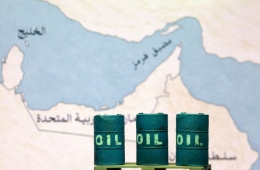
The IMF also lowered its global economic growth forecast for this year from 4.4% in January to 3.6%, a 0.8 percentage point drop, citing the war, tightening monetary and fiscal policies, China’s slowing growth, and the impact of COVID-19. Only the oil-producing country Saudi Arabia raised its growth forecast by 2.8 percentage points to 7.6%, reflecting rising international oil prices.
The negative scenarios presented by the IMF darken the outlook for South Korea’s highly externally dependent economy. Prolonged war could cause further supply chain damage and raw material price increases, as well as expanded inflation expectations and increased debt burdens due to interest rate hikes?all risks that align with domestic conditions.
The problem lies in the fact that with the launch of the Yoon administration, fiscal, monetary, and financial policy tools are bound to conflict amid this complex crisis. Experts continue to argue that the 50 trillion won supplementary budget pledge by President-elect Yoon Seok-yeol, which could potentially stimulate inflation, will inevitably have to be scaled down to focus on targeted support for vulnerable groups. The monetary authorities are also deeply concerned about the need to moderate the pace of tightening amid entrenched high inflation. Lee Chang-yong, the nominee for Governor of the Bank of Korea, clearly stated at the parliamentary confirmation hearing the day before that he intends to maintain a tightening monetary policy stance for the time being, placing greater emphasis on controlling inflation.
Not only the IMF but also major international credit rating agencies and institutions have recently lowered their growth outlooks for the South Korean economy. Fitch, Moody’s, and S&P all forecast low growth in the 2.5?2.7% range. The South Korean government, which had announced a 3.1% figure in December last year, is also considering downward revisions of economic growth and inflation rates either immediately after the new government takes office or during the economic policy direction announcement in June.
Hot Picks Today
!["Stock Set to Double: This Company Smiles Every Time a Data Center Is Built [Click e-Stock]"](https://cwcontent.asiae.co.kr/asiaresize/93/2026050416112750184_1777878687.jpg) "Stock Set to Double: This Company Smiles Every...
"Stock Set to Double: This Company Smiles Every...
- "Continuous Groundwater Extraction Causes Mexico City of 22 Million to Sink by 2...
- "Is Yours Just Gathering Dust at Home? Millennials & Gen Z Rediscover Digicams O...
- "Going to Seongsu-dong?" Japanese Girl Group Faces Taxi Refusal in Seoul
- "Prime Minister in Underwear?"... Italy's Meloni Posts Herself to Warn of Deepfa...
Joo Won, head of the Economic Research Department at Hyundai Research Institute, analyzed, "We expect the domestic economy this year to show a pattern of high in the first half and low in the second half." He added, "The global uncertainty expansion due to the Ukraine crisis, the shift to tightening monetary policies in major countries such as the United States, and the possibility of economic slowdown in China are downside factors for export performance." Regarding consumer prices, he said, "The high inflation trend will continue," and explained, "Rising prices of crude oil and major raw materials will push up import prices, acting as supply-side inflationary pressure."
© The Asia Business Daily(www.asiae.co.kr). All rights reserved.