[Diplomatic Document Release] Intense Diplomatic Battle Over Simultaneous UN Membership of South and North Korea
[Asia Economy Reporter Lee Ji-eun] It has been confirmed that our government engaged in intense diplomatic efforts for the simultaneous admission of South and North Korea to the United Nations. In particular, significant efforts were made toward China, North Korea's ally and a permanent member of the UN Security Council with veto power over UN membership.
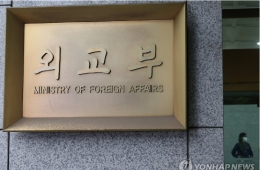
According to the declassified diplomatic documents released by the Ministry of Foreign Affairs on the 15th, our government negotiated with UN member states in 1991 for the simultaneous admission of South and North Korea to the UN. The diplomatic documents, totaling 2,466 volumes (405,000 pages), were declassified and made public after 30 years.
According to the diplomatic documents, while the Soviet Union, a permanent member at the time, shifted to support simultaneous admission after establishing diplomatic relations with South Korea on September 30, 1990, China maintained its position for some time that "it must be done according to an agreement between the South and the North."
According to a report on a meeting between the US Department of State and the Chinese Deputy Director-General, prepared by the Embassy in the United States on January 15, 1991, Rogachov, the Soviet Deputy Foreign Minister who attended the 1st Korea-Soviet policy consultation in July and visited Korea, stopped by China on his way back and conveyed the position that "South Korea hopes to join the UN within 1991, and the Soviet Union hopes that China will not oppose this."
However, China's stance was firm. The Chinese side repeated its existing position that "this is an issue to be resolved between South and North Korea, and the United States and Japan should further improve their relations with North Korea."
At the time, Foreign Minister Lee Sang-ok repeatedly requested Deputy Minister Rogachov, who visited Korea again in April following his visit in March, to "persuade the Soviet Union to have a realistic sense regarding North Korea not only in general diplomatic policy but especially on the UN issue," but Deputy Minister Rogachov admitted, "Persuading North Korea is a very difficult task even for the Soviet Union."
In response to the Soviet position, our government conveyed its stance to countries with plans for high-level exchanges with China. The Embassy in Pakistan conveyed the government’s position to China through Prime Minister Nawaz of Pakistan, who visited China in March, and the Ambassador to Thailand requested Prime Minister Anand of Thailand on March 14 to persuade Chinese President Yang Shangkun, who was scheduled to visit Thailand in June, to support South Korea’s UN membership.
North Korea, which had been insisting on joining with a single seat for both South and North Korea, did not remain passive. On March 13, Choi In-seop, North Korea’s Ambassador to Yemen, invited officials from the Yemeni Ministry of Foreign Affairs to a residence dinner to explain North Korea’s proposal for a single UN seat. The Embassy in Libya reported in a cable dated March 14, 1991, that North Korean Deputy Premier and Foreign Minister Kim Yong-nam visited Libya from March 4 to 7 and requested support for North Korea’s position opposing South Korea’s sole admission at the UN and the Non-Aligned Movement.
Hot Picks Today
!["Stock Set to Double: This Company Smiles Every Time a Data Center Is Built [Click e-Stock]"](https://cwcontent.asiae.co.kr/asiaresize/93/2026050416112750184_1777878687.jpg) "Stock Set to Double: This Company Smiles Every...
"Stock Set to Double: This Company Smiles Every...
- "Who Says It's an 'Old Man's Hobby'? Millennials and Gen Z Flock to Japan for Di...
- "South Korea Will Be Taken Advantage of as an Errand Boy": Expert Voices Concern...
- Embassy of Iran in South Korea: "No Iranian Military Involvement in Korean Vesse...
- “Did They Bet Too Early?” Losses Snowball for ‘Geopverse Ants’ as KOSPI Soar...
However, North Korea was eventually pressured by the overwhelming support of the international community for simultaneous admission and submitted its application to the UN on July 8. On September 17, at the 46th UN General Assembly, the simultaneous admission of South and North Korea was approved unanimously by 159 member states.
© The Asia Business Daily(www.asiae.co.kr). All rights reserved.