독일 Chancellor Scholz's First 100 Days... Unstable Coalition, War, COVID-19, and Other Challenges Ahead
![Olaf Scholz, German Chancellor [Photo by Reuters Yonhap News]](http://www.asiae.co.kr/news/img_view.htm?img=2022031815012184176_1647583282.jpeg)
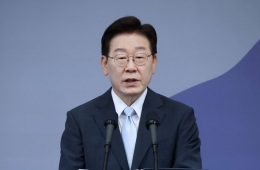
[Asia Economy Reporter Park Byung-hee] Olaf Scholz, the German Chancellor, marked his 100th day in office on the 17th (local time).
Germany's public broadcaster Deutsche Welle (DW) reported on his 100-day milestone with an article titled "The German government's continuous stress test." DW noted that no government has had to tackle so many challenges from day one, mentioning war, the COVID-19 pandemic, and climate change. It also commented that Chancellor Scholz had barely shown his presence for a while, casting uncertainty over the future coalition's course.
◆Hashtag 'Where is Scholz?' = DW described Scholz as a politician who prefers to act behind the scenes rather than take the spotlight. He tends to talk more about the results themselves than about how he achieved them. Due to his low-profile nature, his presence was not strongly highlighted during his first 100 days in office.
After his parliamentary inauguration speech on December 15 last year, he disappeared from the public eye, and the hashtag "Where is Scholz? (#WoIstScholz)" trended on Twitter. DW observed that even as the risk of Russian military provocations increased, calls to send weapons to Ukraine grew louder, and demands for sanctions against Russia intensified, Scholz seemed to be hiding. As a result, his approval ratings dropped significantly in January this year.
Chancellor Scholz began to reassert his presence after holding a summit with U.S. President Joe Biden at the White House on February 6 and subsequently visiting Kyiv and Moscow. He ultimately refused to activate the Nord Stream 2 gas pipeline, which had been hesitated over, and on the 27th of last month, announced plans to increase defense spending.
◆Clashes between the Green Party and the Free Democratic Party = The Scholz government started off precariously as a coalition of three parties with differing ideological orientations: the center-left Social Democratic Party (SPD), the Green Party, and the Free Democratic Party (FDP).
The Green Party wanted a coalition with the SPD during the election campaign. However, to avoid a minority government, the FDP had to be included, and although the FDP holds the fewest seats, it has a strong voice.
Recently, the coalition showed signs of division during the push for mandatory COVID-19 vaccinations. The SPD and the Green Party supported mandatory vaccination, but most FDP members opposed it. Ultimately, Karl Lauterbach, the German Health Minister from the SPD, abandoned the government's proposal for mandatory vaccination.
![Robert Habeck, German Minister of Economy (left), and Christian Lindner, Minister of Finance of Dogil [Photo by AP·EPA·Yonhap News]](http://www.asiae.co.kr/news/img_view.htm?img=2022031815090084201_1647583740.jpg)
Robert Habeck, German Minister of Economy (left), and Christian Lindner, Minister of Finance of Dogil [Photo by AP·EPA·Yonhap News]
View original imageChristian Lindner, the Finance Minister from the FDP, suggested on the 14th that the government should support consumers with partial refunds due to soaring gasoline and diesel prices. Robert Habeck, the Vice Chancellor and Economy Minister from the Green Party, appeared on public TV that afternoon and showed discomfort. Habeck said, "If there are proposals for the market, it is wise for everyone to sit down and discuss together, and that is the right way to reach a solution."
Germans are known for enjoying speed. Finance Minister Lindner is also a sports car enthusiast. On the other hand, the Green Party wants to limit speed and expand public roads.
Coordinating positions between the Green Party and the FDP, which have significantly different stances, is a major challenge for Chancellor Scholz.
Ideologically, Scholz may be closer to the Green Party, but he was also Lindner's predecessor as Finance Minister. Because of this, there are evaluations that Scholz gets along well with Finance Minister Lindner.
On the 27th of last month, Scholz announced plans to raise defense spending to more than 2% of the Gross Domestic Product (GDP) and invest an additional 100 billion euros (about 136 trillion won). However, while an agreement was reached with Finance Minister Lindner at that time, it was confirmed that no proper consensus was reached with senior SPD and Green Party officials.
Meanwhile, the recent decision to refuse the activation of Nord Stream 2 aligned with the Green Party's position. The Green Party holds that the Nord Stream 2 gas pipeline should not be operated, considering geopolitical factors as well as environmental concerns. The FDP has also shifted its stance, emphasizing that solar and wind power are free energy sources. However, the Green Party and the FDP still differ on nuclear power. Germany plans to shut down its remaining three nuclear plants by the end of this year, but the FDP is calling for a review of the shutdown plan.
Hot Picks Today
 "Stocks Are Not Taxed, but Annual Crypto Gains Over 2.5 Million Won to Be Taxed Next Year... Investors Push Back"
- "Don't Throw Away Coffee Grounds" Transformed into 'High-Grade Fuel' in Just 90 Seconds [Reading Science]
- Despite Warnings of "Do Not Enter, You May Not Make It Out Alive"... Foreign Tourist Stranded After Unauthorized Climb on Jeju Sanbangsan
- Signed Without Viewing for 1.6 Billion Won... Jamsil and Seongbuk Jeonse Prices Jump 200 Million Won in a Month [Real Estate AtoZ]
- "Even With a 90 Million Won Salary and Bonuses, It Doesn’t Feel Like Much"... A Latecomer Rookie Who Beat 70 to 1 Odds [Scientists Are Disappearing] ③
DW noted that since the coalition is still in its early days, it seems to be refraining from issues that could cause conflicts. It was a kind of honeymoon period. However, after 100 days, the coalition is expected to return to reality, and the fragile harmony seen during the first 100 days is unlikely to last.
© The Asia Business Daily(www.asiae.co.kr). All rights reserved.