A Nail-Bitingly Close 'Ultra-Narrow Presidential Election'... Ruling and Opposition Parties Scramble to Boost Voter Turnout Among Supporters
Efforts to Boost Early Voting Turnout by Both Ruling and Opposition Parties
Ban on Publishing Poll Results Starting Tomorrow
All-Out Effort to Mobilize Supporters Amid Uncertain Race
"Early Voting Turnout Alone Cannot Determine Advantage or Disadvantage"

On the 28th, nine days before the 20th presidential election (March 9), an official from the National Election Commission is holding up a printed ballot paper at a printing house in Anyang, Gyeonggi Province, where the ballots are being printed.
Photo by Kang Jin-hyung, Anyang aymsdream@
[Asia Economy Reporters Chae-eun Koo, Ki-min Lee] Even one day before the ban on publishing public opinion polls, the presidential election race remains unpredictable. Each party believes that the outcome could be decided by a narrow margin and urged voters to participate in early voting as much as possible.
According to a presidential candidate approval rating poll released on the 2nd (conducted by Realmeter on behalf of Newsis from the 28th to the 1st, surveying 1,007 men and women aged 18 and over nationwide), 46.3% supported Yoon Seok-yeol of the People Power Party, while 43.1% supported Lee Jae-myung of the Democratic Party of Korea. The gap between the two candidates was 3.2 percentage points, within the margin of error (±3.1 percentage points). Compared to the same poll conducted about four weeks ago on the 3rd and 4th of last month, Yoon’s support rose by 3.0 percentage points, and Lee’s by 1.3 percentage points.
Ahn Cheol-soo of the People’s Party received 6.7%, and Sim Sang-jung of the Justice Party received 1.9%. In the ‘27th Regular Poll on Elections and Social Issues’ released by Media Tomato on the 1st (commissioned by News Tomato, conducted from the 26th to 27th of last month, surveying 1,452 adults aged 18 and over nationwide), Yoon was at 44.2% and Lee at 42%, showing a gap of 2.2 percentage points within the margin of error (±2.6 percentage points).

On the 25th, an early voting station for the 20th presidential election is being set up at Seoul Station. Early voting will take place over two days, from 6 a.m. to 6 p.m. on the 4th and 5th of next month. Photo by Moon Honam munonam@
View original imageBoth ruling and opposition parties are putting all their efforts into encouraging early voting on the 4th and 5th. The Democratic Party held an early voting encouragement performance with the phrase ‘I voted early for myself #MyFamilyHasDecided’ displayed in the background of their meeting room. Woo Sang-ho, the Democratic Party’s election committee chairman, appealed, "Please make sure to participate in early voting to create a better Korea." The People Power Party is also encouraging early voting participation. On the same day, Won Hee-ryong, head of the policy headquarters of the People Power Party’s election committee, emphasized at an expanded election countermeasures meeting, "Victory or defeat depends on rallying at the polling stations."
Experts say it is difficult to determine advantages or disadvantages based on early voting rates, and they expect the ultra-close race to continue until the end. The forecast is that the foggy and chaotic race will persist until the ballot box lids are opened. Shin Yul, a professor of political science and diplomacy at Myongji University, explained, “Currently, due to the surge in COVID-19 cases and the short voting hours, it is hard to expect a high early voting rate. The turnout among the younger generation, who have a high proportion of confirmed cases, will not be as high as in previous general or local elections, making it difficult to assess any candidate’s advantage or disadvantage.” He added, “Unless a major mistake is found in either of the two leading candidates, Lee Jae-myung or Yoon Seok-yeol, the ultra-close race seen in current polls will continue. In this situation, whether Ahn Cheol-soo makes a last-minute unification could be a significant variable at the end.”


Woo Sang-ho, Chief of the Democratic Party of Korea's General Election Headquarters, is attending the headquarters chiefs meeting of the election campaign held at the central party office in Yeouido, Seoul, on the 2nd, conducting a campaign to encourage early voting. Photo by Yoon Dong-joo doso7@
View original imagePark Sang-byeong, a professor at Inha University Graduate School of Public Policy, said, "In this historically high-dislike presidential election where many say there is no one to vote for, the Central Election Commission’s survey on voting intention showed a high 83%. This indicates that the contest between the ruling and opposition parties is very intense, and early voting rates will also be high." He added, "Voters think that their single vote has great meaning and do not want to give up."
Since early voting was first introduced in the 2014 local elections on a nationwide scale, participation rates have steadily increased. Early voting rates reached a record high of 26.06% in the 2017 presidential election and 26.69% in the 2020 general election. This time, it is expected to exceed 30%. Unlike on the main voting day, when voters must vote only at their registered residential precinct, early voting allows convenient voting anywhere nationwide over two days, increasing voter participation. For detailed information on the polls cited by this report, please refer to the Central Election Survey Deliberation Commission’s website.
Hot Picks Today
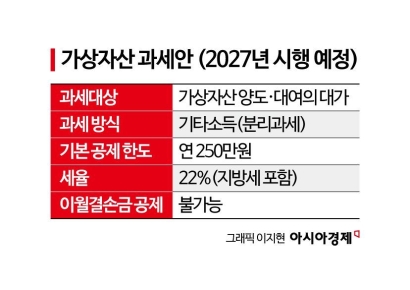 "Stocks Are Not Taxed, but Annual Crypto Gains Over 2.5 Million Won to Be Taxed Next Year... Investors Push Back"
- "Not Jealous of Winning the Lottery"... Entire Village Stunned as 200 Million Won Jackpot of Wild Ginseng Cluster Discovered at Jirisan
- "Even With a 90 Million Won Salary and Bonuses, It Doesn’t Feel Like Much"... A Latecomer Rookie Who Beat 70 to 1 Odds [Scientists Are Disappearing] ③
- "Rather Than Endure a 1.5 Million KRW Stipend, I'd Rather Earn 500 Million in the U.S." Top Talent from SNU and KAIST Are Leaving [Scientists Are Disappearing] ①
- "How Did an Employee Who Loved Samsung End Up Like This?"... Past Video of Samsung Electronics Union Chairman Resurfaces

On the 28th, ballot papers to be used in the 20th presidential election are being printed at a printing shop in Anyang, Gyeonggi Province. / Anyang - Photo by Kang Jin-hyung aymsdream@
View original image© The Asia Business Daily(www.asiae.co.kr). All rights reserved.







