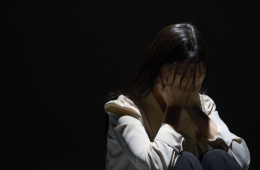
Seodaemun-gu Launches First Pilot Project of Young Carer Program by Ministry of Health and Welfare
[Seoul District News] Seodaemun-gu Conducts Survey on Identifying Family Care Youth (Young Carers) Including Middle, High School, and University Students... Operates Pilot Projects for Home Care and Customized Elderly Care Services... Runs Pilot Projects Linking Administrative and Legal Consultations (Village Lawyers and Administrative Officers)... Seodaemun-gu Provides Emergency Support and Emotional Stability Programs for Family Care Youth... Kim Seon-gap, Gwangjin-gu Mayor, Holds Emergency Meeting to Discuss Response to Rapid Increase in COVID-19 Cases

[Asia Economy Reporter Park Jong-il] Seodaemun-gu (Mayor Moon Seok-jin) announced that it has been selected as a pilot local government for establishing a support system for family caregiving youth (Young Carers) at the 6th Youth Policy Coordination Committee held at the Government Seoul Office on the 14th, chaired by Prime Minister Kim Boo-kyum.
On the same day, the Ministry of Health and Welfare (Minister Kwon Deok-cheol) announced the ‘Plan to Establish Support Measures for Family Caregiving Youth’ and stated that after conducting a pilot project in Seodaemun-gu, which is currently leading Young Carer support projects, they will develop a model for expansion.
Earlier, the Population Policy Division and Youth Policy Team of the Ministry of Health and Welfare visited Seodaemun-gu in early last month to review Young Carer cases and support status and discuss support measures.
Seodaemun-gu has been promoting a three-stage project including legal definition, status survey, and support measures for Young Carers since November last year, following increased social awareness due to the ‘Youth Caregiver Incident,’ becoming the first local government nationwide to do so.
To overcome the limitations of ‘application-based welfare’ and proactively identify Young Carers showing crisis signs, the district established its own plan in November last year and urgently conducted a ‘Family Caregiving Youth Discovery Survey’ in December.
First, using the ‘Ministry of Health and Welfare Welfare Blind Spot Crisis Household Discovery System,’ 1,071 households showing crisis signs (such as power cut, water cut, gas cut, unpaid rent, financial delinquency, etc.) with members aged 9 to 24 in the area were extracted.
The district produced and distributed a ‘Health and Welfare Integrated Service Counseling Manual (Customized Support Counseling Manual for Caregiving Households)’ to each community service center in December last year to discover Young Carers and ensure stepwise support considering their characteristics.
This manual covers over 80 types of public and private welfare services according to the characteristics and crisis situations of the subjects.
The district uses this manual to prioritize linking to public systems that can provide immediate support according to the severity and emergency of the crisis, and also ensures timely provision of services tailored to each household’s situation through private resources.
Additionally, to quickly discover and support Young Carers, the district collaborates and operates a ‘Discharged Patient Linkage Project’ with Severance Hospital, Dongshin Hospital, Kangbuk Samsung Hospital, Seoul Red Cross Hospital, and Seran Hospital, linking 31 households and 48 cases of care services.
For subjects (discharged patients) referred by these medical institutions, the district provides Care SOS application and services without complicated procedures or waiting, as well as comprehensive counseling on mid- to long-term welfare support systems.
To strengthen this health-welfare one-stop care support system, the district plans to expand cooperation targets from the existing five general hospitals to general hospitals and nursing hospitals.
Furthermore, Seodaemun-gu plans to enact an ordinance in May this year containing provisions for Young Carer surveys and management plans, budget allocation for support, and implementation of customized health and welfare services.
Based on this, the district will establish an emergency support system for medical and living expenses for Young Carers and operate emotional stability support programs to alleviate emotional isolation.
Meanwhile, from March, the Ministry of Health and Welfare and Seodaemun-gu will conduct a status survey targeting middle and high school students, out-of-school youth, university students, and working youth (up to age 34) to grasp the scale and actual conditions of family caregiving youth.
To this end, the district plans to closely cooperate with the Western Education Support Office and local middle and high schools to enhance the accuracy and completeness of the survey.
For Young Carers identified through the survey with the Ministry of Health and Welfare, customized support will be immediately provided by linking existing welfare systems, and special pilot projects such as ‘Household Care Service’ and ‘Customized Elderly Care Service’ will be operated.
Additionally, the district will reduce the burdens of Young Carers regarding legal and administrative matters by linking village lawyers and administrative officers.
Moon Seok-jin, Mayor of Seodaemun-gu, said, “We will do our best to carry out the pilot project so that support for family caregiving youth can smoothly expand nationwide, and we will actively develop and support new policies that can provide practical help to them within the district.”
He also said, “We will devise customized welfare measures such as rent support linked to rental housing and the ‘100 Families Embracing Project’ for ‘youth parents’ who are in the blind spots of national childbirth and childcare support policies and systems.”

Gwangjin-gu (Mayor Kim Seon-gap) held an emergency countermeasure meeting to discuss response measures as COVID-19 confirmed cases rapidly increased due to the spread of the Omicron variant.
This meeting was held preemptively as the nationwide confirmed cases approached 100,000 daily and are expected to surge to nearly 200,000 by the end of this month.
On the day, Gwangjin-gu Mayor Kim Seon-gap instructed to thoroughly review the quarantine system, reinforce any shortcomings, and prepare measures to alleviate residents’ inconveniences and anxieties.
He also ordered the establishment of a system to quickly communicate the changing testing and home treatment systems, rechecking necessary matters and preparing new manuals suitable for the current situation.
Based on the discussions at the emergency meeting, the district decided to hold additional meetings among working-level staff to develop concrete measures.
All former executives attending the meeting confirmed negative results using COVID-19 self-test kits provided at the entrance before attending.
Hot Picks Today
!["Rather Than Endure a 1.5 Million KRW Stipend, I'd Rather Earn 500 Million in the U.S." Top Talent from SNU and KAIST Are Leaving [Scientists Are Disappearing] ①](https://cwcontent.asiae.co.kr/asiaresize/93/2026051414165763158_1778735817.jpg) "Rather Than Endure a 1.5 Million KRW Stipend, I'd Rather Earn 500 Million in the U.S." Top Talent from SNU and KAIST Are Leaving [Scientists Are Disappearing] ①
"Rather Than Endure a 1.5 Million KRW Stipend, I'd Rather Earn 500 Million in the U.S." Top Talent from SNU and KAIST Are Leaving [Scientists Are Disappearing] ①
- "Most Americans Didn't Want This"... Americans Lose 60 Trillion Won to Soaring Fuel Costs
- Trump Puts Iran Strike on Hold One Day Before Attack... "Full-Scale Offensive If Talks Fail"
- At 24°C It's Iced Coffee, at 31°C Tube Ice Cream... "It's Only May" But Convenience Stores Already Know: The 'Summer Boom' Thermometer
- "Why Make Things Like This?" Foreign Media Highlights Bizarre Phenomenon Spreading in Korea
Gwangjin-gu Mayor Kim Seon-gap said, “As confirmed cases rapidly surge approaching 100,000, we are facing an emergency situation. It is predicted that new confirmed cases will reach between 130,000 and 200,000 by the end of this month, so we will review and actively implement all possible measures at the local government level.”
© The Asia Business Daily(www.asiae.co.kr). All rights reserved.