"Negative Antigen Test but Unable to Do PCR, Confirmed Positive Later"…Concerns Over Rapid Antigen Testing
No Follow-up on Fake Voices
Health Authorities "Have No Choice but to Accept"
Home Treatment Cases Surpass 100,000

[Asia Economy Reporter Ki Ha-young] Kim Mo (34), an office worker living in Gwangjin-gu, Seoul, recently tested positive for COVID-19. Having completed the third vaccination last month, Kim could not hide his bewilderment upon hearing the positive diagnosis. Before testing positive, he had a sore throat and cold symptoms, so he bought a self-test kit just in case and tested negative. The next day, as his cold symptoms seemed to worsen, he went to the local public health center for a polymerase chain reaction (PCR) test but was told to go home since the self-test kit showed a negative result and he had no fever. Kim said, "According to the instructions of the self-test kit, the probability of a positive result after a negative one was 2%," and added, "If the public health center had conducted the PCR test on time, I would have felt less unfair about the COVID-19 positive diagnosis."
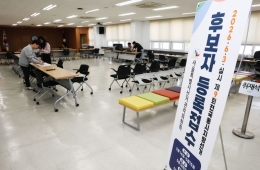
As the COVID-19 diagnostic system shifts due to the spread of the Omicron variant, confusion is increasing across medical sites. In particular, the lack of appropriate follow-up measures when false negatives occur in rapid antigen tests is being pointed out as a problem. There is concern that asymptomatic or mildly symptomatic individuals may not receive PCR tests in time, potentially increasing the number of confirmed cases.
According to the quarantine authorities on the 4th, following the transition to the Omicron response quarantine system the previous day, rapid antigen tests will be conducted first unless the individual is high-risk, such as those aged 60 or older or close contacts. Only if the rapid antigen test is positive will a PCR test be performed. Rapid antigen tests provide results within 30 minutes but are less accurate compared to PCR tests. Even infected individuals may test negative if symptoms are mild or if the specimen is not properly collected.
The biggest problem arises when false negatives occur in rapid antigen tests. While false positives lead to additional PCR testing, false negatives allow individuals to continue daily life without further testing. Because no additional PCR tests are conducted, the extent of false negatives in rapid antigen tests remains unknown.
Experts have expressed concerns about the expansion of rapid antigen testing. The Korean Society for Laboratory Medicine analyzed that infected individuals have a 41.5% chance of testing positive with rapid antigen tests. This means the remaining 58.5% could be left unprotected. The society stated, "The sensitivity of rapid antigen tests is below 50% even when performed by medical professionals and below 20% when self-administered. Introducing rapid antigen tests for asymptomatic patients increases the likelihood of false negatives, which could further spread the infection."
The quarantine authorities also acknowledge that a small number of false negatives must be tolerated. Im Sook-young, head of the Central Disease Control Headquarters' situation management team, urged, "Do not be complacent just because the test is negative; please strictly follow quarantine rules such as wearing masks," and recommended retesting if there is suspicion despite a negative result.
Hot Picks Today
 "Suspicious Timing?"...Trump Traded Stocks After Praising Wartime Capabilities
- "I Went to 10 Convenience Stores and Still Couldn't Buy It": The Bread Sensation That Sold 100 Million Units Already [The Way We Shop Now]
- [Breaking] Trump: "U.S. and Nigerian forces eliminate IS number two"
- There Is a Distinct Age When Physical Abilities Decline Rapidly... From What Age Do Strength and Endurance Drop?
- "Contact Me First If Houses Are Built": Wealthy Clients Eyeing... Will Ultra-High-End Residences Worth 20 Billion Won Be Developed? [Real Estate AtoZ]
On the same day, the number of COVID-19 patients under home treatment surpassed 104,857, exceeding 100,000 for the first time. This is about double the number from a week after surpassing 50,000 on the 28th of last month. As of midnight the previous day, there were 461 medical institutions managing home treatment, with a capacity to handle 109,000 patients. With home treatment management capacity nearly saturated, issues have arisen where patients under home treatment are not receiving guidelines or kits in a timely manner.
© The Asia Business Daily(www.asiae.co.kr). All rights reserved.