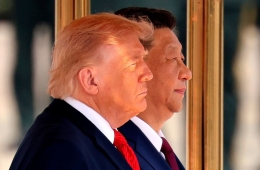
[W Forum] A Dignified Prejudice That Respects Even Differences in Others' Views
![[W Forum] A Dignified Prejudice That Respects Even Differences in Others' Views](http://www.asiae.co.kr/news/img_view.htm?img=2022020409322131593_1643934741.jpg)
What is something that everyone has but no one claims to possess? I believe it is "prejudice." Whenever I give lectures on disability empathy, I often say, "As long as the word 'prejudice' exists, prejudice will exist, and as long as the words 'exclusion' or 'discrimination' exist, exclusion or discrimination will manifest in some form." As an optimistic person, it is not just personal experience that leads me to say something that sounds so negative. Various psychologists have also demonstrated this inevitability through experiments and social phenomena. The dictionary definition of prejudice is a biased thought.
Generally, humans tend to 'categorize' an event or phenomenon, place it within a familiar category, and then act accordingly. German philosopher Hans-Georg Gadamer stated in his book, "We all have prejudices, and we cannot live or act without them." So why do we say "let's not have prejudice" or "let's break prejudice," trying to deny such a natural phenomenon? Prejudice does not end with mere thoughts; it appears in the form of hostile words, discriminatory actions, and physical attacks. When the language of rejection becomes everyday and expands into collective patterns, it leads to discriminatory behavior.
Henri Tajfel, who proposed social identity theory, conducted an experiment dividing groups based on the outcome of a coin toss?heads or tails. Members of each group began to praise their own group and belittle the other group. They acted as if they knew members of their own group well, rated their personalities and work abilities higher, and even argued that they deserved more rewards. This was just from dividing groups by a coin toss; imagine what happens with school ties, regional ties, or blood relations. This instinct to divide the world dichotomously leads to favoritism toward one's own group and prejudice against others.
Even without considering race, gender, nationality, or disability, we can observe situations similar to the coin toss experiment in the various political phenomena unfolding daily during election seasons. If this were the early stage of human evolution, it might be natural. Insiders were cooperative partners who helped each other, but outsiders were often competitors or invaders, so the distinction between insiders and outsiders was very primal in early human social life. However, now in 2022, as we enter the Fourth Industrial Revolution era, developing the metaverse and breaking down spatial and linguistic boundaries in this global era, it is impossible to completely eliminate prejudice from our instincts. Still, constant reflection on our attitudes and thoughts is necessary. Moreover, rather than a "prejudice" that serves only one's own side, we need the qualities of a global citizen who respects and embraces the views and differences of others, and perhaps it is time to prepare the dignity of a cosmic citizen as well.
Hot Picks Today
!["Even If I Lose My Investment, the Government Will Cover It"... The Fund Attracting Retail Investors' Attention [Weekend Money]](https://cwcontent.asiae.co.kr/asiaresize/93/2026051609052165501_1778889921.jpg) "Even If I Lose My Investment, the Government Will Cover It"... The Fund Attracting Retail Investors' Attention [Weekend Money]
"Even If I Lose My Investment, the Government Will Cover It"... The Fund Attracting Retail Investors' Attention [Weekend Money]
- Taking Annual Leave and Adding "Strike" to Profiles, "It Feels Like Samsung Has Collapsed"... Unsettled Internal Atmosphere
- AI Said to Eliminate Jobs, but This Role Sees 800% Surge in Hiring [Tech Talk]
- There Is a Distinct Age When Physical Abilities Decline Rapidly... From What Age Do Strength and Endurance Drop?
- On Teacher's Day, a Student's Gifted Cake Had to Be Cut into 32 Pieces... Why?
Member of the National Assembly Kim Yeji
© The Asia Business Daily(www.asiae.co.kr). All rights reserved.