Last Year's Additional Tax Revenue Approaches 60 Trillion Won... February Supplementary Budget Accelerated
9.1 Trillion KRW More Collected Than Target Until November
President Moon Also Orders Supplementary Budget Using Excess Tax Revenue
Tax Revenue Error Rate Hits Record High in 20% Range

[Sejong=Asia Economy Reporters Kim Hyunjung, Son Sunhee] The annual tax revenue error for last year is expected to reach 60 trillion KRW. Accordingly, the ruling party and government are certain to draft a supplementary budget (추경) utilizing nearly 30 trillion KRW in excess tax revenue. President Moon Jae-in, who had shown a cautious stance so far, has also indirectly ordered the drafting of a supplementary budget using the excess tax revenue, accelerating discussions.
According to the ‘Fiscal Trend’ report published by the Ministry of Economy and Finance on the 13th, total national tax revenue collected until November last year amounted to 323.4 trillion KRW, an increase of 55.6 trillion KRW compared to the same period a year earlier. The tax revenue progress rate recorded 102.9%, surpassing 100% as of November. This exceeded the expected tax revenue of 314.3 trillion KRW projected during last year’s supplementary budget.
The government forecasted that adding December’s national tax revenue would push the total annual national tax revenue beyond expectations. Ko Gwanghyo, Director General of Tax Policy at the Ministry of Economy and Finance, said at a briefing, "The cumulative tax revenue until November last year was 323.4 trillion KRW, exceeding the expected 314.3 trillion KRW by 9.1 trillion KRW. December’s tax revenue is expected to slightly increase compared to 17.7 trillion KRW collected in December two years ago," adding, "The excess tax revenue is expected to be higher than our initial forecast of around 19 trillion KRW."
Assuming December’s tax revenue is similar to that of two years ago, the excess tax revenue already amounts to 26.8 trillion KRW, with total national tax revenue exceeding 341 trillion KRW, surpassing the previous government’s estimate of 19 trillion KRW excess. If December’s tax revenue reaches the 20 trillion KRW range, the total annual national tax revenue would be 343.4 trillion KRW, and the excess tax revenue would rise to about 29.1 trillion KRW. In this case, the total tax revenue error, including the previous supplementary budget, would exceed 60 trillion KRW, with the error rate surpassing 20%, marking a record high.
It is noteworthy that this error comes after the excess tax revenue estimate was revised three times this year. The government revised the excess tax revenue to 31.5 trillion KRW in July last year and expected an additional 19 trillion KRW last month, but in reality, up to 10 trillion KRW more tax revenue is being collected.
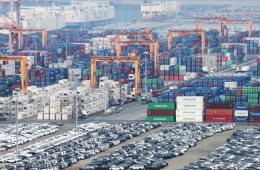
The government attributed the tax revenue error to record-high imports and exports in November and December and a faster-than-expected recovery in the employment market, indicating a stronger economic recovery. However, considering that the largest error was in income tax, it is also analyzed that the increase in capital gains tax due to the real estate and stock market boom had a significant impact.
By tax category, income tax showed the highest progress rate at 107.2%, influenced by a strong asset market and an increase in employed persons. A total of 106.6 trillion KRW in income tax was collected until November, an increase of 20.2 trillion KRW compared to the previous year. Corporate tax also increased by 14.7 trillion KRW from the previous year to 68.8 trillion KRW, showing a progress rate of 104.9%. Value-added tax rose by 6.1 trillion KRW to 70.3 trillion KRW, with a progress rate of 101.3%.
As a result, based on the excess tax revenue, the ruling party and government are highly likely to draft a supplementary budget around mid-next month, just before the presidential election. Especially since the ruling party and government agreed to maintain the current social distancing policy of ‘4 people, 9 PM’ announced on the 14th, the necessity and justification for drafting a supplementary budget have been somewhat secured.
According to Park Kyungmi, spokesperson for the Blue House, on the same day, President Moon said, "It is regrettable that there was an error in the tax revenue estimate, but it is a result of economic activation such as corporate performance, imports and exports, and employment, and it is fortunate that there is capacity to support small business owners and self-employed persons," adding, "Swiftly devise measures to alleviate the difficulties of small business owners and self-employed persons caused by prolonged quarantine using the excess tax revenue that increased more than expected," effectively ordering the supplementary budget. The Ministry of Economy and Finance also maintains the position of reviewing the supplementary budget by examining ▲small business damage situations ▲the scale that can be mobilized from the existing budget ▲tax revenue and other financial conditions.
Hot Picks Today
 No Bacteria Detected in Arisu After 24 Hours of Repeated Drinking from a Tumbler
- "Available Only in Korea": Pokémon Card Prices Surge 2,532% Due to Rarity, Becoming Investment Assets
- Staring at Stock Charts Causes 'Hwabyeong'... "What Have I Even Been Doing?" FOMO Spreads Amid Soaring KOSPI
- President Lee: "Agriculture Is a Core Strategic Industry Ensuring Food Sovereignty... Major Transformation of Rural Areas Needed"
- "Egg Prices Are Strange" Proven True... Collusive Margin Hike of 46% Without Basis Leads to 594 Million Won Fine
However, the ruling party and government have decided to minimize or avoid issuing deficit bonds considering fiscal soundness and the burden of interest rate hikes. As of the 12th, the 3-year government bond yield fell by 4.0 basis points (1 bp = 0.01 percentage points) from the previous day, closing at 1.99% annually. A government official explained, "If government bonds are issued beyond the annually set issuance volume, the interest rate shock on the market must be considered," adding, "If the benchmark government bond yield rises, bank bonds and corporate bonds are also affected, eventually causing a chain reaction that raises loan interest rates." On the same day, the government also projected that last year’s annual government bond issuance would be reduced by 5.8 trillion KRW compared to the issuance limit of 186.3 trillion KRW due to the use of excess tax revenue and other factors.
© The Asia Business Daily(www.asiae.co.kr). All rights reserved.