The Democratic Party, "Limit Financial Holding Company Chairperson to One Reappointment"... Controversy Over Excessive Intervention in Private Governance Structure
First Bill Proposed to Limit Reappointment to One Term, Maximum 6 Years
Controversy Over Authoritarian Governance... 13 Ruling Party Lawmakers Participate
Excessive Regulation Debate... Concerns Over Hindering Financial Firms' Mid- to Long-Term Development

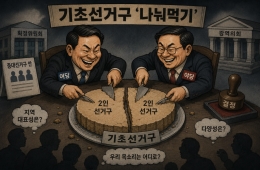
[Asia Economy Reporters Jin-ho Kim and Seung-seop Song] A ruling party lawmaker has proposed a bill in the National Assembly to limit the reappointment of financial holding company chairpersons to once, with a maximum term of six years. The bill aims to address concerns that repetitive reappointments lead to a 'monarchical governance structure,' which weakens the fairness and independence of financial companies. However, the bill could hinder the medium- to long-term development of financial firms, and significant difficulties are expected during the legislative process. In particular, it is likely to face controversy over excessive political interference in the governance of private companies. Experts also point out that while enhancing transparency in governance is desirable given the public nature of the financial industry, excessive regulation should be avoided.
According to political and financial circles on the 13th, Park Yong-jin of the Democratic Party of Korea and 12 other lawmakers submitted the "Partial Amendment to the Act on the Governance of Financial Companies" the day before.
The amendment mainly stipulates limits on the reappointment and total term of financial holding company CEOs and prohibits full-time executives from concurrently holding full-time executive positions at other companies. Park explained at a press conference on reappointment limits last year that "problems arise from the repetitive reappointment of financial company CEOs, leading to excessive authority and weakening the public nature and independence of financial companies."
The financial sector is on high alert over the bill to block the reappointment of financial holding company chairpersons being proposed by ruling party lawmakers. There are concerns that the ruling party, which holds a majority of seats, might pass the bill unilaterally. Although controversies over the monarchical governance structure of financial holding company chairpersons are not new, attention is focused on the increased possibility of legislation at this time.
If the bill passes within this year, it is expected to cast a red light on the third-term reappointments of the chairpersons of Woori Financial Group and Shinhan Financial Group, whose terms expire at the end of March next year.
Therefore, significant resistance from financial companies is anticipated during the bill's promotion process. Voices criticizing excessive political intervention in private governance are likely to grow, especially from the financial sector. It is argued that limiting terms is undesirable since reappointments can be made based on ability and performance, and chairperson appointments require shareholder approval. A financial industry insider said, "To move beyond the short-term performance focus of the past and become a global financial group, a medium- to long-term management strategy based on strong leadership is necessary. If the chairperson's term is limited to six years, core businesses requiring long periods, such as overseas expansion and digital transformation, will inevitably face setbacks."
Experts agree with the bill's intent to enhance governance transparency but warn that excessive regulation could reduce the competitiveness of financial companies. Limiting reappointment terms may lead to management focused on short-term results rather than long-term visions spanning 10 or 20 years.
Professor Woo-jin Kim of Seoul National University's Business School said, "The market principle is that if you do well, you continue; if not, you stop. For professional managers to manage with a sense of ownership like owners, long-term term guarantees are necessary, not short-term." He added, "If reappointments are not allowed and replacements happen frequently, who would take risks and manage with a long-term perspective?"
Professor Ji-yong Seo of Sangmyung University's Department of Business Administration said, "Domestic financial companies have a somewhat public nature, so strengthening governance transparency seems desirable," but added, "If overly strong regulations like this bill are introduced, controversy over private sector interference will be inevitable."
Hot Picks Today
 No Bacteria Detected in Arisu After 24 Hours of Repeated Drinking from a Tumbler
- Hyundai Motor and Samsung Remain in Russia with Trademarks Intact: "For Brand Protection"
- "We Can't Just Let Them Be Damaged Inside"... Samsung Electronics Removes 360,000 Wafers in Preparation for Strike
- Wife in $6.7 Million Debt Took Out $3 Million in Husband's Life Insurance, Poisoned Him... US Court: "She Can Never Be Released"
- "He's Handsome, It's Such a Pity?"... Lawyer Responds to Bizarre 'Appearance Evaluation' of High School Girl Murder Suspect
In fact, in advanced global financial countries like the United States, long-serving CEOs are common. Jamie Dimon, chairman of JP Morgan Chase, and Lloyd Blankfein, former chairman of Goldman Sachs, are representative examples. Especially, Chairman Dimon is regarded as a legendary figure on Wall Street, having led the company for 16 years, strengthening the bank's functions and growing the company through mergers and acquisitions.
© The Asia Business Daily(www.asiae.co.kr). All rights reserved.