President Xi Jinping Issues First People's Liberation Army Mobilization Order of 2022
Firm Commitment to Chinese Interests in Taiwan, Hong Kong, Xinjiang, Tibet, and the South China Sea
Continued Pursuit of Military Modernization Including Hypersonic Missile Development
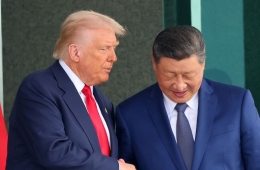
[Asia Economy Beijing=Special Correspondent Jo Young-shin] Amid escalating US-China tensions, Chinese President Xi Jinping signed the first Central Military Commission (CMC) Order No. 1 of 2022.

According to state-run Xinhua News Agency and Global Times on the 5th, President Xi, who also serves as chairman of the Chinese CMC, issued an order the previous day to initiate the mobilization for the People's Liberation Army's training.
In the order, President Xi instructed, "The entire army must resolutely implement the policy decisions and directives of the Party Central Committee and the CMC," adding, "We must accurately grasp changes in national security and the military struggle situation." He further emphasized, "We must closely observe changes in science and technology, warfare, and the adversary," and stressed, "We must fully combine actual combat and training, and promote systematic training."
Chinese military expert Song Zhongping commented on the CMC Order No. 1, stating, "The external situation China faces is changing," and "The Chinese military will strengthen military responses and joint combat capabilities to cope with these changes."
The Global Times emphasized that despite changes in the external environment, China's goal to safeguard sovereignty and security will not change. It added that Order No. 1 contains a firm determination regarding issues related to Chinese interests such as the South China Sea, Taiwan Strait, Hong Kong, the Xizang Autonomous Region (Tibet), and the Xinjiang Uygur Autonomous Region.
Meanwhile, Fu Chong, Director-General of the Arms Control Department at the Chinese Ministry of Foreign Affairs, stated, "China's nuclear capability maintains the minimum level necessary for national defense, so it will not expand its nuclear capability," but also noted that modernization of weapons, including the development of hypersonic missiles, will continue for security purposes.
He emphasized, "Following the US withdrawal from the Anti-Ballistic Missile (ABM) Treaty, China and Russia have embarked on developing hypersonic weapons," stressing that the development of hypersonic missiles by China and Russia is entirely due to the United States. He added that China's nuclear weapons are military secrets and that military secrecy also helps deter war.
Hot Picks Today
 No Bacteria Detected in Arisu After 24 Hours of Repeated Drinking from a Tumbler
- "I Feel Uncomfortable Being Filmed"... Cheerleaders Distressed by Commercial Fan Cam Practices
- High-Net-Worth Investors Increase Stock Holdings: "Samsung and SK hynix Are Basic, Now Searching for the Next Opportunity" [Investment Strategies of the Wealthy] ⑧
- "Not Just Fuel Prices: Whale Collision Risks Surge as Hormuz Blockade Reroutes Ships"
- Police Officer Cycling on Day Off Rescues Woman Attempting to Jump from Hangju Bridge
According to a report by the Stockholm International Peace Research Institute (SIPRI) in Sweden, as of January last year, China is estimated to possess 350 nuclear warheads. During the same period, Russia and the United States are known to possess 6,255 and 5,550 nuclear warheads respectively. The US Department of Defense is concerned that China's nuclear warhead stockpile will exceed 700 by 2027 and 1,000 by 2030.
© The Asia Business Daily(www.asiae.co.kr). All rights reserved.