? China Distribution Market ... Emart Targets the US, Lotte Focuses on Southeast Asia
Retreat from China amid THAAD Retaliation and Common Prosperity Policy Expands Global Market Reach
Shinsegae Emart Fully Withdraws... Intensifies US Supermarket Strategy
Lotte Closes Chinese Department Stores and Marts, Focuses on Vietnam and Indonesia

Following the 2016 THAAD (Terminal High Altitude Area Defense) incident and the subsequent retaliatory measures, the years-long Hanhanryeong (限韓令), and the Chinese government's 'Common Prosperity (共同富裕)' policy, distribution companies are abandoning their attachment to China and venturing into new global markets such as the United States and Southeast Asia. Their strategy is to focus on markets with high growth potential, moving away from the increasingly uncertain Chinese market due to issues like North Korea's nuclear and missile threats and shifting international dynamics.
Shinsegae: From China to Southeast Asia, and Back to the U.S.
According to the distribution industry on the 5th, Emart plans to open a premium supermarket in downtown Los Angeles (LA), USA, in the first half of this year, marking a full-scale push into the U.S. market. The store will be configured as a 'grocerant' combining a premium grocery store and restaurants, creating a space where customers can purchase ingredients and enjoy various dishes. Emart first stepped into the U.S. market in 2018 by acquiring Good Food Holdings, a local distribution company, and New Seasons Market, an organic food retailer. Currently, it operates a total of 51 stores in the western U.S., including Metropolitan Market and New Seasons Market under Good Food Holdings.
Emart views the U.S. as a developed market with less regulatory risk and higher purchasing power compared to China or Southeast Asia. Shin Yong-jin, Vice Chairman of Shinsegae, has repeatedly emphasized the need to explore new opportunities in the U.S., the world's largest consumer market. Despite restrictions due to the COVID-19 pandemic, he made three business trips to the U.S. last year to review operations.
Emart entered the Chinese market in the late 1990s and operated about 30 stores but completely withdrew in 2017. Meanwhile, it directly entered Vietnam but faced difficulties expanding the market and sold its local distribution company THACO last year. Both countries have implemented policies prioritizing domestic companies, causing significant damage to foreign distribution companies, leading to withdrawals or scale reductions.

Lotte Shifts to Southeast Asia Amid Comprehensive Pressure from China
Until 2016, Lotte operated five department stores and 115 marts in China but now only has one department store left in Chengdu. The group's plan to build a nearby 'Lotte Town'?including a theme park, apartments, hotels, and offices?launched with the opening of Lotte Department Store in Shenyang in 2014, was effectively canceled. The project was halted by Chinese authorities in December 2016, shortly after the THAAD incident, then resumed, but with the spread of COVID-19 and the closure of the Shenyang department store in April 2020, Lotte is considering selling all the land originally intended for the theme park and exiting the Chinese market.
Lotte Mart faced massive business suspension orders from Chinese authorities after Lotte provided a golf course in Seongju, Gyeongbuk, as a THAAD site in 2016. At that time, 87 out of 112 stores in China had to cease operations simultaneously, and the Hanhanryeong (限韓令), which banned sales of Korean group tour products, worsened the situation. Lotte sold all its Lotte Mart stores in China in April 2018, withdrew from department stores in July of the same year, and subsequently exited the confectionery and beverage businesses in China the following year.
Hot Picks Today
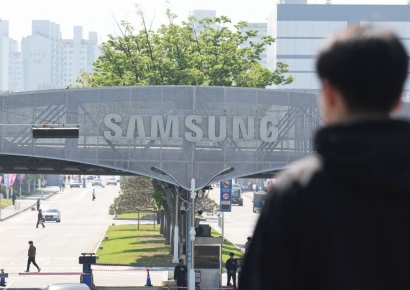 In the End, Fearing a Strike, Samsung Electronics Removes Wafer Pods... Enters 'Emergency Mode'
- No Bacteria Detected in Arisu After 24 Hours of Repeated Drinking from a Tumbler
- "Available Only in Korea": Pokémon Card Prices Surge 2,532% Due to Rarity, Becoming Investment Assets
- [Tomorrow's Weather] Early Summer Heat... Gwangju and Jeonnam Highs Reach 30°C
- 'Quite a Spectacle'... Musk Takes a 360-Degree Selfie, Rubio Gives Thumbs-Up at the Ceiling [US-China Summit]
Lotte is focusing on its businesses in Vietnam and Indonesia, but performance remains sluggish. Due to operational disruptions from the COVID-19 pandemic and local policies favoring domestic companies, the company is running at a loss. However, considering the high economic growth rates and the continuing popularity of Korean culture in these regions, internally they still view these markets as attractive. A Lotte official said, "Since the THAAD incident, we have reduced our dependence on the Chinese market, and the COVID-19 pandemic made it impossible to consider aggressive market entry. However, we highly evaluate the potential of emerging markets in Southeast Asia and the Association of Southeast Asian Nations (ASEAN), such as Vietnam and Indonesia, as part of preparing for the post-COVID era beyond the domestic market, which has reached growth limits due to low birth rates and aging."
© The Asia Business Daily(www.asiae.co.kr). All rights reserved.