AP Technology "Mamstamin Enters Alibaba... Expanding Global Market Share of Breast Milk Oligosaccharides"
[Asia Economy Reporter Hyunseok Yoo] AP Technology is expanding its global market entry using Alibaba as a stepping stone.
On the 4th, AP Technology announced that it will sell human milk oligosaccharide (HMO) 2’-FL and the probiotic product ‘Momstamin’ through the global e-commerce platform Alibaba.
‘Momstamin’ is a global health functional food brand based on 2’-FL, the key component of human milk oligosaccharide (HMO). By entering Alibaba, it will sell raw materials of human milk oligosaccharide 2’-FL and Momstamin products for adults and kids worldwide.
Human milk oligosaccharide is a representative component present in high concentrations in breast milk, and 2’-FL is the main component constituting human milk oligosaccharide. Various papers and research results have revealed that it is effective not only for children but also for adults.
Founded in 1999, Alibaba is China’s largest e-commerce company operating Alibaba.com, Taobao, Tmall, and others. During China’s Singles’ Day in November, the transaction volume on the Alibaba platform reached a total of 540.3 billion yuan (approximately 100 trillion won). This is an 8.4% increase compared to the previous year and represents the highest transaction volume ever.
An AP Technology official said, “Entering Alibaba will increase Momstamin’s global recognition and competitiveness and serve as an opportunity to expand the global market,” adding, “Following the United States and Southeast Asia, we will actively enter all global markets and take the lead in pioneering the global human milk oligosaccharide (HMO) market.”
Earlier, the company announced that it had launched Momstamin on the U.S. e-commerce platform ‘Amazon’ last month and on the Southeast Asian e-commerce platform ‘Shopee’ on December 17. The strategy is to accelerate the preemption of the global market and expand overseas sales growth.
Hot Picks Today
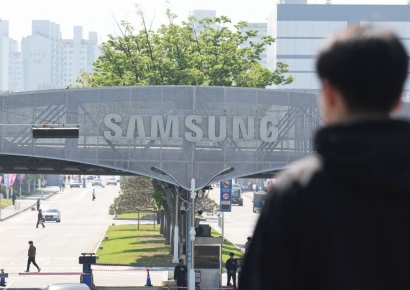 "We Can't Just Let Them Be Damaged Inside"... Samsung Electronics Removes 360,000 Wafers in Preparation for Strike
- No Bacteria Detected in Arisu After 24 Hours of Repeated Drinking from a Tumbler
- "Up to 100 Trillion Won in Losses Feared, It's Not About Second Place but Catastrophe"... Industry Minister: 'Emergency Mediation Unavoidable If Samsung Strike Occurs'
- Wife in $6.7 Million Debt Took Out $3 Million in Husband's Life Insurance, Poisoned Him... US Court: "She Can Never Be Released"
- "He's Handsome, It's Such a Pity?"... Lawyer Responds to Bizarre 'Appearance Evaluation' of High School Girl Murder Suspect
AP Technology, established in 2001, is a company that developed human milk oligosaccharide production technology using an internationally patented bio-process. Following the acquisition of GRAS (Generally Recognized As Safe) from the U.S. Food and Drug Administration (FDA) in February, it was also approved as a food ingredient by the Korean Ministry of Food and Drug Safety in April.
© The Asia Business Daily(www.asiae.co.kr). All rights reserved.