Tightening Loan Regulations and the Upcoming Presidential Election... Real Estate in 'Foggy Uncertainty'
DSR 40% Applied, Loan Difficulties
Interest Burden Increases with Rate Hikes
Seoul Supply Shortage, Upward Pressure
Presidential Election Major Variable, Market Cautious for Now
Housing Price Direction Likely Clearer After March

[Asia Economy Reporter Kim Hyemin] The outlook for this year's real estate market is essentially at a standstill. With the upward trend in housing prices that began in the second half of last year losing momentum, and the presidential election coinciding, the policy directions of the ruling and opposition presidential candidates, which directly affect the market, are polarized at both extremes. Market observers say that until the uncertainty surrounding these major variables is resolved, it is difficult to predict whether there will be a sustained decline or a rebound in prices.
There is no disagreement that financial issues and the presidential election will be the biggest factors determining the future direction of housing prices.
Financial issues, represented by loan regulations and interest rate hikes, have been identified as the reasons for the recent halt in the rise of housing prices. Due to the tightened loan regulations by financial authorities making it harder to obtain loans, and the Bank of Korea raising the base interest rate twice in the second half of last year, the financial burden has significantly reduced the number of people willing to buy homes.
This trend is expected to strengthen further this year. One of the loan regulations, the Debt Service Ratio (DSR), will be enforced with increased stringency starting this month. The 'DSR 40%' regulation applies when the total loan amount across all financial institutions exceeds 200 million KRW. This means that the annual principal and interest repayment amount cannot exceed 40% of the borrower's annual income. From July, this regulation will apply to total loans exceeding 100 million KRW. It is likely to become even more difficult to obtain loans than now.
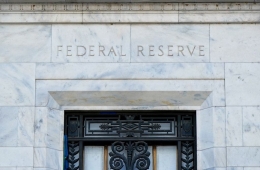
The prevailing forecast is that interest rates will rise further. With the U.S. Federal Reserve (Fed) signaling the possibility of three interest rate hikes this year, the Bank of Korea's Monetary Policy Committee is also expected to raise the base interest rate two to three more times. An increase in the base rate leads to higher market loan interest rates, including mortgage loans. Combined with loan regulations and increased interest burdens, this could further dampen housing purchase demand.
However, there are intrinsic upward factors in the market that make it difficult to hastily predict a downward trend. First, the shortage of housing supply in Seoul will continue this year as well. According to Real Estate R114, the planned housing supply in the metropolitan area this year is 166,897 units, an increase of 4,000 units compared to last year. However, narrowing the scope to Seoul, which is considered a barometer of housing prices, tells a different story. The planned supply in Seoul this year is 20,520 units, a sharp decrease of 11,500 units compared to last year.
Although redevelopment, reconstruction, and the 3rd New Town projects are being promoted to increase supply, it is expected to take at least five years before these projects result in actual housing availability. Until then, each time these projects advance, they are likely to stimulate housing prices or lead to a large influx of land compensation funds back into the real estate market.
With the use of the contract renewal request right leading to an increase in jeonse (long-term lease) properties entering the market after July, a sharp rise in jeonse prices is expected, which could affect the sales market. If jeonse prices rise rapidly, tenants might remain in the rental market through semi-jeonse leases, but some may opt to purchase homes instead. If there is ample upcoming housing supply, it might help curb the rise in jeonse prices, but in Seoul, which leads nationwide housing prices, such an effect is unlikely.
Above all, the definite direction of housing prices is expected to be gauged after the March presidential election. In fact, many market participants are postponing sales or purchases to observe the situation until after the election. It is said that the market trend could become clearer after the election, or at the latest after the next government is fully formed in June.
Hot Picks Today
 "Let's Buy Before It Sells Out Again": 'Cup Bingsu' Sells 1 Million Cups in Just 2 Weeks
- South Korea Overtakes Japan in a Decade: "This Time for Real"... Record-High Q1 Current Account Surplus Driven by Semiconductor Boom
- High-Net-Worth Investors Increase Stock Holdings: "Samsung and SK hynix Are Basic, Now Searching for the Next Opportunity" [Investment Strategies of the Wealthy] ⑧
- "You Don't Need to Go to the Gym": The Best Exercises for Lowering Hypertension
- "My Wife Is Missing"... Woman in Her 50s Still Unaccounted for Nearly a Month After Climbing Bukhansan Mountain
Kyunghee Yeo, Senior Researcher at Real Estate R114, said, "Since government policies are suppressing real estate transactions while buyers have not decreased, the housing market is bound to remain sluggish until the election," adding, "Ultimately, the market sentiment will change depending on the real estate policy direction of the next government."
© The Asia Business Daily(www.asiae.co.kr). All rights reserved.