[Column] Overshadowed Short Selling Pledges and the Donghak Ants' Vote

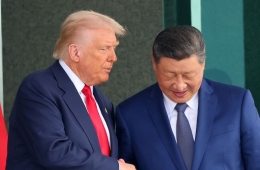
Yoon Seok-yeol, the presidential candidate of the People Power Party, and Lee Jae-myung, the presidential candidate of the Democratic Party of Korea, are attending the "2022 Stock Market Festival" held on the 3rd in front of the Korea Exchange headquarters in Yeouido, Seoul. Photo by the National Assembly Press Photographers Group
View original image[Asia Economy Reporter Ji Yeon-jin] On the first trading day of the Year of the Tiger, presidential candidates from both the ruling and opposition parties visited the 2022 Securities and Derivatives Market Opening Ceremony held at the Korea Exchange. It is rare for major politicians to attend exchange events at the beginning of the year. This move is interpreted as an effort to court the growing influence of Donghak Ants, individual investors whose voting power has increased amid the stock investment boom fueled by liquidity unleashed during last year's COVID-19 pandemic.
As the presidential race intensifies, candidates from both parties are rushing to present capital market pledges. In particular, they unanimously promised to improve the short-selling system, which is the hottest issue among individual investors. Lee Jae-myung, the Democratic Party candidate who has put resolving unfairness in the capital market front and center, said, "I will prohibit discrimination in the short-selling borrowing period between foreigners and individual investors." Short selling is an investment technique where borrowed stocks are sold, and if the stock price falls, they are repurchased to return the shares and realize a profit. Lee said, "Individuals must repay the borrowed stocks within 90 days, but institutions and foreigners have no restrictions, allowing them to hold indefinitely until profits are made." Yoon Seok-youl, the People Power Party candidate, said he would actively consider introducing a 'short-selling circuit breaker,' which would automatically ban short selling on stocks experiencing excessive price declines.
Both pledges sound plausible. However, they are merely superficial modifications of existing systems. Regarding Lee’s pledge to prohibit discrimination in the short-selling borrowing period, the government already extended the borrowing period for individual investors from 60 to 90 days last September and revised the system to allow additional extensions as the maturity approaches. This means individual investors can effectively borrow stocks for short selling without a time limit. Yoon’s short-selling pledge is similar. Currently, if short selling is concentrated and the stock price plunges sharply, the stock is designated as overheated for short selling, and short selling is banned the following day.
Hot Picks Today
 No Bacteria Detected in Arisu After 24 Hours of Repeated Drinking from a Tumbler
- "I Feel Uncomfortable Being Filmed"... Cheerleaders Distressed by Commercial Fan Cam Practices
- High-Net-Worth Investors Increase Stock Holdings: "Samsung and SK hynix Are Basic, Now Searching for the Next Opportunity" [Investment Strategies of the Wealthy] ⑧
- "Not Just Fuel Prices: Whale Collision Risks Surge as Hormuz Blockade Reroutes Ships"
- Police Officer Cycling on Day Off Rescues Woman Attempting to Jump from Hangju Bridge
Other pledges related to the capital market also lack specificity and remain declarative promises. Politics is a governing act to address the public’s needs. Pledges that lack substance or feasibility, as well as deceptive promises, must be filtered out.
© The Asia Business Daily(www.asiae.co.kr). All rights reserved.