[Column] The Statement "Rice Can Be Quarantined If Necessary" That Could Become Psychological Torture of Hope

Kim Hyun-soo, Minister of Agriculture, Food and Rural Affairs, speaking at a press briefing held at the Government Sejong Complex on the afternoon of the 16th. (Photo by Ministry of Agriculture, Food and Rural Affairs)
View original image[Sejong=Asia Economy Reporter Moon Chaeseok] Kim Hyun-soo, Minister of Agriculture, Food and Rural Affairs, said at a press conference on the 16th, "This year's rice production is about 270,000 tons (t) more than actual demand," adding, "If it is judged that market isolation of rice is necessary due to continued price declines, it will be implemented immediately."
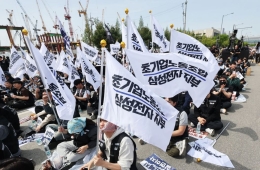
When production exceeds demand, prices fall. The decline in rice prices implies that the government may purchase rice to compensate farmers' income, as falling prices lead to reduced income for farmers. From the farmers' perspective, this statement can be seen as a positive response.
However, in a situation where prices of industrial products including electricity and gas are rising one after another, it seems difficult for the government to find justification to prevent the fall in rice prices. Rather, it is more likely to send the wrong signal of "rice price stability" to rural public opinion.
The background of the minister's remarks lies in political demands. Lee Jae-myung, the Democratic Party presidential candidate, wrote on his social media (SNS), "I once again urge the government to immediately take action to isolate 270,000 tons of rice from the market," and Yoon Seok-youl, the People Power Party presidential candidate, also said, "The government should not ignore the desperate feelings of farmers and must take a more active role." However, as the minister in charge, a more prudent response would have been to say, "We will make a judgment considering prices and other factors comprehensively," rather than being swayed by such remarks.
What is urgently needed is a fundamental measure to prevent rice oversupply. Rice overproduction is a chronic problem in our agricultural sector. Consumption is decreasing, but rice farming is preferred by farmers because it is easier to manage than other crops. The government restructured last year to provide direct payments as subsidies regardless of rice prices. Although the purpose was also to encourage switching to other varieties instead of rice, the oversupply has not yet been resolved this year.
It is understandable that the minister must consider both price management and farmers' income. However, rather than focusing on immediate rural sentiment, efforts to enhance price stability through supply and demand management seem more necessary.
Hot Picks Today
 No Bacteria Detected in Arisu After 24 Hours of Repeated Drinking from a Tumbler
- "I Feel Uncomfortable Being Filmed"... Cheerleaders Distressed by Commercial Fan Cam Practices
- Staring at Stock Charts Causes 'Hwabyeong'... "What Have I Even Been Doing?" FOMO Spreads Amid Soaring KOSPI
- "Not Just Fuel Prices: Whale Collision Risks Surge as Hormuz Blockade Reroutes Ships"
- Police Officer Cycling on Day Off Rescues Woman Attempting to Jump from Hangju Bridge
![[Column] The Statement "Rice Can Be Quarantined If Necessary" That Could Become Psychological Torture of Hope](http://www.asiae.co.kr/news/img_view.htm?img=2017122808571314896_1514419036.jpg)
© The Asia Business Daily(www.asiae.co.kr). All rights reserved.