[Kim Taemin's Food and Drug Story] MFDS Turns a Blind Eye to Side Effects of Health Functional Foods
Nutritional Supplements as the Foundation for the 100-Year Life... Consumed from Infants to the Elderly
Must Use MFDS-Certified Ingredients to Be Classified as 'Health Functional Foods'
Reported Adverse Cases 1,300 Annually... "Attributed to Individual Characteristics and Constitution"
Even When Causality of Side Effects Is Clear, Only Company Website Disclosure Is Mandated
![[Kim Taemin's Food and Drug Story] MFDS Turns a Blind Eye to Side Effects of Health Functional Foods](http://www.asiae.co.kr/news/img_view.htm?img=2021070211235817113_1625192638.jpg)
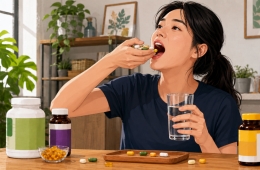
One of the things that has become very familiar to us living in the era of 100-year lifespans is health foods or health functional foods. Recently, people of all ages, from infants to the elderly, consume them for health, regardless of gender or age, and everyone is curious whether they really work as well as their popularity suggests. There is also concern about whether problems might arise when taking multiple types at once, either between different health functional foods or in connection with medications being taken.
First of all, how many consumers properly distinguish between health foods, health supplements, and health functional foods? According to the law, health functional foods refer to those using ingredients whose functionality has been recognized by the Ministry of Food and Drug Safety (MFDS). Health foods and health supplements are general foods under the Food Sanitation Act. Simply put, the difference is that the government does not recognize their functionality.
Just because the government does not recognize functionality does not mean the ingredient lacks functionality. Sometimes developers have not received official recognition of efficacy due to costs, and products like red ginseng or vitamins can be classified as either health functional foods or general foods depending on the content of indicator substances or usage amounts. The difference lies in whether safety and functionality have been recognized by the government through research data, but it can be considered that they are beneficial to the body when consumed, though they do not have the same effects as pharmaceuticals. However, the MFDS’s inadequate management of adverse events, i.e., side effects occurring after consumption, is coming under scrutiny.
![[Kim Taemin's Food and Drug Story] MFDS Turns a Blind Eye to Side Effects of Health Functional Foods](http://www.asiae.co.kr/news/img_view.htm?img=2021111911111528012_1637287875.jpg)
According to data presented by Representative Kim Mi-ae of the National Assembly’s Health and Welfare Committee during the National Audit, from January 2019 to August 2021, there were as many as 3,628 adverse event reports related to health functional foods submitted to the MFDS. This amounts to about 1,300 cases annually. Representative Kim pointed out, "The MFDS determines that the number of adverse event reports is due to individual characteristics or constitution, creating a blind spot regarding repeated side effects."
Of the reported adverse events, only 32 cases were referred to the expert review committee. Among these, there were no cases classified at level 5, which indicates a very high possibility of causality, and most were judged to be at a level that did not require special investigation. Experts have also pointed out that this effectively blocks victims from receiving relief.
More seriously, even if a clear causal relationship between the adverse event and the product is established, the MFDS only instructs the companies involved to conduct continuous monitoring and disclose information on their websites. Ultimately, the MFDS fails to clarify scientific and medical causality directly and shifts responsibility to the business operators.
Although younger generations have recently increased their consumption of health functional foods as a preventive measure, the main consumers remain middle-aged and elderly people with various diseases. It is very important to identify the causes of adverse events occurring when various medications or different types of health functional foods are taken together. When such cases occur, from the consumer’s perspective, whether the product has a problem and whether these issues were clearly explained to consumers are the most important matters in terms of compensation for damages.
Just like allergy prevention labeling, consumers must be notified. Clear labeling or advertising that guides consumers to accurately recognize the possibility of side effects from the product is urgently needed. Such pre-notification labeling systems would also greatly help reduce compensation cases or legal disputes related to consumer protection.
Experts expect that if the revised Consumer Group Litigation Act, recently passed at the Cabinet meeting, is implemented from next year, the most frequent disputes will involve foods or cosmetics. In this context, if the MFDS does not conduct more thorough post-management of adverse events related to health functional foods consumed by the entire nation, it will inevitably face criticism for inadequate management responsibility.
Since the MFDS enacted the Health Functional Foods Act in 2013 to bring trust to the chaotic health food market and promote industry development, it is naturally time for them to take responsibility and pay more attention to safety management for consumers.
Hot Picks Today
 If They Fail Next Year, Bonus Drops to 97 Million Won... A Closer Look at Samsung Electronics DS Division’s 600M vs 460M vs 160M Performance Bonuses
- Opening a Bank Account in Korea Is Too Difficult..."Over 150,000 Won in Notarization Fees Just for a Child's Account and Debit Card" [Foreigner K-Finance Status]②
- "While Others Rest, Nearly 3 Million May Work Substitute Public Holidays Without Extra Pay"
- "Better Than the Lottery": Reporting Collusion Could Earn Hundreds of Billions... KFTC Announces Administrative Notice to Abolish Whistleblower Reward Cap
- "Who Is Visiting Japan These Days?" The Once-Crowded Tourist Spots Empty Out... What's Happening?
/Lawyer, Food Sanitation Law Research Institute
© The Asia Business Daily(www.asiae.co.kr). All rights reserved.

!['WHO Declares International Public Health Emergency' Why the Untreatable 'Variant Ebola' Is More Deadly Than COVID-19 [Reading Science]](https://cwcontent.asiae.co.kr/asiaresize/307/2026052110164072055_1779326201.png)
!["Please Help Us": How Much Do Those Bowing 90 Degrees These Days Actually Earn? [Data Pick]](https://cwcontent.asiae.co.kr/asiaresize/307/2026052010120870131_1779239528.png)



