Korean Advanced Bus Stops with Various Features to Transform Once Again
Nuclear Research Institute Develops 'Microalgae Mutant' Technology Transferred to Private Companies
Absorbs Carbon Dioxide at Bus Stops to Produce Bioethanol and More

Seoul City announced that the "Seoul Art Station" exhibition titled "Together, Us" will be held at 44 bus stops in Dobong Mia-ro, Mangu Wangsanno, Tongil Ujuro, and the Jongno area, showcasing artworks on bus stop advertising boards. The exhibition runs from today (the 1st) until November 30. A bus stop in Jongno-gu. Photo by Moon Honam munonam@
View original image[Asia Economy Reporter Kim Bong-su] A new feature is being added to Korea's bus stops, which are famous for their advanced technologies such as air conditioners, air purifiers, and free internet. This new feature is an advanced eco-friendly technology that converts carbon dioxide, the main culprit of greenhouse gases, into biofuel through microalgae. Microalgae, developed by domestic researchers to convert carbon dioxide into bioenergy more efficiently, has entered the full-scale commercialization stage, making the 'advanced eco-friendly biofuel-producing bus stop' a reality.
The Advanced Radiation Research Institute of the Korea Atomic Energy Research Institute announced on the 17th that it has signed a contract to transfer the technology for producing 'microalgae mutants for bioethanol production' to a private company. The contract includes a fixed technology fee of 10 million won.
Microalgae are tiny algae that can only be seen under a microscope and are also called phytoplankton. Using microalgae, various substances can be produced, and when replacing petroleum-based raw materials with bioenergy or bioplastics, the carbon dioxide reduction effect is excellent, attracting more attention. The private company that received this technology transfer plans to establish microalgae cultivation facilities using urban bus stops in the future to promote the production of bioplastics and biofuels.

Bioethanol Production Bus Stop Sketch. Image provided by Korea Atomic Energy Research Institute.
View original imageEarlier, the institute developed an improved microalgae strain called 'Chlamydomonas' using radiation breeding technology. Compared to existing strains, the starch accumulation increased more than twofold. The growth rate is also over 20% faster, enabling more efficient bioethanol production. Unlike GMO (genetically modified organism) microalgae developed using biotechnology, it is free from environmental hazard issues. Radiation breeding technology has been used worldwide for over 80 years, proving its safety.
Hot Picks Today
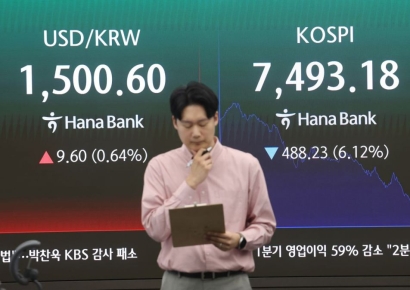 After Topping 8,000 Instead of Hitting 10,000... KOSPI Plunges—When Will It Rebound?
- "Samsung and Hynix Were Once for the Underachievers"... Hyundai Motor Employee's Lament
- [Breaking] Court Rules Against Samsung Electronics Union...1 Billion Won per Day Penalty for Exceeding Strike Scope
- Six Economic Organizations Urge Withdrawal of Samsung Electronics Strike Plan...Warn of National Loss of Opportunity
- "That? It's Already Stashed" Nightlife Scene Crosses the Line [ChwiYak Nation] ③
Senior Researcher Ahn Jun-woo of the institute stated, "The microalgae developed this time can be used not only for biofuel but also for bioplastic production," adding, "Compared to conventional petroleum-based fuels or plastics, it emits less carbon dioxide, and it is expected to greatly contribute to 'low-carbon green growth and carbon neutrality.'"
© The Asia Business Daily(www.asiae.co.kr). All rights reserved.







