"If Necessary, Use the Defense Production Act"... US Receives Semiconductor Materials, What Is the Next Step?
US Biden Administration on Alert for Possible Additional Data Requests
Semiconductor Companies' Submitted Data Does Not Include Customer Information
US Commerce Secretary: "If Data Is Insufficient, Further Action... Need to Know Where Chips Are Going"
Close Coordination Needed Between Domestic Companies and Government... Moon Seung-wook, Minister of Industry, Visits US
![[Image source=Reuters Yonhap News]](http://www.asiae.co.kr/news/img_view.htm?img=2021101405333065150_1634157210.jpg)
[Asia Economy Reporters Kim Heung-soon and Jung Hyun-jin] As of the deadline on the 8th (local time) for submitting semiconductor data requested by the U.S. Biden administration, it has been confirmed that most major semiconductor companies have submitted their data, shifting the global semiconductor industry's focus toward the possibility of additional pressure. Since companies submitted data while protecting core confidential information such as their customers, future actions are expected to be determined based on whether the U.S. government accepts the level of information provided.
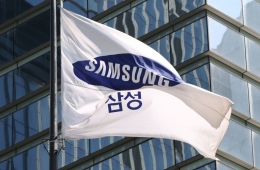
On this day, major domestic semiconductor companies such as Samsung Electronics, SK Hynix, and DB HiTek did not include customer data in the materials submitted to the U.S. The companies explained that this was due to contractual confidentiality with customers and to maintain trust with them. Taiwan's TSMC, the number one foundry (semiconductor contract manufacturing) company, also submitted data to the U.S. Department of Commerce on the 5th but stated that customer information was not included.
Data Request Started Because of Cars... U.S. May Take ‘Further Action’
As some information was excluded from the data submitted to the U.S. Department of Commerce, how the U.S. government judges this has become crucial. Since the information was requested to resolve semiconductor supply chain issues, if the submitted data is insufficient to help solve the problem, there is a possibility that additional information will be requested. The information requested by the U.S. government on September 24 included 26 items such as total sales over the past three years, sales by product, semiconductor inventory quantities, order details, and customer information?data that semiconductor companies generally keep confidential and do not disclose externally.

Reviewing the submitted materials from major semiconductor companies such as TSMC, U.S. Micron, and Germany's Infineon, which are publicly available on the U.S. federal government website, it appears that the publicly disclosed data contains very little detail, with confidential data submitted separately. In particular, Infineon, a representative automotive semiconductor manufacturer, submitted additional confidential documents that seem to include perspectives on changes in the automotive semiconductor market, customer supply shortages, and the semiconductor supply chain issues from last August, beyond the official documents. While customer information was likely excluded from the data, it is expected that the level of disclosure varied by company, so the U.S. government is anticipated to scrutinize these submissions carefully.
U.S. Secretary of Commerce Gina Raimondo stated that if the companies' data is insufficient, the government may take ‘further action,’ reiterating the Defense Production Act (DPA) card mentioned in September. She told Bloomberg News, "We need to know what is happening, where the chips are going, and if hoarding is occurring," adding, "We do not want to use the Defense Production Act, but we will if necessary." Ultimately, since the U.S. government's data submission request originated from the repeated impact on automakers caused by automotive semiconductor shortages, the key will be how well the current supply chain problems and bottlenecks can be understood and whether solutions can be found through this.
Semiconductor Industry Playing a Waiting Game... "Need for Cautious Response"
Since the Biden administration's semiconductor-related actions began amid global supply chain issues and are expected to continue for some time, industry experts and insiders suggest that domestic companies and the government must respond closely yet cautiously. The industry hopes for behind-the-scenes communication with the government to understand the background and desired level of information and to carefully convey the companies' difficulties.

The Ministry of Trade, Industry and Energy has reportedly held several face-to-face and virtual meetings with Samsung Electronics, SK Hynix, and others to discuss countermeasures and has communicated companies' inquiries to the U.S. government. Samsung Electronics explained that it submitted data on this day and that the exclusion of customer-related information was done "in consultation with the Department of Commerce."
Minister Moon Seung-wook of the Ministry of Trade, Industry and Energy departed for the U.S. on the same day for follow-up measures. The ministry stated that Minister Moon's visit, scheduled until the 11th, aims to discuss ways to accelerate the follow-up cooperation outcomes from the May Korea-U.S. summit, including the submission of supply chain information by domestic semiconductor companies and U.S. export restrictions on Korean steel. During this process, Minister Moon is expected to focus on explaining to Secretary Raimondo and others that the limited information provided by domestic semiconductor companies this time should not result in disadvantages.
Hot Picks Today
 "Suspicious Timing?"...Trump Traded Stocks After Praising Wartime Capabilities
- "Even If I Lose My Investment, the Government Will Cover It"... The Fund Attracting Retail Investors' Attention [Weekend Money]
- There Is a Distinct Age When Physical Abilities Decline Rapidly... From What Age Do Strength and Endurance Drop?
- "I Went to 10 Convenience Stores and Still Couldn't Buy It": The Bread Sensation That Sold 100 Million Units Already [The Way We Shop Now]
- "Contact Me First If Houses Are Built": Wealthy Clients Eyeing... Will Ultra-High-End Residences Worth 20 Billion Won Be Developed? [Real Estate AtoZ]
An Gi-hyun, Executive Director of the Korea Semiconductor Industry Association, said, "The U.S. demand is related to the automotive semiconductor issue," but added, "Rather than the Korean government and companies proactively preparing countermeasures or accepting the demands, it is necessary to cautiously observe the trends of global companies like Taiwan that lead the supply chain." Kim Yang-pyung, a senior researcher at the Korea Institute for Industrial Economics and Trade, said that the government's response should vary depending on the level of U.S. demands, stating, "If the current level of demand remains, a soft response seems appropriate, but if unreasonable demands arise, legal measures should be prepared to protect the technology of domestic semiconductor companies and the industry."
© The Asia Business Daily(www.asiae.co.kr). All rights reserved.