Concerns Over Austerity Ease but Inflation Anxiety Remains "The Next Month Is Critical"
FOMC Tapering Schedule Announcement Eases Uncertainty
Concerns Over Fed Tightening Ease
Inflation Outlook Remains Uncertain... "Next Month Will Confirm Previous Forecasts"
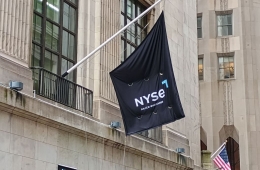
![On the 3rd (local time), a TV screen installed in the trading floor of the New York Stock Exchange in the United States shows Federal Reserve Chairman Jerome Powell announcing tapering during a press conference. <br>[Image source=Yonhap News]](http://www.asiae.co.kr/news/img_view.htm?img=2021110611041899781_1636164258.jpg)
On the 3rd (local time), a TV screen installed in the trading floor of the New York Stock Exchange in the United States shows Federal Reserve Chairman Jerome Powell announcing tapering during a press conference.
[Image source=Yonhap News]
[Asia Economy Reporter Minwoo Lee] The U.S. Federal Open Market Committee (FOMC) finalized its tapering (asset purchase reduction) schedule but stated it will not rush to raise interest rates until sufficient employment recovery is achieved. Accordingly, concerns about the U.S. Federal Reserve's (Fed) tightening are expected to subside in emerging market stock markets, including the KOSPI. On the other hand, supply chain issues and inflation outlook uncertainties remain ongoing, which may continue to keep caution over risk assets.
On the 3rd (local time), the FOMC announced in a statement that it will begin tapering by reducing the amount of bond purchases this month. Currently, it purchases $120 billion in bonds monthly, but starting this month, it plans to reduce the purchase amount by $15 billion each month ($10 billion in Treasury bonds and $5 billion in mortgage-backed securities). However, it left open the possibility of adjusting the purchase amount and schedule depending on economic conditions.
The benchmark interest rate was kept unchanged at 0?0.25%. The focus was on suppressing the spread of market concerns. While acknowledging inflationary pressures due to supply chain disruptions, it maintained the existing view that these are temporary. It stated that it will not rush to raise interest rates before sufficient employment recovery.

As a result, concerns about the Fed's tightening that had rapidly spread over the past month are calming down. Although the implied policy rate within the Fed still reflects the possibility of two rate hikes by the end of next year, the momentum has notably softened. Seokhyun Park, head of investment strategy at KTB Investment & Securities, explained, "The forecast for the number of rate hikes by the end of next year, which had risen rapidly over the past month since last month, is clearly stabilizing around this FOMC meeting. This means that concerns about the Fed's tightening, which had spread rapidly in the short term, are calming down."
There is also a forecast that the recent underperformance of emerging market stocks and the KOSPI compared to developed countries in the second half of the year may ease. The background of the underperformance was concerns about tapering and accelerated Fed rate hikes. However, it was noted that it may take time for the performance gap to develop into a trend recovery.

Meanwhile, inflation outlook uncertainties are expected to persist. This is because the index released last month by the U.S. Institute for Supply Management (ISM) confirmed that supply chain disruptions remain. Also, the October U.S. Consumer Price Index (CPI), to be announced next week, is expected to continue its upward trend. Since inflation outlook uncertainties are still ongoing, caution over risk assets may continue.
KTB Investment & Securities sees the next month as a critical period for the trends of emerging market stocks and the KOSPI. The October U.S. CPI is expected to record a 5.8% increase year-over-year, surpassing the previous month's 5.4% increase. Initially, it was expected that inflation would significantly accelerate in the fourth quarter of this year, and from next week, the confirmation process for this will begin. This process may continue until mid-next month, when the November inflation data is released. Park said, "The next month or so, when inflation outlook uncertainties may peak, will be a critical period for the trends of emerging market stocks and the KOSPI. During this process, we will be able to confirm that the relative performance underperformance has passed its bottom."
Hot Picks Today
 As Samsung Falters, Chinese DRAM Surges: CXMT Returns to Profit in Just One Year
- "Most Americans Didn't Want This"... Americans Lose 60 Trillion Won to Soaring Fuel Costs
- Iran Delivers New Ceasefire Proposal to U.S.; U.S. Says "Not Sufficient to Conclude Negotiations"
- Samsung Union Member Sparks Controversy With Telegram Post: "Let's Push KOSPI Down to 5,000"
- "Why Make Things Like This?" Foreign Media Highlights Bizarre Phenomenon Spreading in Korea

© The Asia Business Daily(www.asiae.co.kr). All rights reserved.