Samsung Hits "60,000 Won Electronics," Group Stock Funds Also Plummet
One-Month Return Recorded at -5%
Stake Sale Issue and Semiconductor Industry Slump Weigh on Returns

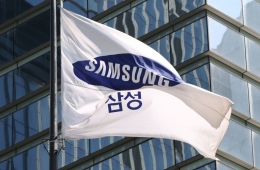
[Asia Economy Reporter Minji Lee] Samsung Electronics, which established itself as a national stock over the past year, has turned into a graveyard for retail investors, causing the returns of Samsung Group stock funds that invest in related affiliates to also collapse.
According to financial information firm FnGuide on the 13th, the year-to-date return of Samsung Group stock funds fell by 0.04%, but in the past month alone, it dropped by 5%. Compared to other group funds, the poor performance is even more pronounced. Group funds excluding Samsung posted a year-to-date return of 7.4% and a one-month return of -3%.
Among Samsung Group stock funds, those excluding Samsung Electronics showed favorable returns. The Korea Investment KINDEX Samsung Group Equal Weight ETF had the best year-to-date return among Samsung Group funds at 6.7%. This ETF is characterized by having no Samsung Electronics in its major holdings but includes key affiliates such as Samsung Card (6.9% weighting), Samsung Electro-Mechanics (6.9%), Samsung Securities (6.9%), and Samsung Fire & Marine Insurance (6.9%) with equal weightings. This fund’s strong performance was due to other affiliates’ relatively good returns despite Samsung Electronics’ sharp decline from 90,000 KRW to the 60,000 KRW range earlier this year amid concerns over the semiconductor industry downturn. Samsung Card (10.08%), Samsung Securities (13%), and Samsung Fire & Marine Insurance (29%) all posted year-to-date returns better than the market average. Other funds with favorable returns included Korea Investment KINDEX Samsung Group SW (2.8%), Samsung Group Value Index Fund for You (1%), and IBK Jae-hyung Samsung Group (0.63%).
Meanwhile, the outlook for Samsung Group stock funds is not entirely bright. The issue of share sales to pay inheritance tax, which surfaced the day before, could weigh on the stock prices of major Samsung affiliates. Samsung SDS (-6.5%) and Samsung Life Insurance (-3.3%), whose controlling family announced plans to sell some of their shares, both plunged sharply. Since additional stock sales to raise inheritance tax funds are possible, affiliates under the governance structure are expected to carry overhang risk for the time being. Despite solid performance, concerns about further declines are growing for Samsung SDS, where Lee Boo-jin, President of Hotel Shilla, and Lee Seo-hyun, Director of Samsung Welfare Foundation, have put up shares. Choi Kwan-soon, a researcher at SK Securities, said, “It is true that the stock price is negatively affected by the supply burden and investor sentiment due to share sales by major shareholders and related parties,” adding, “Considering the supply-demand burden, we lower SDS’s target price by 20% to 200,000 KRW.”
Hot Picks Today
 "Do We Need to Panic Buy Again?" War Drives 30% Price Surge... Even the Bedroom Feels the Impact
- "Suspicious Timing?"...Trump Traded Stocks After Praising Wartime Capabilities
- There Is a Distinct Age When Physical Abilities Decline Rapidly... From What Age Do Strength and Endurance Drop?
- "Anyone Who Visited the Room Salon, Come Forward"… Gangnam Police Station Launches Full Staff Investigation After New Scandal
- "Contact Me First If Houses Are Built": Wealthy Clients Eyeing... Will Ultra-High-End Residences Worth 20 Billion Won Be Developed? [Real Estate AtoZ]
Regarding the semiconductor industry outlook, securities experts all expressed conservative views. Amid growing concerns over China’s economic slowdown due to the Evergrande crisis and power shortages, and considering the decline in memory semiconductor prices and the economic slowdown in China and the U.S., it is judged that earnings may weaken until the first half of next year. Lee Seung-woo, a researcher at Eugene Investment & Securities, said, “Inflation, which was expected to be temporary due to rising raw material prices, is likely to last longer than expected, increasing uncertainty about the global economy and corporate profits in 2022,” adding, “If earnings can enter a recovery cycle from the second half, the annual operating profit is expected to be around 53 trillion KRW, similar to this year.”
© The Asia Business Daily(www.asiae.co.kr). All rights reserved.