KOSPI Rebounds to Close Near 2960 as Debt Ceiling and Inflation Concerns Ease
![[Image source=Yonhap News]](http://www.asiae.co.kr/news/img_view.htm?img=2021100715560858025_1633589768.jpg)
[Asia Economy Reporter Lee Seon-ae] On the 7th, the domestic index, which started higher, closed up, successfully rebounding. This is interpreted as a rebound supported by the easing of uncertainty over the US debt ceiling and the easing of inflationary pressures.
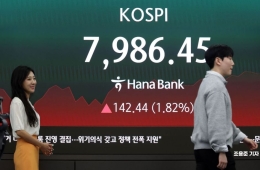
The KOSPI closed up 51.15 points at 2,959.46 (1.76%↑). On that day, the KOSPI index started at 2,936.87, up 28.56 points (0.98%↑), and extended its gains during the session. The KOSDAQ closed at 953.43, up 31.07 points (3.37%↑). The KOSDAQ index started the day at 932.65, up 10.29 points (1.12%↑).
Looking at trading trends by investor type, in the KOSPI market, individuals and foreigners took net selling positions, while institutions were the sole net buyers. Individuals recorded net sales of approximately 530.6 billion KRW, and foreigners net sold about 104.5 billion KRW. Institutions purchased about 614.3 billion KRW. In the KOSDAQ market, individuals alone took a selling position, offloading about 407.3 billion KRW. Foreigners and institutions were net buyers of approximately 335.8 billion KRW and 84.3 billion KRW, respectively.
The US New York stock market successfully rebounded, and Asian markets also rose in unison, bringing positive momentum to the domestic stock market.
Overnight, the New York stock market closed higher on news that the US Republican Party proposed a plan to suspend the debt ceiling until December. Asian markets also rose. Japan’s Tokyo stock market Nikkei 225 index ended its eight-day losing streak and rebounded. The Nikkei 225 closed at 27,678.21, up 149.34 points (0.54%) from the previous day.
Top market capitalization stocks also closed higher across the board. Samsung Electronics ended trading at 71,600 KRW, up 0.42% from the previous day. NAVER (5.50%), Samsung Biologics (3.03%), Kakao (5.75%), Samsung SDI, Hyundai Motor, and others also rose. Conversely, SK Hynix (-0.83%), LG Chem (-0.81%), and SK Innovation (-1.37%) closed lower.
Hot Picks Today
 No Bacteria Detected in Arisu After 24 Hours of Repeated Drinking from a Tumbler
- "I Feel Uncomfortable Being Filmed"... Cheerleaders Distressed by Commercial Fan Cam Practices
- Staring at Stock Charts Causes 'Hwabyeong'... "What Have I Even Been Doing?" FOMO Spreads Amid Soaring KOSPI
- High-Net-Worth Investors Increase Stock Holdings: "Samsung and SK hynix Are Basic, Now Searching for the Next Opportunity" [Investment Strategies of the Wealthy] ⑧
- Police Officer Cycling on Day Off Rescues Woman Attempting to Jump from Hangju Bridge
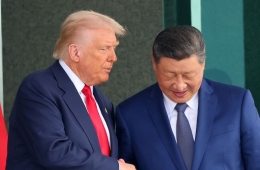
Park Gwang-nam of Mirae Asset Securities explained, “The Korean stock market showed strength due to easing macroeconomic risks and inflows of bargain hunting. The news of an agreement on a US-China summit within the year and the decline in energy prices partially alleviated inflation concerns, which positively affected the stock market.”
© The Asia Business Daily(www.asiae.co.kr). All rights reserved.