9 out of 10 Small and Medium Enterprises Not Ready for ESG Management
KCCI 'SME ESG Survey' Results
"Government K-ESG Indicators Should Strengthen Fair Trade Responsibilities of Large Corporations' Partners"

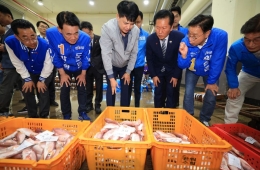
The Korea Federation of Small and Medium Business announced the results of the 'SME ESG Difficulty Survey,' conducted from August 30 to September 17 with 300 small and medium-sized enterprises, on the 30th. Photo by Korea Federation of Small and Medium Business
View original image[Asia Economy Reporter Kim Heeyoon] It has been revealed that 89.4% of small and medium-sized enterprises (SMEs) are completely unprepared for the adoption of ESG (Environmental, Social, and Governance) management, which is spreading across various industries.
The Korea Federation of SMEs announced on the 30th the results of the 'SME ESG Difficulty Survey' conducted from August 30 to September 17, targeting 300 SMEs.
The survey results showed that 53.3% of SMEs currently feel that 'ESG management adoption is necessary,' but 89.4% of companies feel that the adoption environment is 'not prepared (completely + almost) and difficult.'
Among SMEs that have experienced ESG evaluation requests (12.0%), 77.8% reported that these requests came from large corporations, the highest proportion. Following that, 'overseas clients' accounted for 22.2%.
When clients' evaluations fall short, the most common consequence was 'trade suspension if no improvement after improvement requests' (47.2%), indicating that ESG evaluations are actually affecting transactions. On the other hand, the level of support from clients requesting evaluations was high for responses such as 'none at all' (52.8%) and 'some support but hardly helpful' (30.6%).
Regarding the government-promoted K-ESG indicators, many respondents emphasized the need to highlight 'fair trade operation efforts by partner companies' (52.8%). The necessary elements for evaluation indicators were ranked as follows: 'efforts to reflect raw material price increases in delivery prices' (60.0%), 'payment and adjustment of appropriate delivery prices' (55.0%), 'whether fair contracts are concluded' (41.0%), and 'efforts to protect SME technology' (20.3%).
Yang Chanhoe, Head of the Innovation Growth Division at the Korea Federation of SMEs, stated, “The survey results show that SMEs collaborating with large corporations and exporting SMEs are already receiving ESG demands, and that evaluation results are affecting transactions.”
Hot Picks Today
 "Suspicious Timing?"...Trump Traded Stocks After Praising Wartime Capabilities
- [Breaking] Three basic local government heads and 510 local council members elected unopposed in the June 3 local elections
- "Even If I Lose My Investment, the Government Will Cover It"... The Fund Attracting Retail Investors' Attention [Weekend Money]
- There Is a Distinct Age When Physical Abilities Decline Rapidly... From What Age Do Strength and Endurance Drop?
- "Envious of Korean Daily Life"...Foreign Tourists Line Up in Central Myeongdong from Early Morning [Reportage]
He added, “To help SMEs establish an ESG management foundation, the government’s K-ESG indicators should further subdivide and expand fair trade indicators between large and small-medium enterprises. Large corporations should also strengthen their win-win efforts, such as facility establishment for ESG adoption and carbon neutrality promotion, rather than unilateral evaluations of partner companies, to respond efficiently to the low-carbon economy.”
© The Asia Business Daily(www.asiae.co.kr). All rights reserved.