"Fair Trade Act, Our Companies Competing Globally Face Business Activity Contraction... Needs Improvement"
Korea Employers Federation Holds Forum to Explore Development Directions of the Fair Trade Act
[Asia Economy Reporter Ki-min Lee] It has been pointed out that South Korea's Fair Trade Act excessively restricts the business activities of our companies competing globally and needs to be improved from a macro and strategic perspective.
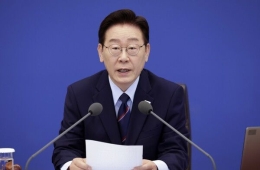
The Korea Employers Federation held a "Discussion on the Development Direction of the Fair Trade Act" on the 7th. In his opening remarks, KEF Chairman Kyung-sik Son said, "Recently, the business environment of our companies is changing faster than ever before, and efforts for innovation to survive and compete globally are becoming more intense," adding, "In this situation, our companies should not fall behind in changes or bear more burdens in competition with foreign companies due to excessive regulations compared to competing countries."
Academics participating in the discussion pointed out that South Korea's Fair Trade Act mainly relies on asset size and imposes preemptive regulations uniformly and unilaterally, which hinders the development of our companies competing worldwide. In particular, regulations such as those on internal transactions and holding companies are rarely found globally and are viewed as excessively restricting business activities.
Professor Jin-yeol Joo of the Graduate School of Law at Pusan National University, who presented at the event, stated, "In today's global market competition, global conglomerates are betting their lives on market dominance through disruptive innovation, the core of the Fourth Industrial Revolution." He diagnosed that if large companies lose in global competition and their sales decrease, the sales of small and medium-sized partner companies also decline, resulting in job losses. Professor Joo emphasized, "If Korea's competition law, the Fair Trade Act, imposes regulatory burdens on large companies that do not exist in other advanced countries just because they are large, Korean companies will be disadvantaged in global competition."
Professor Dae-sik Hong of the Graduate School of Law at Sogang University pointed out, "As the government's role is newly established, and laws and regulations in other fields seek new combinations or convergence, discussions and practices should be conducted on parts of the competition law that need to be maintained or strengthened and parts that should be harmonized, reduced, or readjusted with other laws and regulations."
Senior Researcher In-hak Hwang of the Corporate Law Research Institute argued, "The Fair Trade Act remains stuck in its original purpose of 'preventing economic power concentration' set in the early 1980s, and it is a Galapagos regulation that neither advanced legal systems nor countries with higher economic power concentration than Korea impose. The regulatory purpose should shift to preventing the abuse of economic power." Professor Young-soo Shin of the Graduate School of Law at Kyungpook National University also said, "With the advent of the data economy, the government urgently needs to establish new standards to resolve market uncertainties regarding newly emerging monopoly issues and corporate mergers."
Hot Picks Today
 "Stocks Are Not Taxed, but Annual Crypto Gains Over 2.5 Million Won to Be Taxed Next Year... Investors Push Back"
- "Don't Throw Away Coffee Grounds" Transformed into 'High-Grade Fuel' in Just 90 Seconds [Reading Science]
- Signed Without Viewing for 1.6 Billion Won... Jamsil and Seongbuk Jeonse Prices Jump 200 Million Won in a Month [Real Estate AtoZ]
- [Breaking] President Lee: "Sharing operating profit before taxes are deducted?... I don't understand"
- "Even With a 90 Million Won Salary and Bonuses, It Doesn’t Feel Like Much"... A Latecomer Rookie Who Beat 70 to 1 Odds [Scientists Are Disappearing] ③
Professor Se-jin Min of the Department of Economics at Dongguk University said, "Regarding platform regulations under the Fair Trade Act, Europe uses them to protect its own interests, while the United States is moving toward protecting the competitive process rather than simple competition protection," adding, "We must clearly recognize the impact and implications of these regulatory directions and support what should be supported and block what should be blocked."
© The Asia Business Daily(www.asiae.co.kr). All rights reserved.