[2022 Budget] 31 Trillion Won Invested to Support 2.11 Million Jobs... Mitigating Polarization in 5 Major Life Sectors Including Education and Healthcare
Creation of 2.11 Million Jobs... Expansion of Job-Seeking Allowance
41.3 Trillion KRW to Alleviate Polarization in Education, Housing, Healthcare, Care, and Culture
33.7 Trillion KRW for New Deal 2.0 Projects... Targeting a ‘Leap into the Future’
![[2022 Budget] 31 Trillion Won Invested to Support 2.11 Million Jobs... Mitigating Polarization in 5 Major Life Sectors Including Education and Healthcare](http://www.asiae.co.kr/news/img_view.htm?img=2021083110501499102_1630374614.jpg)
[Sejong=Asia Economy Reporters Kim Hyunjung, Moon Junsuk] The government will pour more than 31 trillion KRW into job projects next year to support the creation of approximately 2.11 million jobs. To alleviate polarization in five major sectors?education, housing, healthcare, care, and culture?it will allocate a budget in the 40 trillion KRW range, and invest about 34 trillion KRW in the Korean New Deal projects to drive ‘inclusive economic recovery’ and ‘leap forward.’
The Ministry of Economy and Finance announced the ‘2022 Budget Proposal’ with these details on the 31st. Hong Namki, Deputy Prime Minister and Minister of Economy and Finance, explained at a briefing held at the Government Seoul Office in Gwanghwamun, Seoul, in the morning, “The nation and its finances will serve as a life support system that ensures no one falls behind or is left out, reducing the gaps widened after COVID-19, and act as a ‘strong driving force leading a strong economy’ that moves forward together.”
◆ Creation of 2.11 Million Jobs... Expansion of Job-Seeking Allowance = The government’s job-related budget for next year (31.3 trillion KRW) is 1.2 trillion KRW (4.0%) higher than this year’s main budget (30.1 trillion KRW), which was the largest ever.
Through this, the government will provide 1.05 million direct public sector jobs, increasing by 40,000 from this year’s 1.01 million, targeting vulnerable employment groups such as the elderly and disabled. Most of these (845,000) are elderly jobs, while jobs for the disabled are about 27,000.
In the private sector, 1.06 million people will be supported through employment incentives and vocational training subsidies. A new ‘Youth Job Leap Incentive’ has been introduced in private employment incentives, providing up to 9.6 million KRW per person annually in labor costs when small and medium enterprises hire vulnerable youth. The Youth Tomorrow Savings Program, which helps young employees in SMEs accumulate 3 million KRW over two years with the government providing a lump sum of 12 million KRW, will expand its support target to 70,000 people. Additionally, job-seeking promotion allowances of 500,000 KRW per person per month for six months will be paid to low-income job seekers, and the target for Type 1 support under the National Employment Support System, which provides employment support services, will be expanded by 100,000 to 500,000 people. The budget for job-seeking benefits will slightly increase to about 11.5339 trillion KRW compared to this year.
The budget exclusively for youth will expand to 23.5 trillion KRW, an increase of 3.3 trillion KRW from this year. For university students, the national scholarship support amount will be raised so that more than 1 million students can benefit from ‘half-price tuition.’ For low-income youth with an annual income below 24 million KRW, the government will provide support of 1 to 3 times the monthly savings of 100,000 KRW, allowing them to receive up to 14.4 million KRW after three years. A new Social Reintegration Preparation Fund will be established, where the government matches a certain amount in the Military Tomorrow Savings, enabling soldiers to receive up to 10 million KRW upon discharge.
![[2022 Budget] 31 Trillion Won Invested to Support 2.11 Million Jobs... Mitigating Polarization in 5 Major Life Sectors Including Education and Healthcare](http://www.asiae.co.kr/news/img_view.htm?img=2021081815321782324_1629268336.jpg)
◆ 41.3 Trillion KRW to Alleviate Polarization in Education, Housing, Healthcare, Care, and Culture = The government will spend 41.3 trillion KRW to alleviate polarization in five major sectors: education, housing, healthcare, care, and culture. First, it will provide differential support for medical expenses, covering 50% of out-of-pocket costs for up to 80% of basic and lower-income groups, 70% for those below 50% of the median income, and 60% for those below 100% of the median income.
In education, a new annual special learning voucher of 100,000 KRW will be provided to 310,000 low-income elementary, middle, and high school students. Employment incentives for vocational high school students who get jobs at small and medium enterprises will be increased from 4 million KRW to 5 million KRW per person.
In terms of housing support, the government plans to supply 210,000 new public rental housing units and offer interest-free monthly rent loans (200,000 KRW per month) for youth with annual incomes below 50 million KRW. Additionally, the government will support up to 90% of childcare costs for youth and grandparent-headed families, and increase salaries for social welfare facility workers such as youth shelters by up to 9.4%. Care hours for people with developmental disabilities will increase from 100 to 120 hours per month, and families with severely disabled children exceeding 120% of median income will also be eligible for care support.
The target for the three major cultural voucher supports for low-income groups will increase from 1.94 million to 2.45 million people. They will receive benefits such as 100,000 KRW annually for cultural activities, sports class vouchers worth 80,000 KRW, and youth book tokens worth 12,000 KRW annually for book exchanges.
◆ 33.7 Trillion KRW for New Deal 2.0 Projects... Targeting a ‘Leap into the Future’ = The Korean New Deal, one of the Moon Jae-in administration’s core strategies, has been allocated a budget of 33.7 trillion KRW. In particular, 6.2 trillion KRW will be invested in strengthening the so-called ‘D.N.A’ ecosystem?data, network, and artificial intelligence (AI)?within the Digital New Deal sector, and 500 billion KRW will be spent on expanding and advancing non-face-to-face infrastructure such as education and healthcare. A new sector for fostering ultra-connected new industries for metaverse and intelligent robot industries has been established, with 800 billion KRW allocated.
For the ‘Green New Deal’ aimed at becoming a global green powerhouse, 13.3 trillion KRW is expected to be spent. It will allocate 1.1 trillion KRW to build a carbon-neutral foundation by expanding support for business transitions to low-carbon industries and establishing a business restructuring support base, and 3.5 trillion KRW will be poured into the green transition of urban, spatial, and living infrastructure by promoting Green Smart Schools and Smart Green Cities. Additionally, about 6.8 trillion KRW will be used for projects to promote green mobility such as hydrogen and electric vehicles and eco-friendly ships. Due to the government’s full-scale carbon neutrality projects, the environmental sector will see the largest increase in next year’s budget at 12.4%.
Hot Picks Today
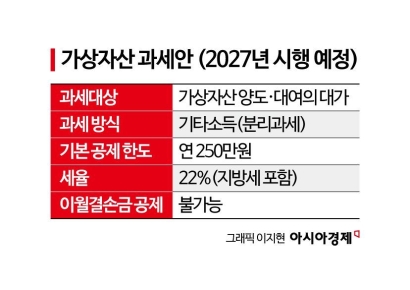 "Stocks Are Not Taxed, but Annual Crypto Gains Over 2.5 Million Won to Be Taxed Next Year... Investors Push Back"
- "Not Jealous of Winning the Lottery"... Entire Village Stunned as 200 Million Won Jackpot of Wild Ginseng Cluster Discovered at Jirisan
- "Jeong Yu-kyung Is a Neighbor"...Itaewon Standalone House with Record 23.2 Billion Won Appraisal Up for Auction [Real Estate AtoZ]
- "How Did an Employee Who Loved Samsung End Up Like This?"... Past Video of Samsung Electronics Union Chairman Resurfaces
- "Even With a 90 Million Won Salary and Bonuses, It Doesn’t Feel Like Much"... A Latecomer Rookie Who Beat 70 to 1 Odds [Scientists Are Disappearing] ③
© The Asia Business Daily(www.asiae.co.kr). All rights reserved.