Local Consumption Tax Increased by 4.3% Over 3 Years... Establishment of Local Extinction Response Fund
Announcement of Local Fiscal Innovation Measures at the 'Jibang Jaeseong Jeonlyak Hoeui'
Gradual Increase of Local Consumption Tax from 21% to 23.7% to 25.3%
Establishment of 1 Trillion Won Local Extinction Response Fund to Support Infrastructure in Underdeveloped Areas

The government will increase the local consumption tax by 4.3% and establish a Local Extinction Response Fund to expand local finances by more than 5 trillion won annually.
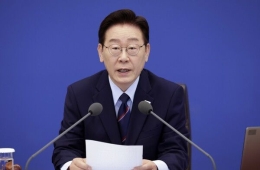
On the 11th, the Ministry of the Interior and Safety held the '2021 Local Finance Strategy Meeting' at the Government Seoul Office and announced these local finance innovation measures.
According to the plan, the local consumption tax will gradually increase over three years: 21% this year, 23.7% next year, and 25.3% in 2023. As a result, the ratio of national tax to local tax, which was 73.7 to 26.3 in 2020, will change to 72.6 to 27.4. The increased local consumption tax will first compensate for the amount corresponding to the scale of regional function transfers of national subsidy projects, and the remaining amount will be distributed by multiplying the private final consumption expenditure by region. The distribution ratio between metropolitan and basic local governments is 6 to 4. The local consumption tax is a portion of the value-added tax, a national tax, which the state allocates to local governments without a separate collection procedure.
A 1 trillion won Local Extinction Response Fund will also be established to improve infrastructure in underdeveloped areas. It will be concentrated in underdeveloped regions considering population, area, local extinction level, and financial capacity, and local governments will operate it by setting investment plans. 25% will be allocated to metropolitan governments and 75% to basic local governments. To ease the local financial burden, the national subsidy rate for basic local governments will also be increased. The Ministry of the Interior and Safety plans to actively respond to ensure that six bills, including the Local Tax Act and the Value-Added Tax Act containing these measures, pass the National Assembly in September.
The Ministry of the Interior and Safety has also prepared 12 improvement tasks to expand the autonomy of local finance expenditures. Budget reallocation to projects other than originally planned is allowed only for disaster responses such as COVID-19. When promoting public housing development projects such as the 3rd New Town, the bond issuance limit of local public enterprises will be increased from 300% to 350% for metropolitan development corporations and from 200% to 230% for basic city corporations. Projects exempted from preliminary feasibility studies when promoting regional development projects will be excluded from investment review. To reduce financial disparities between regions, an innovation plan for local grants to strengthen financial support for underdeveloped areas facing population extinction risks has also been prepared.
Hot Picks Today
 "Stocks Are Not Taxed, but Annual Crypto Gains Over 2.5 Million Won to Be Taxed Next Year... Investors Push Back"
- "Don't Throw Away Coffee Grounds" Transformed into 'High-Grade Fuel' in Just 90 Seconds [Reading Science]
- Signed Without Viewing for 1.6 Billion Won... Jamsil and Seongbuk Jeonse Prices Jump 200 Million Won in a Month [Real Estate AtoZ]
- [Breaking] President Lee: "Sharing operating profit before taxes are deducted?... I don't understand"
- "Even With a 90 Million Won Salary and Bonuses, It Doesn’t Feel Like Much"... A Latecomer Rookie Who Beat 70 to 1 Odds [Scientists Are Disappearing] ③
Jeon Hae-cheol, Minister of the Interior and Safety, said, "Since the direction such as increasing the local consumption tax rate and establishing the Local Extinction Response Fund has been set, we will prepare detailed operational plans that metropolitan and basic local governments can agree on," adding, "We will collect opinions from the National Assembly, local governments, and private experts to promptly propose bills and aim to pass related bills in September so that next year's budget can be stably prepared."
© The Asia Business Daily(www.asiae.co.kr). All rights reserved.