"Overcoming China's Semiconductor Rise Early On"... Acceleration of US-Japan-Taiwan Tripartite Alliance
TSMC Considers Factory Construction in Japan
Japan Was World's No.1 30 Years Ago
Striving to Regain Past Glory
US Increases Aggressive Investment Since Biden's Inauguration
Working to Secure Stable Supply Chain
![[Image source=Reuters Yonhap News]](http://www.asiae.co.kr/news/img_view.htm?img=2021071611144337208_1626401684.jpg)
[Asia Economy Reporter Kwon Jae-hee] Recently, as the world experienced a semiconductor shortage crisis and realized that semiconductors are directly linked to national security, countries worldwide are competitively promoting semiconductor development. In particular, the United States and Japan, former semiconductor powerhouses, are fostering the semiconductor industry at the national level to regain their past glory. To counter China's semiconductor rise, the US, Japan, and Taiwan are accelerating their semiconductor alliance.
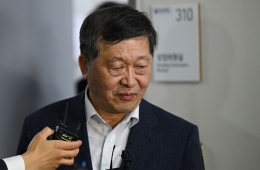
According to major foreign media such as Nihon Keizai Shimbun and The Wall Street Journal (WSJ) on the 16th, during an online Q2 earnings conference call held the previous day, Wei Zhejia, CEO of Taiwan's TSMC, hinted at building a factory in Japan.
CEO Wei Zhejia stated, "We are currently in the review stage regarding the construction of our first factory in Japan," adding, "We are proceeding with all possibilities in mind." He further said, "We will make a final decision based on future customer demand."
This is not the first time TSMC's entry into Japan has been rumored. Earlier, Nihon Keizai Shimbun reported last month, citing sources, that TSMC was considering building a large-scale semiconductor factory using 300mm silicon wafers in Kumamoto Prefecture, Japan. However, TSMC had not commented on this until now, when it officially announced the construction of a factory in Japan.
TSMC's announcement of building a factory in Japan came as the Japanese government strives to strengthen its domestic semiconductor industry, reaffirming the semiconductor partnership between Taiwan and Japan.
In 1988, Japan's global semiconductor market share led the world, accounting for more than 50% of the global semiconductor market, but it sharply dropped to 10% by 2019. As a result, the Japanese government currently imports 64% of its semiconductors.
Especially recently, as the global semiconductor shortage worsened, the Japanese government has actively promoted the semiconductor industry. In May, the Japanese government announced that it would provide subsidies worth 200 billion yen if TSMC establishes a semiconductor research and development complex in Ibaraki Prefecture, Japan. Jiji Press evaluated this move, saying, "Against the backdrop of semiconductor supply shortages and US-China confrontations, the global semiconductor supply chain is being reconsidered as a worldwide challenge, and TSMC is considering Japan, where it has major customers."
The United States has also been strategically fostering the semiconductor industry since President Joe Biden took office. Recently, the Biden administration announced a bill to invest $52 billion (about 60 trillion won) in the semiconductor industry, supporting the sector. This bill is passing through the White House and the Senate and is awaiting approval in the House of Representatives. The Biden administration's approval of the US Innovation and Competition Act (USICA) is also aimed at resolving the semiconductor supply chain crisis and securing a stable semiconductor supply chain.
Hot Picks Today
 "Stocks Are Not Taxed, but Annual Crypto Gains Over 2.5 Million Won to Be Taxed Next Year... Investors Push Back"
- [Breaking] Samsung Electronics Union: "Mediation Ends Due to Management's Rejection... General Strike Tomorrow"
- "Not Jealous of Winning the Lottery"... Entire Village Stunned as 200 Million Won Jackpot of Wild Ginseng Cluster Discovered at Jirisan
- "Looks Even More Like Him in Person": Crowds Gather to See 'Trump Lookalike' Albino Buffalo
- "Even With a 90 Million Won Salary and Bonuses, It Doesn’t Feel Like Much"... A Latecomer Rookie Who Beat 70 to 1 Odds [Scientists Are Disappearing] ③
China, which had led the semiconductor rise, has recently shown signs of faltering. On the 11th, Huishang Bank, a creditor of Tsinghua Unigroup, filed for bankruptcy restructuring at the Beijing court in China. The reason cited was that Tsinghua Unigroup lacks the ability to repay maturing debts and does not have sufficient assets to cover all liabilities. Tsinghua Unigroup's total debt is known to reach 202.9 billion yuan (about 35.9 trillion won). The bankruptcy of Tsinghua Unigroup appears to be due to liquidity crises caused by aggressive business expansion despite lacking core technology. Additionally, the comprehensive pressure from the US, which is competing with China for technological supremacy, is also analyzed to have had an impact.
© The Asia Business Daily(www.asiae.co.kr). All rights reserved.