Naiju Bank of Korea Monetary Policy Committee... "Minority opinions expected, rate hikes possible in July-August"
"If More Than Two Dissenting Opinions Arise, Interest Rate Hike in August"

[Asia Economy Reporter Kim Eunbyeol] There is growing speculation that a minority opinion supporting a base interest rate hike will emerge at the Bank of Korea's Monetary Policy Committee meeting scheduled for next week. Although the base rate is expected to remain unchanged in July, it is analyzed that the appearance of a rate hike-supporting opinion will send a preemptive message to the market. If there are two or more minority opinions, it is highly likely that the base rate will be raised immediately in August. If only one minority opinion emerges, the prevailing view is that the rate hike will likely occur in the fourth quarter (October). Although less likely, the scenario of raising rates this time without any minority opinion cannot be ruled out.
According to a compilation of statements from inside the Bank of Korea and market experts on the 6th, the upcoming Monetary Policy Committee meeting on the 15th is expected to keep the base rate unchanged but may see minority opinions favoring a rate hike. This is based on the judgment that the historically low base rate of 0.50% per annum, lowered to the lowest level ever last year in response to the COVID-19 crisis, has instead increased household debt and driven up housing prices and stock prices. The minutes of the Monetary Policy Committee already confirm a consensus that the base rate should be raised to some extent. Following last week's meeting between Bank of Korea Governor Lee Ju-yeol and Deputy Prime Minister and Minister of Economy and Finance Hong Nam-ki, the government has effectively supported a rate hike, meaning that only implementation remains.
Im Seon, a researcher at Hana Financial Investment, said, "Most Monetary Policy Committee members probably agree on the necessity of a rate hike, but it will be difficult for all to support it at once," adding, "Since minority opinions themselves are a way to communicate with the market, it is highly likely that the Bank of Korea will adjust minority opinions with a plan and intention."
She continued, "If two or more minority opinions emerge at next week's meeting, a rate hike is expected in August. If only about one minority opinion appears, it can be interpreted that the Bank of Korea will make a decision after reviewing the revised economic outlook in August and raise rates around October." The Bank of Korea will announce the revised economic outlook on August 26 and make another rate decision. From August 26 to 28 (local time), the Federal Reserve is also expected to announce its tapering (asset purchase reduction) plan at the Jackson Hole meeting in Wyoming, USA.
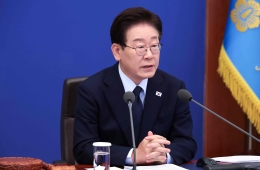
![Bank of Korea Governor Lee Ju-yeol is speaking at the Monetary Policy Committee meeting held at the Bank of Korea in Jung-gu, Seoul, on the morning of May 27. [Image source=Yonhap News]](http://www.asiae.co.kr/news/img_view.htm?img=2021061901430986765_1624034589.jpg)
Bank of Korea Governor Lee Ju-yeol is speaking at the Monetary Policy Committee meeting held at the Bank of Korea in Jung-gu, Seoul, on the morning of May 27. [Image source=Yonhap News]
View original imageDaishin Securities recently revised its base rate hike forecast from once to twice this year following the meeting between the two economic chiefs. Gong Dong-rak, an economist at Daishin Securities, said, "They have formalized policy coordination to maintain expansionary fiscal policy while raising rates, which is a decision considering financial stability," adding, "Since household debt has already increased, raising rates too much would be burdensome, so it is appropriate to raise rates twice and then monitor the situation with some time lag."
Earlier, JP Morgan identified Monetary Policy Committee members Jo Yoon-je and Lim Ji-won as the most hawkish (favoring monetary tightening) figures in its analysis report. The minutes of the Monetary Policy Committee show that except for Ju Sang-young, who clearly opposed a rate hike, most members agreed on the necessity of raising rates citing reasons such as asset price surges and rapid loan growth. The consumer price inflation rate, although influenced by base effects, remains supported at around 2%. However, whether an immediate rate hike is appropriate and whether minority opinions will actually emerge considering the recent increase in the COVID-19 Delta variant remains to be seen. The rapid spread of the COVID-19 Delta variant domestically is also a variable that could influence decisions.
Hot Picks Today
 "Samsung and Hynix Were Once for the Underachievers"... Hyundai Motor Employee's Lament
- After Topping 8,000 Instead of Hitting 10,000... KOSPI Plunges—When Will It Rebound?
- "They Said It's Impossible to Get—Already Selling for Triple the Price: Crowds Worldwide Line Up for $600 Luxury Watch"
- Real Estate PF Fees Reduced from 32 to 11 Types... Penalty and Maturity Extension Fees Abolished
- "That? It's Already Stashed" Nightlife Scene Crosses the Line [ChwiYak Nation] ③
© The Asia Business Daily(www.asiae.co.kr). All rights reserved.