Jung Sye-kyun: "Underground Railways in 5 Major Cities for National Balanced Development"
![[Image source=Yonhap News]](http://www.asiae.co.kr/news/img_view.htm?img=2021062714155497845_1624770953.jpg)
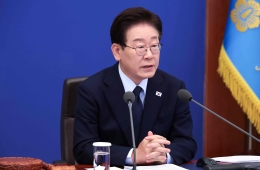
[Asia Economy Reporter Jeon Jinyoung] Jeong Se-gyun, a ruling party presidential candidate and former Prime Minister, announced on the 30th a presidential pledge to underground five major city railways (Seoul, Daejeon, Daegu, Busan, Gwangju) to promote national balanced development and create future-oriented urban environments.
In his second pledge announcement that day, former Prime Minister Jeong stated the necessity of undergrounding, saying, “Citizens suffer greatly from chronic noise, vibration, dust, and slumification near the railway lines, and the socio-economic losses to local communities are enormous.”
He added, “Recently, we have experienced successful cases of urban railway undergrounding such as the Gyeongui Line Forest Trail,” and said, “At the point where we are heading toward a national income of $40,000, urban railway undergrounding has become an unavoidable task of the times.”
He continued, “We must connect urban areas divided by railways, promote future-oriented urban development, and enable citizens to enjoy a comfortable environment free from noise and dust as soon as possible.” He emphasized, “By undergrounding urban railways and building parks, cultural facilities, sports facilities, and residential facilities on the resulting national and public land, these cities will become world-renowned attractions and their competitiveness will increase. This will accelerate national balanced development.”
Former Prime Minister Jeong mentioned the sections currently under consideration for undergrounding: approximately 32 km from Seoul Station to Dangjeong Station, 13 km on the Gyeongbu Line from Daejeon Shindaedong to Panam Interchange, 11 km from Seodaegu Station to Gomo Station, 13.1 km from Gupo Station to Busanjin Station in Busan, and 14 km from Gwangju Station to Songjeong Station.
He said, “The main obstacle to railway undergrounding has been budget issues,” and explained, “The project budget will be resolved by attracting private capital through selling part of the railway land to the private sector or transferring land use rights. Any remaining shortfall will be covered by some government funding.”
Hot Picks Today
 "Samsung and Hynix Were Once for the Underachievers"... Hyundai Motor Employee's Lament
- "Plunged During the War, Now Surging Again"... The Real Reason Behind the 6% One-Day Silver Market Rally [Weekend Money]
- "They Said It's Impossible to Get—Already Selling for Triple the Price: Crowds Worldwide Line Up for $600 Luxury Watch"
- Korea and ASEAN to Strengthen Supply Chain Cooperation... FTA Digital Rules to Be Revised
- "That? It's Already Stashed" Nightlife Scene Crosses the Line [ChwiYak Nation] ③
He added, “If we can restore urban functions, promote balanced development, and improve citizens’ quality of life, we should not keep complaining about the budget indefinitely,” and concluded, “Through bold undergrounding of urban railways, we will create a strong Republic of Korea with rapidly rising urban competitiveness.”
© The Asia Business Daily(www.asiae.co.kr). All rights reserved.