"If the US Rejoins CPTPP, E-commerce Regulations Could Be Strengthened"
3rd CPTPP Trade Forum Held
Stronger E-commerce Rules Expected if US Rejoins
"Korea Should Objectively Assess Benefits Before Joining CPTPP"

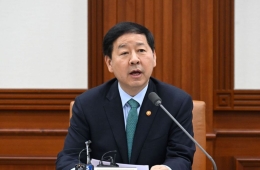
Woo Tae-hee, Executive Vice President of the Korea Chamber of Commerce and Industry, is speaking at the '2nd Comprehensive and Progressive Agreement for Trans-Pacific Partnership (CPTPP) Trade Forum' held on the 28th at the Korea Chamber of Commerce and Industry in Jung-gu, Seoul. Photo by Kang Jin-hyung aymsdream@
View original image[Asia Economy Reporter Hwang Yoon-joo] Opinions have emerged that the Comprehensive and Progressive Agreement for Trans-Pacific Partnership (CPTPP) membership should be carefully decided after objectively assessing its practical benefits. In particular, as the United States is expected to strengthen e-commerce regulations if it rejoins the CPTPP, it has been pointed out that the Korean government should prepare policy alternatives in advance to prevent domestic companies from suffering disadvantages.
The Korea Chamber of Commerce and Industry (KCCI), together with the law firm Sejong, held the 3rd CPTPP Trade Forum on the 29th under the theme "Prospects for U.S. CPTPP Rejoining and Korea's Response Strategy." This forum was organized to hear expert opinions on the prospects of the U.S. rejoining the CPTPP and Korea's response strategies, and to discuss domestic acceptance of strengthened obligations and new trade norms upon accession.
Attendees at the meeting included Woo Tae-hee, Executive Vice President of KCCI; Kim Doo-sik, Chief Attorney at Sejong Law Firm; Na Seung-sik, Deputy Minister for Trade at the Ministry of Trade, Industry and Energy; Professor Ahn Deok-geun of Seoul National University; and Senior Research Fellow Jeong Cheol of KIEP, representing government, academia, research institutes, and business sectors. Simon Lester, Deputy Director of the CATO Institute in the U.S., participated via video conference from Washington D.C.
Simon Lester, who gave the first presentation, stated, "The progressive and labor groups, traditional supporters of the U.S. Democratic Party, are somewhat skeptical about free trade, so it is unlikely that President Biden will actively pursue CPTPP rejoining against their opposition. In the short term, the U.S. will not push for CPTPP rejoining, but when renegotiations occur in the future, existing provisions will be significantly revised."
He continued, "It has been four years since Trump withdrew from the TPP, and now the situation has returned to square one, with CPTPP being one of several options. Korea should decide on CPTPP membership by assessing its practical benefits under the assumption that the U.S. will not rejoin."
Park Kyung-jin, Sejong Senior Fellow: "U.S. Leading Trend of Strengthening Digital Trade Norms, U.S. CPTPP Rejoining Status Is Important"
There is also a forecast that if the U.S. rejoins the CPTPP, digital trade norms could be strengthened beyond existing trade agreements. While the Korea-U.S. FTA only presented the principle recognizing the importance of the free flow of information regarding data governance, the CPTPP includes various provisions such as personal data protection, prohibition of localizing computer facilities, and cybersecurity issues.
Park Kyung-jin, Senior Fellow at Sejong, explained, "The biggest difference between the Korea-U.S. FTA and the CPTPP e-commerce chapters is that e-commerce, which was previously understood as merely online shopping, has evolved into digital trade norms encompassing data and information transfers."
He added, "Regarding the CPTPP e-commerce chapter, the U.S. decision to rejoin is a crucial variable," and "recent agreements like the USMCA, concluded by the U.S., have established digital trade norms that are stronger than those in the CPTPP."
Additionally, advice was given to be cautious about further opening the agriculture and livestock sectors if Korea decides to join the CPTPP. This is because Japan, aiming to expand agricultural and food export opportunities targeting the Korean market during accession negotiations, may exert strong pressure for liberalization related to agricultural and food product concessions.
Experts attending the forum agreed that the e-commerce norms have gradually become more concrete through the Korea-U.S. FTA, CPTPP, and USMCA, reflecting a broad consensus on the goals of personal data protection and the free flow of information.
Hot Picks Today
 "How Do Six People Sleep in a 44㎡ Apartment?" ...
- "Why Are the Same Shares Priced Differently?" Will SK hynix Also See a 'U.S. Lis...
- "If You Have This at Home, Remove It Immediately"... 'This Item' Is as Harmful a...
- "Never Hike Alone as a Woman" "Even Two Are at Risk"... Growing Fear of Crime on...
- "You Can Only Have This in Korea": Which National Museum Cafe Menu Is Captivatin...
They also concurred that, given that six months have passed since President Biden took office and the U.S. government and Democratic Party's priority remains domestic issues, the question of the U.S. rejoining the CPTPP should be reconsidered from the beginning.
© The Asia Business Daily(www.asiae.co.kr). All rights reserved.
![Epic "1,500 Trillion Won Bill"... In the End, the Poor Pay the Price [Data Pick]](https://cwcontent.asiae.co.kr/asiaresize/307/2026042310001637425_1776906017.jpg)