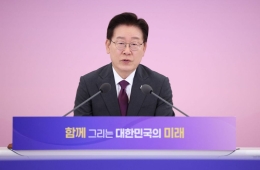
Hong Nam-ki: "Legislation to Ensure No Tax Operation Issues for Top 2% of Comprehensive Real Estate Tax"
Ministry of Economy and Finance Presents Legal Basis... Specific Amounts Delegated to Enforcement Decree
![[Image source=Yonhap News]](http://www.asiae.co.kr/news/img_view.htm?img=2021062311234092661_1624415020.jpg)
[Asia Economy Reporter Jang Sehee] Hong Nam-ki, Deputy Prime Minister and Minister of Economy and Finance, expressed a positive stance on the proposal to impose the comprehensive real estate holding tax (종부세) on the top 2% as decided by the Democratic Party as party policy, accelerating the discussion. Since the government also views the proposal as not violating the principle of taxation by law, it plans to begin preparing the bill promptly.
On the 23rd, Deputy Prime Minister Hong attended the National Assembly's Planning and Finance Committee plenary session and stated, "The government has also considered other ways to ease the increased tax burden on single-home households subject to the 종부세," adding, "The top 2% criterion was discussed with government participation during the National Assembly deliberations." He further said, "We will negotiate to ensure the legislation is enacted within the scope that does not pose any issues in tax administration."
Hong also said, "The government's review opinion was not specifically the 2% threshold, but it is desirable from the perspective of the principle of taxation by law to clearly define the taxable subjects in the law." He added, "However, considering similar legislative precedents, I think it will not be difficult." Although it was not originally a government proposal, there is no technical problem in preparing the bill.
As similar cases, Hong cited ▲ the 900 million KRW threshold for capital gains tax ▲ the non-taxation criteria for single-home households being stipulated in enforcement ordinances. Since there are similar cases in other tax laws, it is not considered a violation of the principle of taxation by law.
Earlier, the ruling party rebutted claims that the 2% imposition plan violates the principle of taxation by law by citing examples from the Comprehensive Real Estate Holding Tax Act, Local Tax Act, and Individual Consumption Tax Act. According to materials from the ruling party's caucus meeting, Article 1 of the Individual Consumption Tax Act states, "In cases where tax rates on taxable goods are adjusted, the limit of the difference between the calculated tax amount based on the original rate and the adjusted rate may be set by Presidential Decree within the range of 1 million KRW per taxable good."
The Ministry of Economy and Finance plans to present the legal basis and delegate the specific amounts to enforcement ordinances. Once the official public price of apartment complexes, finalized every April, is determined, the enforcement ordinance will be revised to identify the subjects of the 종부세 for that year.
However, the opposition party holds the position that the top 2% plan violates the constitutional right to equality. Ryu Seong-geol, a member of the People Power Party, said, "Imposing a tax on 2% of the population, rather than on all citizens with specific exclusions, violates the constitutional right to equality," and requested, "Please submit data on whether there are domestic or international cases of taxation on the top 2%." Because of this, intense disputes between the ruling and opposition parties are expected after the government-party discussions.
Hot Picks Today
 At President Lee's Call to "Give Enough to Shock," Whistleblower Rewards Become a Real Lottery
- If a Samsung Electronics Employee with a 100 Million Won Salary Receives a 600 Million Won Performance Bonus, Taxes Total 247.19 Million Won
- Lived as Family for Over 30 Years... Daughter-in-Law Cast Aside After Husband's Death
- "White House Blocks Repatriation of 'Ebola-Infected' Doctor... Ultimately Transferred to Germany"
- "4.15 Million Won Prada Jacket Shows White Spots After One Wear"...Korea Consumer Agency Orders Full Refund
The 종부세 bill is expected to be proposed in the form of a member's bill. A Planning and Finance Committee official said, "We plan to proceed with legislation for the prompt handling of the 종부세 law," adding, "Since the special committee's proposal has been confirmed as party policy, the leadership will organize and prepare the bill."
© The Asia Business Daily(www.asiae.co.kr). All rights reserved.