Summer Jeonse Cliff... Seoul Listings '20,000 Unit Wall' Collapsed
Seoul Apartment Jeonse Listings 19,734
Below 20,000 for the First Time in 5 Months
More Than 20% Decrease in 15 Days in Dongjak, Gwanak, Mapo, etc.
Only Jungnang Among 25 Districts Shows Increase
New Lease Law Worsens Supply-Demand Imbalance
![The photo shows the view of apartments in the Gangnam area of Seoul from Daemosan Mountain on the 11th [Image source=Yonhap News]](http://www.asiae.co.kr/news/img_view.htm?img=2021061810444486030_1623980684.jpg)
The photo shows the view of apartments in the Gangnam area of Seoul from Daemosan Mountain on the 11th [Image source=Yonhap News]
View original image[Asia Economy Reporter Onyu Lim] The barrier of 20,000 apartment jeonse listings in the Seoul area has collapsed. Amid the implementation of the new Housing Lease Protection Act and a decrease in new housing supply, the supply-demand imbalance in the jeonse market is becoming entrenched, raising concerns about a "summer jeonse crisis."
According to 'Apartment Real Transaction Price,' a real estate big data company, as of the 21st, the total number of apartment jeonse listings in Seoul was counted at 19,734. It is the first time in five months since January 21 that the number of jeonse listings has fallen below 20,000. After recording 19,881 listings on January 21, Seoul apartment jeonse listings steadily maintained the 20,000 range with △ 21,893 in February △ 23,665 in March △ 23,579 in April △ 21,396 in May.

In particular, the decline in jeonse listings has accelerated recently in some autonomous districts. A representative area is Dongjak-gu, which is under the influence of relocation demand due to reconstruction in the Seocho-gu area. Jeonse listings in this area stood at 490, sharply dropping 23.4% compared to 639 listings 15 days ago. During the same period, Gwanak-gu decreased from 306 to 240 listings, down 21.6%, and Mapo-gu from 997 to 793 listings, down 20.5%. Additionally, the decrease in listings has been significant in Eunpyeong (-18.3%), Yangcheon (-16.4%), Yongsan (-16.0%), and Yeongdeungpo (-14.5%) districts. Among the 25 autonomous districts during this period, Jungnang-gu (12.1%) was the only area where jeonse listings increased.
Experts diagnose that structural factors such as an increase in contract renewals due to the new lease law and a decrease in new housing supply are intensifying the supply-demand imbalance in Seoul's jeonse market. Park Won-gap, Senior Real Estate Specialist at KB Kookmin Bank, analyzed, "The new lease law, introduced to stabilize tenants' housing, paradoxically worsened the jeonse shortage by causing a decrease in listings and a rise in jeonse prices."
Hot Picks Today
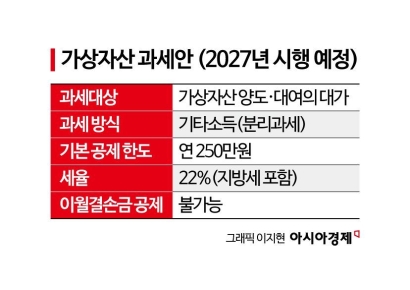 "Stocks Are Not Taxed, but Annual Crypto Gains Over 2.5 Million Won to Be Taxed Next Year... Investors Push Back"
- "Not Jealous of Winning the Lottery"... Entire Village Stunned as 200 Million Won Jackpot of Wild Ginseng Cluster Discovered at Jirisan
- "Even With a 90 Million Won Salary and Bonuses, It Doesn’t Feel Like Much"... A Latecomer Rookie Who Beat 70 to 1 Odds [Scientists Are Disappearing] ③
- Supreme Court Orders NH Investment to Pay 7.5 Billion Won to Ottogi... 'Optimus Fund Mis-selling' Confirmed
- "How Did an Employee Who Loved Samsung End Up Like This?"... Past Video of Samsung Electronics Union Chairman Resurfaces
© The Asia Business Daily(www.asiae.co.kr). All rights reserved.







