The World's Largest Meat Company Hacked, Loses 12 Billion Won in Bitcoin to Hackers
![[Image source=Reuters Yonhap News]](http://www.asiae.co.kr/news/img_view.htm?img=2021061009573373447_1623286653.jpg)
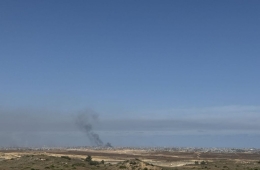
[Asia Economy Reporter Kwon Jae-hee] On the 30th of last month, JBS, the world's largest meat company, which was targeted by a ransomware attack (a hacking method that paralyzes computer networks to demand money) by a Russian hacker group, reportedly paid the hacker group approximately $11 million (about 12 billion KRW) worth of Bitcoin.
According to the Wall Street Journal (WSJ) on the 9th (local time), Andre Nogueira, CEO of JBS USA, explained the reason behind the Bitcoin payment, stating, "JBS paid to prevent greater damage to its meat plants and to stop further repercussions in the food and livestock industries."
He added, "Although paying criminals is painful, it was a decision made for our customers," and explained, "Thanks to the payment, JBS's plants were able to resume operations." He also mentioned that most of JBS's plants were operational before the Bitcoin payment was made.
Previously, JBS is the world's largest meat company that sells and processes beef, chicken, and pork in Australia, South America, and Europe.
Earlier, on the 30th of last month, JBS suffered a hacking attack that halted operations at some plants in North America and Australia. This incident occurred just one month after Colonial Pipeline, the largest U.S. pipeline operator, was targeted by a ransomware attack from the hacker group 'DarkSide,' raising concerns that major supply chains are becoming targets of cyberattacks. Colonial Pipeline paid DarkSide approximately $4.4 million (about 490 million KRW) worth of Bitcoin as ransom. The FBI recovered about 85% of that amount.
The U.S. Federal Bureau of Investigation (FBI) announced three days after the attack that "the cyberattack on JBS was carried out by the Russian ransomware groups REvil and Sodinokibi."
Nogueira, CEO of JBS USA, said, "On the 30th of last month, right after the IT department noticed some servers malfunctioning, they found a message demanding money to regain access to the network," and added, "We immediately reported this to the FBI."
He continued, "External advisors of the company negotiated the ransom amount with the hackers," and "We continuously reported all these processes to federal investigative agencies."
Hot Picks Today
 At President Lee's Call to "Give Enough to Shock," Whistleblower Rewards Become a Real Lottery
- If a Samsung Electronics Employee with a 100 Million Won Salary Receives a 600 Million Won Performance Bonus, Taxes Total 247.19 Million Won
- Lived as Family for Over 30 Years... Daughter-in-Law Cast Aside After Husband's Death
- "Who Is Visiting Japan These Days?" The Once-Crowded Tourist Spots Empty Out... What's Happening?
- Park Minshik Shaves Head: "I Will End Han Donghoon's Predatory and Parasitic Politics"... Ongoing Calls for Conservative Consolidation in Busan Buk-gu Gap within PPP
WSJ analyzed that "the targets of ransomware attacks by hacker groups are shifting from financial and distribution industries to essential service industries such as hospitals, transportation, and food."
© The Asia Business Daily(www.asiae.co.kr). All rights reserved.