"Crying 'Livelihood Crisis Upon Entry of Complete Vehicles'... But Ignoring Consumer Damage"
The Domestic Used Car Market is a Representative Entry-Regulated Industry
Frequent Occurrences of False Listings, Mileage Manipulation, Fraud, and Forced Sales

[Asia Economy Reporter Changhwan Lee] The used car industry, where consumer damages such as fraudulent listings and odometer tampering, as well as forced sales, continue to occur, is also a representative industry with entry regulations.
Many consumers hope that the domestic used car market, which is opaque and chaotic, will become more transparent with the entry of domestic automakers, but it is pointed out that the situation has not improved due to opposition from the used car industry and government regulations.
According to the automotive industry on the 26th, the complete car industry including Hyundai Motor Company and the Korea Automobile Manufacturers Association, and the used car industry including the Korea Used Car Dealers Association Federation and the National Used Car Dealers Association Federation plan to launch the "Automobile Industry Development Council" (tentative name) next month and discuss the issue of large corporations entering the used car market again.
The domestic used car sales industry, with a market size of up to 20 trillion won, was designated as a small and medium-sized enterprise suitable industry in 2013, restricting new entry and expansion by large corporations. Since the expiration of the designation period in early 2019, legally large corporations have been allowed to enter, but due to strong opposition from existing used car companies, the Ministry of SMEs and Startups has not yet approved the entry of large corporations.
While the complete car industry insists that entry by large corporations should be allowed to guarantee consumer choice, the used car industry opposes, arguing that the entry of large corporations will destroy the used car sales ecosystem and threaten the livelihood of about 6,000 companies.
On the other hand, a considerable number of used car consumers appear to be expecting the entry of the complete car industry into the used car market. According to a consumer perception survey on the used car market conducted by the Federation of Korean Industries last year on 1,000 adult men and women, 80.5% of consumers responded that the domestic used car market is opaque, chaotic, and backward.
Consumers who support the entry of domestic large automakers manufacturing complete cars into the used car sales market accounted for 63.4%, more than four times the 14.6% who opposed it.
The number of participants in the "Online Petition Campaign to Urge Full Opening of the Used Car Market," conducted by the transportation civic group Traffic Solidarity since the 12th of this month, has also surpassed 100,000.
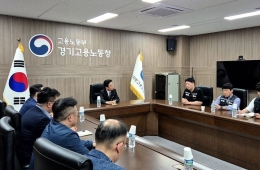
Fraudulent listings are also serious. According to a survey of online used car sales sites conducted by Gyeonggi Province in June last year, 95% of the listings were found to be fraudulent.
While Domestic Cars Were Blocked from Entry, Imported Cars Flourished
Issues of reverse discrimination against imported cars, which have no entry regulations, are also raised. While domestic automakers could not sell used cars, BMW’s certified used car sales jumped from 3,820 units in 2014 to 11,687 units in 2018, and Mercedes-Benz increased from 550 units to 4,640 units during the same period.
There is also analysis that the backwardness of the used car market affects new car sales and export competitiveness. According to the Korea Industrial Alliance Forum (KIAF), the rapid increase in certified used car sales of domestic imported car brands has led to an increase in repeat customers and even new car sales.
Furthermore, the backward domestic used car market is also lowering the export competitiveness of domestic used cars. In Japan, due to quality management of used cars, overseas trust is high, and the export amount of used cars is 6.5 times that of Korea.
Hot Picks Today
!["It Has Now Crossed Borders": No Vaccine or Treatment as Bundibugyo Ebola Variant Spreads [Reading Science]](https://cwcontent.asiae.co.kr/asiaresize/93/2026052019230771274_1779272587.jpg) "It Has Now Crossed Borders": No Vaccine or Treatment as Bundibugyo Ebola Variant Spreads [Reading Science]
"It Has Now Crossed Borders": No Vaccine or Treatment as Bundibugyo Ebola Variant Spreads [Reading Science]
- "Stocks Are Not Taxed, but Annual Crypto Gains Over 2.5 Million Won to Be Taxed Next Year... Investors Push Back"
- [Breaking] Samsung Union "General Strike Suspended...Tentative Agreement to Be Put to Vote"
- "Am I Really in the Top 30%?" and "Worried About My Girlfriend in the Bottom 70%"... Buzz Over High Oil Price Relief Fund
- "Who Is Visiting Japan These Days?" The Once-Crowded Tourist Spots Empty Out... What's Happening?
Jung Manki, chairman of KIAF, said, "The used car market has the potential to develop into various new industries in line with the Fourth Industrial Revolution era, but it is vulnerable to innovation due to entry regulations," adding, "Considering the significant impact of used car competitiveness on new car competitiveness, the reverse discrimination between domestic automakers and imported cars must be resolved promptly."
© The Asia Business Daily(www.asiae.co.kr). All rights reserved.