Minister Jeong Young-ae: "South Korea's Gender Gap Still Far from International Standards" (Comprehensive)
Meeting with 10 Women Leaders to Discuss Gender Equality Policies
"Views and Conflicts Over Gender Discrimination Between Men and Women Have Deepened"
Increased Private and Public Representation but Still Lacking by International Standards

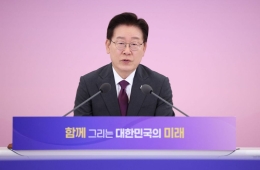
[Asia Economy Reporter Han Jinju] Jung Young-ae, Minister of Gender Equality and Family (photo), said on the 24th that "the gender wage gap in our country is the largest among the Organization for Economic Cooperation and Development (OECD) countries, and women's political and economic status is lower compared to advanced countries, so there is still a long way to go from an international perspective."
On the 24th, Minister Jung met with heads of 10 organizations, including Heo Myung, President of the Korean Council of Women’s Organizations, and Kim Min-moon-jung, Representative of the Korean Women’s Associations United, at the State Council Members’ Cafeteria in the Government Seoul Office Building to discuss the Ministry of Gender Equality and Family’s gender equality policies and recent issues. The gender wage gap in Korea is 34.1%, which remains high compared to the OECD average of 12.9%. Japan’s is 23.5%, Germany’s 15.1%, and Denmark’s 4.9%.
Minister Jung said, "Recently, due to COVID-19, women’s jobs have been reduced, care gaps have emerged, and the rising suicide rates among women in their 20s and 30s have become major issues," adding, "After the local government heads’ by-elections, differences in views and conflicts regarding gender discrimination between men and women have significantly increased."
She added, "The pursuit of feminism based on fairness, diversity inclusion, respect for human rights, working together, and caring together will be the foundation for social integration and sustainable development," and said, "The government has been promoting gender equality policies in various fields and is continuously discovering and improving new challenges that fit the changing times."
The Ministry of Gender Equality and Family’s five-year plan to enhance women’s representation is also gradually showing results. As of 2020, the proportion of female managers at the director level or higher in central administrative agencies and local governments has exceeded 22.8%. Minister Jung evaluated, "We have established gender equality dedicated departments in eight ministries including the Ministry of Education and the Ministry of Employment and Labor, and the proportion of women in senior positions in the public sector and female executives in listed private companies is gradually increasing, indicating a gradual improvement in gender equality."
The heads of organizations attending the meeting presented various opinions on women’s issues. Kim Min-moon-jung, Representative of the Korean Women’s Associations United, emphasized the need for the Ministry of Gender Equality and Family’s active role regarding women’s jobs and care issues related to COVID-19.
Heo Myung, President of the Korean Council of Women’s Organizations, stressed the realization of equal pay for equal work, and Jung Yoon-sook, President of the Korean Women Entrepreneurs Association, highlighted the necessity of employment support policies for women in their 20s and 30s and women who have experienced career interruptions.
Kim Hyo-sun, Representative of Women’s Newspaper, said, "Recently, many comments are posted on all articles containing the word ‘women’ regardless of the content," and the participants unanimously agreed on the need to expand opportunities for mutual understanding and communication between young men and women, as well as related government efforts.
Hot Picks Today
 At President Lee's Call to "Give Enough to Shock," Whistleblower Rewards Become a Real Lottery
- "If Both Spouses Work There, How Much Would They Make?" "They Earn More Than Me, and I'm a Doctor"... Envy Erupts Over Samsung Electronics' Bonus
- Lived as Family for Over 30 Years... Daughter-in-Law Cast Aside After Husband's Death
- Calls for Conservative Unification in Busan Buk-gu Gap Grow Within People Power Party... Park Minshik Shaves Head, Rejects "Han Donghun Unification Fantasy"
- "Who Is Visiting Japan These Days?" The Once-Crowded Tourist Spots Empty Out... What's Happening?
Additionally, the meeting shared various opinions including strengthening victim support related to the enactment of the Stalking Punishment Act, establishing a gender equality data accumulation and utilization system related to technology development such as artificial intelligence (AI), expanding women’s participation in central and local politics, increasing the proportion of female professors in national and public universities, and strengthening the linkage of gender equality policies between central and local governments.
© The Asia Business Daily(www.asiae.co.kr). All rights reserved.