[Into the Stocks] Korea Electric Power Corporation, Fuel Cost Linkage Benefit Turns into a Setback
Q2 Large Deficit Forecast
"Fare Increase Postponed, Investment Uncertainty Grows"
![[Into the Stocks] Korea Electric Power Corporation, Fuel Cost Linkage Benefit Turns into a Setback](http://www.asiae.co.kr/news/img_view.htm?img=2020051315535134821_1589352831.jpg)
[Asia Economy Reporter Minji Lee] Fuel costs are rising, but electricity rates remain unchanged. Despite the introduction of the fuel cost linkage system, the government’s restriction on electricity rate hikes is casting a shadow over Korea Electric Power Corporation (KEPCO).
The fuel cost linkage system refers to a mechanism that reflects fluctuations in fuel prices such as international oil prices, coal, and LNG in electricity rates. When power generation fuel costs rise, electricity rates increase; when fuel costs fall, electricity rates decrease. Since most of the fuel needed for electricity production is imported from overseas, this system ensures that changes in fuel prices are timely reflected in the rates. It was expected that KEPCO’s earnings volatility would decrease with the introduction of the fuel cost linkage system earlier this year, but delays in implementing the system are now expected to worsen the company’s financial structure.
"Large-scale Deficit Expected in Q2"
KEPCO recorded sales of 15.0753 trillion won in Q1, a 0.1% decrease compared to the same period last year. Operating profit increased by 33% to 571.6 billion won but fell significantly short of market expectations (683.3 billion won). Electricity sales volume increased by 2.5% year-on-year due to colder winter temperatures and economic recovery.
Although electricity sales volume rose and the utilization rate of nuclear power plants with lower unit costs (77.6%) increased by 3.8 percentage points compared to the same period last year, operating profit fell short of expectations due to a decrease in coal power plant utilization. Coal power plant utilization was 56%, down 2.6 percentage points year-on-year. There was also an impact from increased power purchase costs. Although the purchase unit price decreased by 7.6% compared to last year due to falling oil prices, the volume of power purchased from private power producers increased by 6.6%, resulting in power purchase costs rising by 1.15 trillion won more than expected.
![[Into the Stocks] Korea Electric Power Corporation, Fuel Cost Linkage Benefit Turns into a Setback](http://www.asiae.co.kr/news/img_view.htm?img=2021052011382842821_1621478309.png)
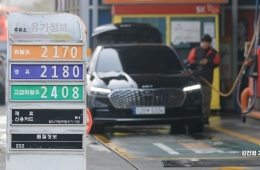
A large-scale deficit is expected in Q2. Fuel costs for electricity generation have risen, but rate hikes have not been implemented. The fuel cost adjustment rate for Q2 was set at 3 won per kWh, the same as in Q1. Although raw material price increases caused a 2.8 won per kWh upward pressure, the government decided to freeze rates to ease household burdens amid the spread of COVID-19.
Securities Industry: "Neutral Investment Opinion... Increased Uncertainty"
With the rate hike postponed, the securities industry's positive outlook on the fuel cost linkage system has faded. Initially, the market believed that the introduction of the fuel cost linkage system this year would provide ample room for KEPCO’s stock price to rise. Looking at KEPCO’s stock price over the past decade, it recorded levels in the 60,000 won range in 2015-2016 but has been on a steady decline since, with expectations that a realistic electricity rate hike could restore previous stock price levels. Fueled by this optimism, the stock price, which had fallen to 15,000 won last year due to COVID-19, recovered to around 30,000 won earlier this year.
As the situation changed, securities firms lowered their investment opinions and target prices. Samsung Securities downgraded its investment opinion to neutral, expressing doubts about whether the rising trend in fuel costs amid increasing raw material prices due to higher COVID-19 vaccination rates would be timely reflected in electricity rates. Researcher Youngho Kim of Samsung Securities said, "We expected that the electricity rate system reform would secure stable funding necessary for the government’s green policies and improve KEPCO’s earnings visibility, but the postponement of reflecting fuel cost fluctuations is increasing concerns about performance," adding, "The upside potential is limited."
![[Into the Stocks] Korea Electric Power Corporation, Fuel Cost Linkage Benefit Turns into a Setback](http://www.asiae.co.kr/news/img_view.htm?img=2021052011392342824_1621478364.png)
The securities industry expects that whether electricity rate hikes are reflected in Q3 (July) will significantly influence KEPCO’s stock price direction. This is because KEPCO’s coal power generation unit cost and LNG power generation unit cost reflect international energy prices with a lag of six months and three to four months, respectively, so fuel cost increases are expected to be fully reflected starting in Q3. However, even if rate adjustments occur from July, a decline in earnings is expected to be unavoidable. Researcher Jiyoon Shin of KTB Investment & Securities said, "Although LNG prices are showing some signs of stabilization, coal prices have surged past $100 per ton, making it difficult to fully pass on costs even if rates are raised in Q3," emphasizing, "The aftereffects of skipping the system application once will inevitably lead to a large-scale downward revision of earnings."
Government’s Renewable Energy Policy Also a ‘Hindrance’
Another significance of implementing the fuel cost linkage system is to secure renewable energy for the government’s 2050 carbon neutrality goal and to support KEPCO’s entry into renewable energy power generation projects and funding. Through this, KEPCO was expected to solidify its position as an offshore wind power developer along with earnings stability.
Hot Picks Today
![Samsung: "More, Faster — Letting Your Guard Down Is Fatal"... Hesitation Means Losing Ground [Chip Talk]](https://cwcontent.asiae.co.kr/asiaresize/93/2025021710490034501_1739756940.jpg) Samsung: "More, Faster — Letting Your Guard Down Is Fatal"... Hesitation Means Losing Ground [Chip Talk]
Samsung: "More, Faster — Letting Your Guard Down Is Fatal"... Hesitation Means Losing Ground [Chip Talk]
- "Even If I Lose My Investment, the Government Will Cover It"... The Fund Attracting Retail Investors' Attention [Weekend Money]
- "I Turned It On Again Out of Frustration"... Chinese Youth Hooked on 20,000 Won AI Fortune-Telling Services [Z-World Now]
- There Is a Distinct Age When Physical Abilities Decline Rapidly... From What Age Do Strength and Endurance Drop?
- "Envious of Korean Daily Life"...Foreign Tourists Line Up in Central Myeongdong from Early Morning [Reportage]
However, due to poor performance weakening its fundamentals, there are concerns that the government’s renewable energy policy may not proceed smoothly. The securities industry estimates KEPCO’s average annual operating profit at 600 billion won, an 85% decrease compared to the same period last year. Additionally, as of Q1, KEPCO’s consolidated debt ratio was 190%, down 3 percentage points from the previous quarter. On a standalone basis, KEPCO’s debt ratio was 117%, up 5 percentage points during the same period. Researcher Minjae Lee of NH Investment & Securities explained, "Unlike power generation subsidiaries with significant investments in renewable and fossil fuel power plants, KEPCO’s standalone financial structure, with relatively low related investments, has begun to deteriorate, indicating a loss of capacity to respond to changes," adding, "Since KEPCO oversees most offshore wind projects in Korea, it is difficult to expect rapid progress in related projects."
© The Asia Business Daily(www.asiae.co.kr). All rights reserved.