[Exclusive] On the 21st of the US-Korea Summit, Party-Government-Cheong Hold 'Semiconductor Meeting'... 'United Effort'
Meeting of Semiconductor Special Committee chaired by Song on the 21st
Discussion on K-Semiconductor Strategy and Parliament's Role including Over 40% Drastic Tax Support
People Power Party also pushing for Special Committee Launch
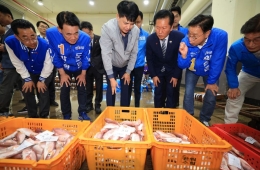
Kim Ki-hyun visits Gumi Chamber of Commerce
Semiconductor and Material Business Leaders Meeting
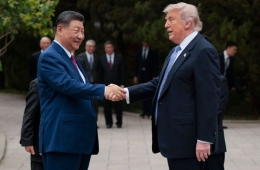
[Asia Economy Reporter Oh Ju-yeon] On the 21st, the day of the Korea-US summit, the first meeting of the Semiconductor Technology Special Committee (Semiconductor Special Committee), attended by the ruling party, government, Blue House, and industry, will be held. This is the first meeting presided over by Representative Song Young-gil after the May 2nd party convention, and it is significant as it takes place at a time when the two countries will address semiconductor issues as a major agenda item at the summit.
According to the Democratic Party's Semiconductor Special Committee on the 20th, the meeting will discuss ways to support the government’s recently announced ‘K-Semiconductor Strategy’ at the National Assembly level. Yang Hyang-ja, who served as the initial chairperson before Representative Byun Jae-il took over, has emphasized strengthening the competitiveness of the semiconductor industry focusing on three pillars: introducing bold tax incentives exceeding the US level (40%), deregulation, and workforce development. Most of these elements were included in the government’s announced K-Semiconductor Strategy. Additionally, a plan was announced for Samsung Electronics, SK Hynix, and others to invest 510 trillion won over the next 10 years. The committee plans to focus discussions on expanding tax credits and financial support to reinforce the plan for companies and the government to build the world’s largest semiconductor supply chain.
There is also a plan to accelerate the enactment of the Semiconductor Special Act. In particular, the special act will broaden its scope from targeting industries to technologies to expand its coverage. Careful consideration is being given to avoid the risk of being challenged by the World Trade Organization (WTO) if it appears to strengthen government benefits for specific industries. This practical work is being handled by Representative Yang, who is regarded as a semiconductor expert within the National Assembly. Although the chairperson was replaced within a month of the committee’s launch, the schedule to prepare the special act by August and pass it in the National Assembly in September remains unchanged.
The opposition party has also begun reviewing the semiconductor industry. It is reported that first-term opposition lawmakers proposed the launch of a Semiconductor Special Committee during a meeting with Kim Ki-hyun, the acting party leader and floor leader. On the afternoon of the same day, Acting Leader Kim and the floor leadership will visit the Gumi Chamber of Commerce and Industry to hold a meeting with businesspeople engaged in semiconductors and future advanced materials industries. On the 17th, Representative Yoon Chang-hyun of the People Power Party held a semiconductor seminar at the ‘Post-Corona Economic Research Forum’ and mentioned the reallocation of the semiconductor value chain.
Hot Picks Today
 "Do We Need to Panic Buy Again?" War Drives 30% Price Surge... Even the Bedroom Feels the Impact
- "Suspicious Timing?"...Trump Traded Stocks After Praising Wartime Capabilities
- Paint Thrown and Eggs Splattered on Door... Incheon "Revenge-for-Hire" Suspect in His 20s Arrested
- "Anyone Who Visited the Room Salon, Come Forward"… Gangnam Police Station Launches Full Staff Investigation After New Scandal
- "Contact Me First If Houses Are Built": Wealthy Clients Eyeing... Will Ultra-High-End Residences Worth 20 Billion Won Be Developed? [Real Estate AtoZ]
In a phone interview, Representative Yoon said, "Government support is needed so that memory semiconductors, as well as system semiconductors where Korea has a global advantage, can grow significantly," adding, "Deregulation is basic, but it is time to focus on areas that have been neglected, such as infrastructure development and workforce training." He also added, "It would be good to operate the Semiconductor Special Committee jointly between the ruling and opposition parties," emphasizing, "A bipartisan effort is necessary."
© The Asia Business Daily(www.asiae.co.kr). All rights reserved.