[Column] Public Corruption Investigation Office and National Police Agency, Foreseen Investigation Authority Confusion

[Asia Economy Reporter Choi Seok-jin] The government and ruling party are showing signs of indecision over the investigation into allegations of speculation by employees of Korea Land and Housing Corporation (LH) in the 3rd New Town development.
Following the enforcement of the amended Prosecutors' Office Act and Criminal Procedure Act, which include adjustments to the investigative authority between the prosecution and police, a government joint special investigation headquarters (Joint Investigation HQ) was established with the National Police Agency’s National Investigation Headquarters (NIH) at its core. However, within the ruling party, there are calls such as “the prosecution should participate in the investigation” and “a special prosecutor should be introduced.”
President Moon Jae-in emphasized organic cooperation between the prosecution and police, and Justice Minister Park Beom-gye visited the Ansan branch of the Suwon District Prosecutors’ Office, which has jurisdiction over the new towns, to encourage cooperation with the police investigation. Yet, in the initial investigation phase, the prosecution’s actual role is limited to filing search and seizure warrants or arrest warrants with the court upon the police’s request.
Although the number of prosecutors dispatched to the government joint investigation team for legal review and support was increased from one to two, considering the vast scope and subjects of this case, it is difficult to expect more than a show of administrative cooperation to demonstrate “prosecution and police cooperation.”
As Minister Park mentioned, if allegations involving public officials of grade 4 or higher or executives of public institutions, whom the prosecution can investigate, emerge during this investigation, there is room for the prosecution to conduct direct investigations. However, since the police are handling the overall investigation, separating only a few suspects for prosecution-led investigation raises concerns about continuity and efficiency.
Although the law allows the prosecution to conduct supplementary investigations once the case is sent with a prosecution opinion, it is not easy for prosecutors to review and supplement investigations on a case that has been investigated over several months by about 700 police officers from 15 provincial police agencies, including the three metropolitan police agencies of Gyeonggi Southern, Gyeonggi Northern, and Incheon. Prosecutors who must maintain the prosecution in court will inevitably find it burdensome to prove guilt in court after reading through a mountain of records without any involvement in the investigation process.
Many citizens are genuinely concerned about whether the police can thoroughly uncover the truth behind the allegations and whether they will investigate without hesitation if evidence of involvement by influential ruling party figures or pro-government individuals emerges during the investigation.
If the “LH case” concerns the issue of investigative authority adjustment between the prosecution and police, the “Kim Hak-ui illegal exit ban” case raises issues about investigative authority among other investigative agencies such as the Corruption Investigation Office for High-ranking Officials (CIO), prosecution, and police.
The Suwon District Prosecutors’ Office, which is investigating the case, transferred the case involving Seoul Central District Prosecutor Lee Seong-yoon, who is suspected of blocking the investigation into Prosecutor Lee Gyu-won and another prosecutor from the Ansan branch of Suwon District Prosecutors’ Office, who requested emergency exit bans on former Deputy Minister of Justice Kim Hak-ui using falsified official documents, to the CIO. However, the CIO re-transferred the case back to the prosecution on the 12th.
CIO Chief Kim Jin-wook showed signs of deliberation, stating that before deciding on re-transfer to the prosecution, all three options?direct investigation by the CIO, re-transfer to Suwon District Prosecutors’ Office, or transfer to the National Police Agency’s National Investigation Headquarters?were still open.
Although the ruling party legislated to divide the investigative targets among the prosecution, police, and CIO, the fact that all three agencies can investigate the same case inevitably causes confusion among the public.
In particular, Prosecutor Lee Seong-yoon publicly expressed his desire to be investigated by the CIO, refusing summons from the prosecution three times.
He cited Article 25, Paragraph 2 of the CIO Act, which states that “if an investigative agency other than the CIO discovers allegations of high-ranking public officials’ crimes by a prosecutor, the head of that agency shall transfer the case to the CIO.” Despite knowing that the personnel committee for selecting CIO prosecutors has not even convened and there are no prosecutors to conduct the investigation, Prosecutor Lee’s strong insistence on the CIO’s investigative jurisdiction raises suspicions of other motives.
It is reasonable to suspect that he believes being investigated by the CIO, led by Kim Jin-wook who was appointed under the ruling party’s influence, would be more advantageous in many respects than being investigated by the Suwon District Prosecutors’ Office, which has investigated him so far.
Prosecutor Lee even interpreted the relationship between Article 24, Paragraph 3 and Article 25, Paragraph 2 of the CIO Act?which states that “the chief may transfer a case to another investigative agency if it is deemed appropriate considering the suspect, victim, and the nature and scale of the case”?as a general and special provision, arguing that “the CIO, having received a case transferred from the prosecution, cannot re-transfer the case back to the prosecution.”
However, since Chief Kim re-transferred the case to the prosecution, Prosecutor Lee’s interpretation of the CIO Act is incorrect. It is truly concerning that the Seoul Central District Prosecutor, responsible for the country’s most important investigations, and the CIO chief have differing interpretations of key legal provisions defining jurisdiction between the prosecution and CIO, even considering that the system is still in its early stages.
Meanwhile, reports have emerged that Minister Park was furious upon receiving the report that the CIO re-transferred the case to the prosecution. It seems that Minister Park also felt more at ease with the CIO handling this investigation, which burdens the Blue House and ruling party, rather than the prosecution.
Perhaps for this reason, on the day Chief Kim decided to re-transfer the case to the prosecution, Minister Park refused to approve the extension of dispatch for two of the four prosecutors on the existing investigation team, excluding the team leader.
The Ministry of Justice stated, “Considering that the investigation has progressed significantly over two months to the point of filing arrest warrants, it was judged that the investigation could proceed with personnel reinforcement within the Suwon District Prosecutors’ Office.” However, removing Prosecutor Im Se-jin, head of the Criminal Division 2 at Pyeongtaek branch of Suwon District Prosecutors’ Office, who is in charge of investigating Ministry of Justice Immigration and Foreign Policy Bureau Chief Cha Gyu-geun, whose arrest warrant reapplication is under consideration, and Prosecutor Kim Kyung-mok from Busan District Prosecutors’ Office, who has been investigating key suspect Prosecutor Lee Gyu-won, from the investigation team is clearly an act of obstructing the investigation.
Looking back, prosecutors dispatched to the investigation teams during the National Agricultural Cooperative Federation corruption case and judicial scandal investigations, which aimed to “eradicate deep-rooted evils,” worked on dispatch duty for months and even maintained prosecution after the investigation ended. The Ministry of Justice’s excuse of “excessive workload at the Pyeongtaek branch” is utterly unconvincing.
Although Minister Park himself has revealed that he is a political appointee from the ruling party, the position of Minister of Justice should serve as a shield for the prosecution against political pressures.
Such a minister abusing personnel authority to blatantly block investigations that burden the government is more likely to backfire.
Since Prosecutor Lee, Chief Cha, and others have become suspects through public interest reports and criminal complaints, it is the role of the Minister of Justice to ensure they undergo investigations according to due process.
Briefly stepping aside, it is known that among citizens supporting the ruling party, there are quite a few who criticize the prosecution investigating the illegal exit ban on former Deputy Minister Kim.
Critics argue, “Considering what former Deputy Minister Kim did, allowing him to flee abroad is rather a dereliction of duty by prosecutors or immigration officials,” “Is it right to investigate for using some illegal means to prevent that?” and “Isn’t the prosecution originally at fault for pretending not to know the person in the video was former Deputy Minister Kim?”
These points are understandable. There were problems with the initial prosecution investigation into former Deputy Minister Kim, and his escape abroad should have been prevented. However, even for someone like former Deputy Minister Kim, constitutional fundamental rights such as “freedom of residence and movement” require adherence to legal procedures to restrict them. The current problem arises because those procedures were not followed. If such illegality is overlooked, someday I or my family could become victims of similar illegal acts.
If a murderer wielding a knife runs to kill my parents, restraining that murderer at the scene?even if it results in killing the murderer?is recognized as self-defense and legally justified.
However, even if the murderer who actually killed my parents is found and killed at their home, the killer cannot escape responsibility for murder. This is the decision of our legislators who created the criminal law and ultimately the choice of our people.
No matter how just the purpose, if there is illegality in the procedure, that illegality is subject to punishment. This is our promise and norm to uphold the rule of law.
Returning to the main topic, about three years ago, then-Blue House Senior Secretary for Civil Affairs Cho Kuk presented a briefing on the “Power Institution Structural Reform Plan” with charts prepared directly by the Blue House.
Most of the current investigation reform measures, such as the establishment of the CIO and NIH and the transfer of the National Intelligence Service’s counterintelligence investigation functions to the police, are the direct results of former Minister of Justice Cho Kuk’s vision. It is perhaps natural that the investigation authority adjustment and structural reform plans created by Cho, a scholar who had never conducted an investigation, failed to reflect the realities of the investigative field.
Since the system is still in its early implementation stage, some confusion is inevitable. Issues such as when to transfer cases to the CIO if high-ranking public official crimes are discovered during prosecution investigations, and the scope of case records to be transferred, are expected to be gradually resolved.
The problem is whether it is appropriate for the prosecution, police, and CIO to formally divide investigations of cases involving officials of various ranks as stipulated by law, whether it is right for the prosecution, which decides on prosecution and must prove guilt in court, to be excluded from investigations, and whether excluding prosecutors?quasi-judicial officers with a mission to protect human rights?from investigations truly benefits the public.
Moreover, a bigger problem is that the newly empowered CIO or NIH could become tools for investigations tailored to the tastes of those in power.
It is worth recalling the words of then-Prosecutor General Moon Moo-il in 2019 during a press conference on the prosecution’s political neutrality, when he suddenly took off his suit jacket and shook it, saying, “What is shaking? The clothes are shaking. Who is shaking it?”
It has always been the political circles that sought to use the prosecution as a means to maintain power. Even under the Moon Jae-in administration, which emphasized prosecution reform, the repeated “revolving door personnel” where prosecutors with pro-government leanings occupy key positions shows that such temptations have not been overcome.
The fact that ruling party lawmakers, Prosecutor Lee, and Minister Park all speak in unison that “the CIO should investigate the case related to former Deputy Minister Kim” itself could undermine the political neutrality of the CIO, which has yet to properly start investigations.
The problem lies not in the system but in the people operating it.
In 2018, former Minister Cho publicly announced the “Power Institution Structural Reform Plan,” emphasizing, “If power institutions had properly fulfilled their roles, the unconstitutional state manipulation scandal would not have occurred. The Moon Jae-in government will break this vicious cycle.”
Related Articles
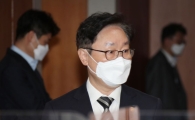 Red Light for Investigation into 'Kim Hak-ui's Departure'... Park Beom-gye Removes Prosecutor from Probe after PACC's 'Re-referral'
Three years later, the system has changed, but has the world truly changed? Who is still engaging in unconstitutional manipulation of investigations?
© The Asia Business Daily(www.asiae.co.kr). All rights reserved.







