The Bank of Korea Says "Exports This Year Will Show a 'Sanggohajeo (High at the Start, Low at the End)' Pattern"
Bank of Korea Monetary and Credit Policy Report
![[Image source=Yonhap News]](http://www.asiae.co.kr/news/img_view.htm?img=2020120908080854921_1607468889.jpg)
[Asia Economy Reporter Kim Eunbyeol] The Bank of Korea forecasted that South Korea's exports will increase significantly this year compared to last year, influenced by the global economic recovery. However, the Bank of Korea also noted that delays in COVID-19 vaccine distribution and US-China trade conflicts could constrain exports.
In the monetary and credit policy report submitted to the National Assembly on the 11th, the Bank of Korea projected that exports this year will improve, supported by economic recovery and semiconductor market improvement, and due to the base effect from the sharp decline in the second quarter of last year, exports are expected to show a pattern of high in the first half and low in the second half.
Earlier, in the economic outlook report released last month, the Bank of Korea predicted that this year's merchandise exports (real goods exports as a share of GDP) will increase by 7.1% compared to last year. It forecasted a 13.0% increase in exports in the first half of this year and a 2.0% increase in the second half compared to the same period last year. The Bank of Korea expected the contribution of exports to this year's GDP growth to be 1.5 percentage points.
The Bank of Korea explained that after COVID-19, consumption of goods increased, and changes in consumption patterns such as the expansion of non-face-to-face demand and movement restrictions have led to differentiated export conditions by item. Semiconductors, which have shown solid growth since the third quarter of last year, are expected to have favorable export conditions due to the recovery of server demand from global IT companies and growth in the 5G smartphone market. Chemical products are also expected to see overall improvement as the conditions of upstream industries such as textiles and electronics gradually recover due to additional economic stimulus measures in major countries. However, the Bank of Korea noted that if the COVID-19 situation in major countries stabilizes thanks to vaccine distribution, demand for pharmaceuticals and diagnostic tools may decrease, which could limit the improvement in chemical product exports.
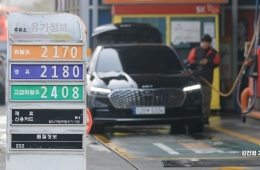
Automobiles are a positive factor for exports due to economic recovery and expanding demand for electric vehicles. The Bank of Korea also noted that steel and machinery exports conditions are improving due to the recovery of upstream industry demand and infrastructure investments in major countries. Petroleum products are expected to see increased demand and higher prices due to the easing of movement restrictions and rising international oil prices. Although rising oil prices generally constrain economic recovery and may negatively affect export volumes, the Bank of Korea judged that the recent rise in oil prices is due more to recovering crude oil demand than supply factors like production cuts, so the negative impact on South Korea's export volumes will be limited.
Hot Picks Today
![Samsung: "More, Faster — Letting Your Guard Down Is Fatal"... Hesitation Means Losing Ground [Chip Talk]](https://cwcontent.asiae.co.kr/asiaresize/93/2025021710490034501_1739756940.jpg) Samsung: "More, Faster — Letting Your Guard Down Is Fatal"... Hesitation Means Losing Ground [Chip Talk]
Samsung: "More, Faster — Letting Your Guard Down Is Fatal"... Hesitation Means Losing Ground [Chip Talk]
- "Even If I Lose My Investment, the Government Will Cover It"... The Fund Attracting Retail Investors' Attention [Weekend Money]
- Gasoline Prices at Gas Stations Rise for 7 Consecutive Weeks... Seoul Maintains 2,050-Won Range
- There Is a Distinct Age When Physical Abilities Decline Rapidly... From What Age Do Strength and Endurance Drop?
- "Envious of Korean Daily Life"...Foreign Tourists Line Up in Central Myeongdong from Early Morning [Reportage]
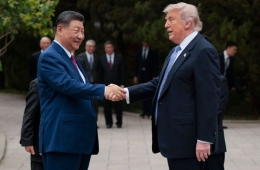
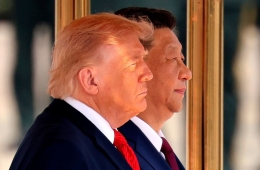
The variables are delays in vaccine distribution and the emergence of variants. The Bank of Korea analyzed, "Even if face-to-face activities resume due to vaccination, if the economic recovery in major countries is centered on the service industry and goods consumption is constrained, the additional improvement in import demand may be gradual." The inauguration of the Joe Biden administration in the United States is positive for South Korea's exports as it could generally reduce uncertainties in US trade policy. This reduction in uncertainty could lead to improved international investment sentiment. However, changes in trade policy toward China and the potential intensification of conflicts between the two countries were cited as factors that could constrain exports.
© The Asia Business Daily(www.asiae.co.kr). All rights reserved.