'High Concentration Fine Dust Period' Seasonal Management Plan Promoted to Reduce Fine Dust
After Two Months of Seasonal Management Policy, Gyeongnam Province's Sky Clears Up

[Asia Economy Yeongnam Reporting Headquarters Reporter Park Saeyan] Gyeongsangnam-do announced on the 8th that it will implement the 'Seasonal Fine Dust Management System' until March, when high concentrations of fine dust are expected to worsen.
According to Gyeongnam Province on the 8th, since December to March is a period when high concentrations of fine dust frequently occur, strengthened reduction measures have been prepared to prevent illegal emissions of fine dust and reduce health damage to residents.
The main tasks in 16 sectors promoted by the province include restricting the operation of Grade 5 emission vehicles during emergency reduction measures, limiting and suspending coal-fired power plants, intensive monitoring of illegal fine dust emissions, and voluntary participation in fine dust reduction at air pollutant emission workplaces.
In the transportation sector, a fine of 100,000 KRW per day will be imposed once for violating the restriction on operating Grade 5 emission vehicles during emergency reduction measures, but this year there will be a guidance period for system establishment, and fines will be imposed from next year.
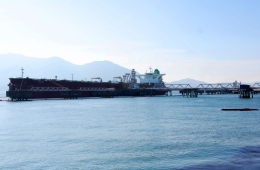
In the power generation sector, among the total 14 generators in the province, two units, Samcheonpo Units 5 and 6, have been suspended, and the remaining 12 units are operating at about 80% capacity.
In the industrial sector, agreements have been made with large fine dust emitting businesses to reduce fine dust.
In addition to 30 companies last year, 12 more companies signed agreements during the second seasonal management period, making a total of 42 companies.
During the first seasonal management period (December 2019 to March 2020), there were positive effects such as abundant rainfall and favorable weather conditions, but by actively promoting fine dust reduction measures, the average concentration of ultrafine dust decreased by 21%, from 24㎍/㎥ to 19㎍/㎥ compared to the same period the previous year.
The number of good air quality days (daily average 15㎍/㎥ or less) increased by 46%, from 35 days to 51 days.
During the second seasonal management period (December 2020 to March), six strengthened, life-oriented fine dust reduction measures across 16 sectors in transportation, industry, and daily life were promoted.
Hot Picks Today
 "Stocks Are Not Taxed, but Annual Crypto Gains Over 2.5 Million Won to Be Taxed Next Year... Investors Push Back"
- "Don't Throw Away Coffee Grounds" Transformed into 'High-Grade Fuel' in Just 90 Seconds [Reading Science]
- Signed Without Viewing for 1.6 Billion Won... Jamsil and Seongbuk Jeonse Prices Jump 200 Million Won in a Month [Real Estate AtoZ]
- [Breaking] President Lee: "Sharing operating profit before taxes are deducted?... I don't understand"
- "Even With a 90 Million Won Salary and Bonuses, It Doesn’t Feel Like Much"... A Latecomer Rookie Who Beat 70 to 1 Odds [Scientists Are Disappearing] ③
As a result, meaningful achievements have been made, such as the monthly average concentration decreasing from 19㎍/㎥ in December last year to 17㎍/㎥ in January this year.
© The Asia Business Daily(www.asiae.co.kr). All rights reserved.