Democratic Party's Lee Yong-woo to Propose Social Solidarity Fund Bill

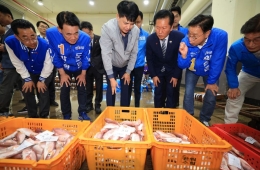
[Asia Economy Reporter Park Cheol-eung] On the 3rd, Lee Yong-woo, a member of the Democratic Party of Korea, announced plans to propose bills related to the Social Solidarity Fund. These include the enactment of the Social Solidarity Fund Act, amendments to the National Finance Act, and amendments to the Corporate Tax Act.
The fund will be financed by contributions from global surplus funds, contributions from other funds, voluntary donations or contributions from the private sector, and income generated from the management of unclaimed assets. It is intended to be used for supporting the livelihood of low-income groups, assisting credit recovery for low-credit individuals, supporting employment and livelihood for the unemployed, and improving the treatment of non-regular workers.
The Social Solidarity Fund will be established within the Office for Government Policy Coordination and managed in consultation with the Minister of Strategy and Finance, heads of relevant central administrative agencies, and the Chairperson of the Economic, Social and Labor Council.
Additionally, to promote voluntary donations or contributions from the private sector, the Corporate Tax Act will be amended so that corporations can include donations made to the Social Solidarity Fund within the deductible limit (50%) when calculating taxable income for the relevant fiscal year.
The role of the Korea Inclusive Finance Agency will be expanded to manage not only dormant deposits but also unclaimed assets. It will be responsible for returning unclaimed assets to their original owners and utilizing related income as resources for the Social Solidarity Fund.
Hot Picks Today
 "Suspicious Timing?"...Trump Traded Stocks After Praising Wartime Capabilities
- "Even If I Lose My Investment, the Government Will Cover It"... The Fund Attracting Retail Investors' Attention [Weekend Money]
- There Is a Distinct Age When Physical Abilities Decline Rapidly... From What Age Do Strength and Endurance Drop?
- "I Went to 10 Convenience Stores and Still Couldn't Buy It": The Bread Sensation That Sold 100 Million Units Already [The Way We Shop Now]
- "Contact Me First If Houses Are Built": Wealthy Clients Eyeing... Will Ultra-High-End Residences Worth 20 Billion Won Be Developed? [Real Estate AtoZ]
Rep. Lee stated, "The inequality issues that surfaced during the 2008 global financial crisis have deepened further through the COVID-19 pandemic. If the current situation continues, it is pointed out that intensified conflicts between social classes and severe polarization will make the sustainability of the community difficult to expect." He added, "To promote sustainable growth, it is necessary to establish a long-term sustainable system based on community spirit, a public fund with private sector participation, namely the Social Solidarity Fund."
© The Asia Business Daily(www.asiae.co.kr). All rights reserved.