The Broken "First-In, First-Out" Principle in the Subscription System... Trust Collapse in "Long-Term Subscribers + Homeless = Subscription Win"
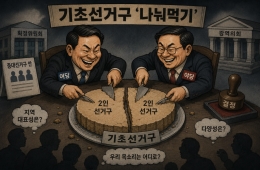
Overall supply decreased but special supply increased
Resulting in a decrease in general supply
Seoul area general:special ratio... 71:29 → 59:41
Experts say "Basic principles must not be broken" "Fundamental solution is supply expansion only"

[Asia Economy Reporters Hyemin Kim, Dongpyo Kim] The dissatisfaction of middle-aged and older adults with the government's housing subscription system fundamentally stems from the rapid breakdown of the system's basic principle of 'first-in, first-out.' They believe that the basic system, which favors those who have been without a home for a long time and have been paying into their subscription accounts for 20 to 30 years, no longer works.
◆ General supply becoming more special than special supply = The reason middle-aged and older adults can no longer expect to win housing subscriptions is because the 'pie' has shrunk. This is also confirmed by indicators.
According to the Korea Real Estate Board's Subscription Home, last year in Seoul, the number of general supply units excluding special supply units was 7,217, a 26.8% decrease compared to the previous year. In contrast, the special supply units targeted at newlyweds, first-time homebuyers, and multi-child families increased by 22.6% to 5,003 units. In Incheon, while the overall supply decreased, the decrease in general supply was 25.6%, twice the 13.6% decrease in special supply.
The change in the proportion of the two types also clearly shows this phenomenon. In Seoul, general supply dropped from 71% in 2019 to 59% last year, while special supply increased from 29% to 41%. Across the metropolitan area, general supply decreased by 2.6 percentage points to 54.9%, indicating an expansion of special supply. This is the result of the government continuously increasing the proportion of special supply to appease the dissatisfaction of young people and newlyweds.
The problem is that while the total supply does not increase, the proportion of special supply rises, lowering the chances of winning general supply. Additionally, with the overheated subscription market causing the winning cutoff scores for private housing to soar, the relative sense of deprivation among middle-aged and older adults has grown. Now, even the highest subscription score of 69 points for a family of four does not guarantee winning a subscription.
◆ Need to create protection measures for long-term homeless with few children = Professor Shim Gyo-eon of Konkuk University’s Department of Real Estate said, "Special supply was created to help social groups needing policy consideration secure housing, but as the volume has increased, the pie for general first-priority applicants has shrunk. Middle-class people who have lived without a home for 30 to 40 years should also be protected, but their opportunities to buy a home are disappearing."
Experts agree that the basic principle of benefiting those with long periods of homelessness should not be broken. Korea introduced the subscription system in 1977 to eliminate speculation and started the subscription point system in 2007. Since then, despite over 140 revisions and amendments, the core principle that longer periods of homelessness and subscription account membership are advantageous has been consistently maintained.
Seo Jin-hyung, president of the Korea Real Estate Society and professor at Gyeongin Women's University, said, "The current situation, where even with points you don’t know if you will win, causes enormous social costs. The system should be simplified to favor those who have been without a home for a long time and have paid a lot into their subscription accounts, and for vulnerable housing groups, the government should supply permanent rental housing in a two-track approach." Professor Kwon Dae-jung of Myongji University’s Graduate School of Real Estate also said, "It is problematic if young people are given houses like money and newlyweds are guaranteed priority, but those who have been without a home for 10 to 20 years have no chance to own a home. A quota system by generation should be introduced so that people in their 30s compete among themselves and those in their 50s compete among themselves based on the length of homelessness."
Hot Picks Today
 No Bacteria Detected in Arisu After 24 Hours of Repeated Drinking from a Tumbler
- "Available Only in Korea": Pokémon Card Prices Surge 2,532% Due to Rarity, Becoming Investment Assets
- Staring at Stock Charts Causes 'Hwabyeong'... "What Have I Even Been Doing?" FOMO Spreads Amid Soaring KOSPI
- President Lee: "Agriculture Is a Core Strategic Industry Ensuring Food Sovereignty... Major Transformation of Rural Areas Needed"
- "Egg Prices Are Strange" Proven True... Collusive Margin Hike of 46% Without Basis Leads to 594 Million Won Fine
On the other hand, there are also criticisms that reducing special supply as a way of 'dividing the pie' should be avoided. Park Won-gap, senior real estate expert at KB Kookmin Bank, emphasized, "The problem is that expanding special supply leads to pie division and reverse discrimination. Ultimately, the only solution is to increase the total supply."
© The Asia Business Daily(www.asiae.co.kr). All rights reserved.