"Capturing Seoul Citizens' Votes" Flood of Real Estate Pledges Ahead of Election... Feasibility in Question
"Plan to Build Public Rental Housing on Gangbyeonbuk-ro," "80-Story Super High-Rise Apartments"
Seoul Mayoral Candidates Flood Real Estate Promises
Concerns Raised Over One-Year Term
Experts Criticize Many Promises as 'Shoot First, Ask Later' Approach
![Apartment complexes in the Songpa-gu area as seen from Seoul Sky, the observation deck of Lotte World Tower in Seoul. Photo is unrelated to specific expressions in the article. [Image source=Yonhap News]](http://www.asiae.co.kr/news/img_view.htm?img=2021011510373128083_1610674652.jpeg)
Apartment complexes in the Songpa-gu area as seen from Seoul Sky, the observation deck of Lotte World Tower in Seoul. Photo is unrelated to specific expressions in the article. [Image source=Yonhap News]
View original image[Asia Economy Reporter Heo Midam] Ahead of the Seoul mayoral by-election scheduled for April, candidates from both ruling and opposition parties are rushing to unveil real estate pledges. This is an effort to regain public support lost due to soaring housing prices and the jeonse crisis, which stemmed from the Moon Jae-in administration's failed real estate policies.
However, the flood of 'presidential candidate-level' pledges for a mayoral position with a term of just over one year is becoming problematic. In particular, some lawmakers have been criticized for proposing unrealistic pledges that appear to be 'populist' promises aimed at winning votes. Experts have also pointed out the ineffectiveness of the real estate pledges presented by the candidates.
Despite the 24th real estate measure announced by the Moon Jae-in administration last November, nationwide housing sales and jeonse prices continue to soar. Last month, nationwide housing sales and jeonse prices rose to their highest levels in nine years.
According to the Korea Real Estate Board, nationwide housing sales prices increased by 0.90% over the past month. This monthly increase rate is the highest in 9 years and 8 months since April 2011, when it recorded 1.14%. Nationwide jeonse prices also rose by 0.97% last month, marking the highest level since September 2011 (1.33%).
As a result, candidates from both ruling and opposition parties are putting great effort into their real estate pledges, judging that resolving real estate issues could sway public opinion.
Woo Sang-ho, a member of the Democratic Party who was the first to declare his candidacy from the ruling party, also presented real estate policy as his number one pledge. Woo proposed covering the Gangbyeonbuk-ro and Olympic-daero highways to build 160,000 public rental housing units on top, along with lifting the 35-floor height limit and easing reconstruction regulations for apartments in the Gangbuk area.
Kim Jin-ae, a member of the Open Democratic Party classified as a pro-government Seoul mayoral candidate, introduced the 'Station Area Midtown' pledge, which combines public and private rental housing. The aim is to increase housing supply in Seoul by revitalizing development around subway stations and other transit areas.
![Ahn Cheol-soo, leader of the People Party, who is running in the April 7 Seoul mayoral by-election, is announcing Seoul's real estate policy at the National Assembly on the 14th. <br>[Image source=Yonhap News]](http://www.asiae.co.kr/news/img_view.htm?img=2021011510345828076_1610674498.jpg)
Ahn Cheol-soo, leader of the People Party, who is running in the April 7 Seoul mayoral by-election, is announcing Seoul's real estate policy at the National Assembly on the 14th.
[Image source=Yonhap News]
Opposition Seoul mayoral candidates are also fervently announcing their real estate policies. Ahn Cheol-soo, leader of the People’s Party, announced a real estate pledge aiming to supply a total of 746,000 housing units over the next five years.
He proposed supplying 100,000 youth rental housing units and introducing a youth housing voucher system to support management fees, constructing 50,000 'Youth Metro Housing' units in mixed-use residential-commercial complexes due to the undergrounding of national and metropolitan railways, and supplying 400,000 housing units for people in their 30s and 40s as well as those in their 50s and 60s.
Meanwhile, Lee Hye-hoon, former member of the United Future Party (now People Power Party), officially announced her candidacy for Seoul mayor last November with the 'Eco Bridge' pledge. She stated, "By installing 'Eco Bridges' over roads like Olympic-daero, we will bring apartment complex gardens into public land and build apartments for homeless couples on the secured land."
Lee also presented a plan to create 'Seoul Blossom' in four districts of Gangbuk and Gangseo, where youth housing and jobs can be addressed together. This is an 80-floor integrated super high-rise facility combining workplace, residence, medical, cultural, welfare, and public services, designed to minimize traffic generation.
Additionally, Cho Eun-hee, head of Seocho District Office affiliated with the People Power Party, proposed supplying 650,000 new housing units within five years through revitalizing New Town projects. Kim Geun-sik, the People Power Party’s Songpa-byeong district committee chairman, promised to relocate Seoul National University of Education in Seocho-dong, Seoul, and build youth apartments on the site.
![A view of a real estate agency in Seoul. The photo is unrelated to specific expressions in the article. [Image source=Yonhap News]](http://www.asiae.co.kr/news/img_view.htm?img=2021011510382828087_1610674708.png)
A view of a real estate agency in Seoul. The photo is unrelated to specific expressions in the article. [Image source=Yonhap News]
View original imageAs lawmakers from both sides competitively flood the scene with real estate pledges, some criticize politicians for announcing 'election populist pledges' aimed at winning elections rather than presenting effective policies. Especially since the remaining term of the next Seoul mayor is only one year, such criticism is growing stronger.
Citizens point out, "It is difficult to implement housing policies that take several years to supply actual housing within just over a year without any setbacks," expressing their critical voices.
Office worker Kim (31) said, "It seems many candidates make unrealistic pledges. I hope they would present a few realistic pledges rather than many promises they cannot keep." He added, "Moreover, since the term is only one year, there are few pledges that can be realized, but the candidates’ pledges almost look like presidential-level promises."
University student Jung (26) also said, "Real estate-related pledges are not easy to speed up from the start. But I doubt whether they can fulfill such pledges within a one-year term." She pointed out, "I hope they refrain from announcing pledges with no realistic possibility just to attract citizens’ attention."
Hot Picks Today
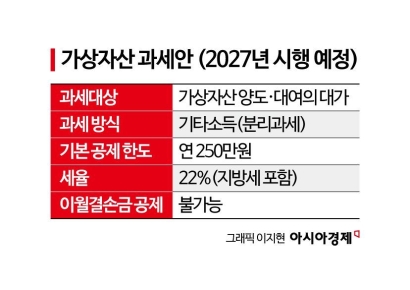 "Stocks Are Not Taxed, but Annual Crypto Gains Over 2.5 Million Won to Be Taxed Next Year... Investors Push Back"
- "Not Jealous of Winning the Lottery"... Entire Village Stunned as 200 Million Won Jackpot of Wild Ginseng Cluster Discovered at Jirisan
- "Even With a 90 Million Won Salary and Bonuses, It Doesn’t Feel Like Much"... A Latecomer Rookie Who Beat 70 to 1 Odds [Scientists Are Disappearing] ③
- "Rather Than Endure a 1.5 Million KRW Stipend, I'd Rather Earn 500 Million in the U.S." Top Talent from SNU and KAIST Are Leaving [Scientists Are Disappearing] ①
- "How Did an Employee Who Loved Samsung End Up Like This?"... Past Video of Samsung Electronics Union Chairman Resurfaces
Experts also raised doubts about the effectiveness of real estate pledges. Political commentator Lee Jong-hoon said, "Some pledges are technically difficult to realize. It seems like they just 'throw out pledges and see what happens.'" He added, "Another problem is the cost. After all, these pledges are implemented using taxpayers’ money, but many pledges seem to pretend to serve the citizens."
© The Asia Business Daily(www.asiae.co.kr). All rights reserved.







