One in Four Koreans Experiences "Gapjil"... 84% Say "Gapjil is Serious"
Office for Government Policy Coordination Announces Survey Results on Public Awareness of Gapjil
"Experienced Gapjil" 27.7% in 2018 → 29.3% in 2019 → 26.9% in 2020
Government: "This Year Marks the First Year to Eradicate Gapjil Culture... Operating a Council to Improve 'Everyday Gapjil'"

Members of the Korea Airlines Employees Solidarity Branch and the Asiana Airlines Branch, affiliated with the Korean Public Service and Transport Workers' Union under the Korean Confederation of Trade Unions, along with civic groups, formed the Citizens' Action to Break the Power Abuse of Aviation Conglomerates. On August 24, 2018, at the candlelight cultural festival held at Gwanghwamun Square in Jongno-gu, Seoul, they pledged to stand firmly against the power abuse by the family owners and performed a mask-removal performance. Photo by Moon Honam munonam@
View original image[Asia Economy Reporter Moon Chaeseok] One in four South Koreans has experienced 'gapjil' (abuse of power), according to recent findings.
The Office for Government Policy Coordination announced the results of a 'Gapjil Awareness Survey' conducted on 1,500 citizens on the 13th.
The survey revealed that 26.9% of respondents experienced gapjil in the past year, roughly one in four, similar to the 27.7% in 2018 and 29.3% in 2019.
Gapjil mainly occurred in 'superior-subordinate relationships in the workplace' (32.5%) and took the form of 'unfair work instructions' (46.0%).
Furthermore, 83.8% of respondents answered that 'gapjil in our society is serious,' a slight decrease from 90% in 2018 and 85.9% in 2019.
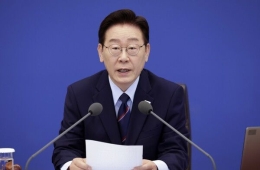
Gu Yooncheol, head of the Office for Government Policy Coordination, evaluated, "The government has made many efforts to eradicate gapjil by establishing its concept and standards and improving laws and systems, but the public still perceives that the culture of gapjil needs improvement."

Respondents' reactions to the seriousness of 'Gapjil' in our society. (Data=Office for Government Policy Coordination)
View original imageAmong the government's gapjil eradication policies, awareness was highest for 'Measures to eradicate workplace harassment' (55.2%), followed by 'Workplace gapjil eradication education' (53.2%), 'Operation of gapjil reporting centers' (42.6%), and 'Protection measures for gapjil victims' (30.3%).
Kim Kyuhwa, team leader at R&R Consulting, which conducted last year's and this year's surveys, explained, "In fact, public awareness of the seriousness of gapjil appears to be decreasing annually."
Kim added, "Although the figures do not show significant improvement, this is because the government's gapjil eradication measures have raised public expectations and awareness of their rights regarding gapjil eradication."
Hot Picks Today
 "Stocks Are Not Taxed, but Annual Crypto Gains Over 2.5 Million Won to Be Taxed Next Year... Investors Push Back"
- "Don't Throw Away Coffee Grounds" Transformed into 'High-Grade Fuel' in Just 90 Seconds [Reading Science]
- Signed Without Viewing for 1.6 Billion Won... Jamsil and Seongbuk Jeonse Prices Jump 200 Million Won in a Month [Real Estate AtoZ]
- [Breaking] Lee Targets Samsung Electronics Union: "Collective Bargaining Should Not Be Abused... There Is an Appropriate Limit"
- "Even With a 90 Million Won Salary and Bonuses, It Doesn’t Feel Like Much"... A Latecomer Rookie Who Beat 70 to 1 Odds [Scientists Are Disappearing] ③
Gu said, "This year, the government will establish laws and systems to prevent and eradicate gapjil that have been promoted in various sectors and will form and operate a public-private joint consultative body to fundamentally improve the 'everyday gapjil' culture."
© The Asia Business Daily(www.asiae.co.kr). All rights reserved.