The Changing Face of Seoul Captured by Writer Kim Ki-chan Becomes History
Bereaved Family Donates Over 100,000 Film Items to Seoul Museum of History
"High Value as Both Nostalgia for Seoul and Historical Records"

The late Kim Ki-chan (1938?2005) captured the changing landscape of Seoul through his camera for about 30 years starting in 1968. His representative work is the 'Scenes Inside the Alley' series, which began in Jungnim-dong, Seoul. He documented people living modestly but with generous hearts through his photographs. The alleys between the tightly packed houses were not just simple passageways. For adults, they were communal living rooms, and for children, playgrounds.
The Seoul Museum of History announced on the 10th that it received a donation of over 100,000 films, photographs, handwritten manuscripts, and the artist’s notes from Kim’s family. The family expressed their hope that these would be preserved as valuable records of Seoul. The films include many unpublished materials, such as photos of Gangnam and the outskirts of Seoul before urban development. Bae Hyun-sook, director of the Seoul Museum of History, stated, "Kim’s photographs not only evoke nostalgia for the city of Seoul but also hold rich value as documentary materials."

Kim was not a professional photographer. He worked as a production manager at Dongyang Broadcasting Station and Korean Broadcasting System. He bought a secondhand camera and began photographing street vendors he encountered on his commute. Drawn to the crowds in front of Seoul Station, he started visiting the alleys of Jungnim-dong, their living spaces, and focused his attention on the scenes inside the alleys. Based on his close relationship with the people in the alleys, he captured diverse aspects within the narrow spaces. His work reflects the loss and dismantling of hometowns, families, lives, and neighbors due to economic growth and urban redevelopment.

Art critic Jung Jin-guk said about Kim’s photographs, "He was not a photographer who made people uncomfortable or resistant by threatening them with his lens or secretly hiding and hesitating while shooting. He mingled freely with the people who became his models." This is why his warm gaze, imbued with longing, stands out in his long-term records. His work is being reevaluated as a long-term record created within narrow spaces.
The 'Scenes Inside the Alley' series had to come to an end as alleys gradually disappeared due to redevelopment starting in the late 1980s. The changing images are not only Kim’s but also a history of Korea’s industrialization and urban structural transformation. They revive fragments of that era as shared memories filled with nostalgia and pain that many can relate to.
Hot Picks Today
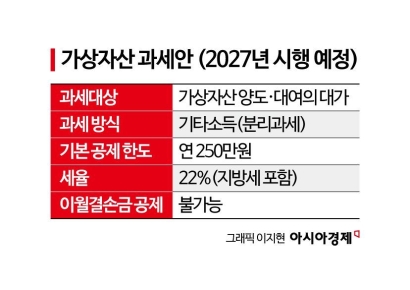 "Stocks Are Not Taxed, but Annual Crypto Gains Over 2.5 Million Won to Be Taxed Next Year... Investors Push Back"
- "Not Jealous of Winning the Lottery"... Entire Village Stunned as 200 Million Won Jackpot of Wild Ginseng Cluster Discovered at Jirisan
- "Rather Than Endure a 1.5 Million KRW Stipend, I'd Rather Earn 500 Million in the U.S." Top Talent from SNU and KAIST Are Leaving [Scientists Are Disappearing] ①
- "How Did an Employee Who Loved Samsung End Up Like This?"... Past Video of Samsung Electronics Union Chairman Resurfaces
- "Even With a 90 Million Won Salary and Bonuses, It Doesn’t Feel Like Much"... A Latecomer Rookie Who Beat 70 to 1 Odds [Scientists Are Disappearing] ③

The Seoul Museum of History will permanently preserve these materials in the museum’s storage. In particular, the over 100,000 films will be digitized, indexed, and made available on the museum’s website.
© The Asia Business Daily(www.asiae.co.kr). All rights reserved.







