NIS to Conduct Comprehensive Investigation into Defector Disguised Spy Cases
'North Boeibu Direct Spy Case' Acquitted After 6 Years
National Intelligence Service: "We Will Prevent Recurrence of Human Rights Controversies"

The National Intelligence Service (NIS) will conduct a comprehensive investigation into the case of North Korean defectors disguised as spies. This is a follow-up measure after the Supreme Court acquitted the 'North Korean State Security Department direct spy case' after six years on the 24th.
On the same day, the NIS stated, "Following the Supreme Court's acquittal in the Hong Mo case involving a North Korean direct spy, we have decided to conduct a full investigation into cases of defectors disguised as spies that were detected in the past by the Central Joint Interrogation Center (now the North Korean Defector Protection Center)."
To this end, the NIS plans to form a related task force (TF) to investigate whether there were any human rights violations during the investigation process at the Central Joint Interrogation Center. The team will consist of about 10 members, including prosecutors dispatched by the NIS, former lawyers serving as compliance officers, and the head of the NIS Policy Office will serve as the team leader.
Since 2014, the NIS has implemented improvement measures to strengthen legal support and human rights protection for defectors, including changing the center's name, shifting the focus from 'interrogation' to 'protection,' abolishing single-person rooms, shortening the investigation period (from 180 to 90 days), and appointing human rights protection officers (external lawyers) at the Protection Center.
The NIS stated, "Through this comprehensive investigation, we will take proactive measures to prevent repeated human rights controversies during the investigation process at the Central Joint Interrogation Center."
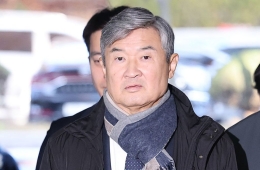
Meanwhile, Hong Mo (47), who was tried for six years on charges of conducting espionage activities after being directly dispatched by the North Korean State Security Command, was finally acquitted by the Supreme Court on the 24th.
The prosecution alleged that Hong was selected as a State Security Department operative in May 2012, and in June of the following year, under orders from superiors, attempted to lure and abduct defectors at the North Korea-China border area but failed. Two months later, he infiltrated South Korea disguised as a defector and was arrested and indicted in March 2014.
As evidence of espionage activities, the prosecution presented a handwritten confession written by Hong at the NIS Central Joint Interrogation Center and interrogation records created during the prosecution's investigation.
However, the first and second trials acquitted Hong, ruling that the statements he made during the NIS investigation were essentially identical to the prosecution's interrogation records but were denied in court, thus could not be accepted as evidence.
Additionally, the courts ruled that the prosecution did not sufficiently explain Hong's right to remain silent and right to legal counsel during the investigation, so the interrogation records were not recognized as lawful evidence. The Supreme Court also upheld the lower court's judgment and dismissed the prosecution's appeal. As a result, Hong was acquitted after more than six years since his arrest and indictment.
Hot Picks Today
 "Now Our Salaries Are 10 Million Won a Month" Record High... Semiconductor Boom Drives Performance Bonuses at Major Electronic Component Firms
- Experts Already Watching Closely..."Target Price Set at 970,000 Won" Only Upward Momentum Remains [Weekend Money]
- "Heading for 2 Million Won": The Company the Securities Industry Says Not to Doubt [Weekend Money]
- 'Still Hesitant? If You're Wondering Whether KOSPI Will Rise, This Is the Number You Must Watch [Weekend Money]'
- Is It Really Like an Illness? "I Can't Wait to Go Again"—Over 1 Million Visited in Q1, Now 'Busanbyeong' Takes Hold [K-Holic]
Hong's legal team issued a statement saying, "With this Supreme Court final ruling, our society stands at a new crossroads to realize reform tasks to prevent the recurrence of state violence that fabricates simple defectors as spies."
© The Asia Business Daily(www.asiae.co.kr). All rights reserved.