Real Estate Delayed Regulations Useless... "Only Fueling House Prices"
[Asia Economy Reporter Yoo In-ho] As the government is reportedly planning to designate additional regulated areas in the metropolitan area and some local regions where housing prices have surged sharply, controversy is spreading over the effectiveness of the 'pinpoint regulation.'
This is because the balloon effect, which has repeatedly occurred during several rounds of pinpoint regulations, only fuels the rise in housing prices in surrounding areas.
![[Image source=Yonhap News]](http://www.asiae.co.kr/news/img_view.htm?img=2020121011013758024_1607565697.jpg)
According to the Ministry of Land, Infrastructure and Transport and industry sources, the government plans to designate some areas with rapidly rising housing prices due to the balloon effect among non-regulated areas as additional adjustment target areas on the afternoon of the 17th, following the Residential Policy Deliberation Committee meeting held the day before.
The additional designated areas are places where the balloon effect appeared after last month’s designation of Gimpo in Gyeonggi Province, Haeundae, Dongnae, Yeonje, Suyeong, and Nam Districts in Busan, and Suseong District in Daegu as adjustment target areas.
Previously, the government designated most areas in the metropolitan area as regulated areas through the '6.17 Measures,' and when the balloon effect spread to non-regulated local areas, it took additional designation measures last month, and now it is expanding the target areas again within a month.
The likely candidates for additional designation this time include Paju in Gyeonggi Province, Uichang and Seongsan Districts in Changwon, Gyeongnam Province, and Dalseo District in Daegu. Cheonan Seobuk District in Chungnam Province, where housing prices rose alongside Sejong due to the ruling party, the Democratic Party of Korea’s relocation discussions, is also highly likely to be included in the designation.

In the case of Paju, housing prices surged sharply around the time Gimpo was designated as an adjustment target area. Apartment prices rose by 4.18% over the past three months. During the same period, Changwon’s Uichang and Seongsan Districts rose by 6.09% and 8.67%, respectively, and Cheonan Seobuk District’s increase rate reached 4.24%.
However, in the market, criticism is being raised that the government’s repeated regulations have not been effective at all, and that the system of designating regulated areas itself needs to be reconsidered from scratch.
This is because housing prices are rising again mainly in areas designated as regulated areas, showing no regulatory effect whatsoever. Even Gimpo, which was designated as an adjustment target area on the 19th of last month, recorded a weekly apartment price change rate of 0.32% as of the 7th, continuing its upward trend.
Professor Shim Gyo-eon of Konkuk University’s Department of Real Estate said, "Without supply measures that can stabilize the market, simply increasing regulated areas in a whack-a-mole fashion will not achieve housing price stabilization effects," adding, "It should be left to the market to adjust autonomously."
Criticism is even coming from within the ruling party.
Hot Picks Today
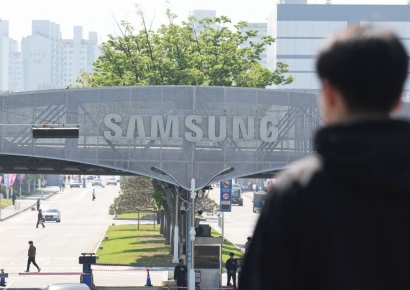 "We Can't Just Let Them Be Damaged Inside"... Samsung Electronics Removes 360,000 Wafers in Preparation for Strike
- No Bacteria Detected in Arisu After 24 Hours of Repeated Drinking from a Tumbler
- "Available Only in Korea": Pokémon Card Prices Surge 2,532% Due to Rarity, Becoming Investment Assets
- 59,000-Year-Old Neanderthal Molar Reveals Cavity Treated with "Stone Drill"
- "He's Handsome, It's Such a Pity?"... Lawyer Responds to Bizarre 'Appearance Evaluation' of High School Girl Murder Suspect
On the previous day, Democratic Party lawmaker Jung Sung-ho criticized the Ministry of Land, Infrastructure and Transport’s policy on real estate adjustment target areas on Facebook, saying, "It is clear that the balloon effect will cause a sharp rise in prices in adjacent non-designated areas, yet the designation was made based on schematic criteria, greatly contributing to the nationwide spread of apartment price surges and increasing the pain and dissatisfaction of residents in designated areas," and added, "It is a practically failed policy, and it would be better to lift all designations and leave it to the market."
© The Asia Business Daily(www.asiae.co.kr). All rights reserved.