COVID-19 Detected in Exported Seafood... Indonesia on Alert
Indonesia Authorities Tense Over Import Ban Measures by China, the Largest Importing Country
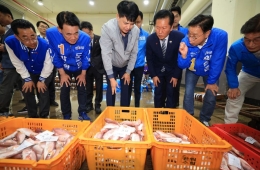
[Asia Economy Jakarta Correspondent Sujin Choi] Authorities in Indonesia are on high alert after the novel coronavirus (COVID-19) was detected in frozen seafood exported from the country. China, the largest importer of Indonesian seafood, has consecutively imposed import bans.
According to the Indonesian Ministry of Marine Affairs and Fisheries on the 8th, seafood exporters from North Sumatra, East Java, and Banten regions recently received notifications from the Chinese Customs Administration that COVID-19 was detected in frozen seafood, resulting in import suspensions. Pitra Faizal, spokesperson for the Indonesian Ministry of Trade, urged countries importing Indonesian seafood, including China, to conduct thorough quarantine inspections and pointed out that the Ministry of Marine Affairs and Fisheries should establish stringent government-level sanctions against exporters.
The local response is very serious, given that restrictions on frozen seafood exports could negatively impact the Indonesian economy. This is because the fisheries sector holds a significant share in Indonesia’s economy. Due to its geographical characteristic of being composed of over 13,000 islands, Indonesia ranks second in the world after China in fishery catch volume. The annual catch volume reaches 16 million tons, with total production amounting to 23.2 million tons.
Additionally, the production value of the marine and fisheries sector is approximately $26.9 billion, accounting for 2.6% of Indonesia’s Gross Domestic Product (GDP). According to the World Bank (WB), Indonesia’s seafood export value reached $4.1 billion in 2017 and is expected to grow annually by more than $3.3 billion within the next decade. From the beginning of this year until October, Indonesia’s marine and fisheries exports recorded $2.88 billion, an 11.6% increase compared to the same period last year. Notably, exports to China during this period increased by 20.6% to $513.7 million. Approximately 17% of total exports depend on China.
Given the high economic significance, the Indonesian Ministry of Marine Affairs and Fisheries is reacting sensitively to China’s import suspension measures. Widodo Sumiyanto, Director of Quality and Safety at the Ministry, expressed regret regarding China’s import restrictions on Indonesian seafood, stating, "China is the only country involved, and the virus was detected not on the seafood but on the external packaging." He added that the Indonesian government has requested rectification from the Chinese government. He further warned, "If China does not respond promptly, we will exclude China from the list of seafood export countries."
Hot Picks Today
 "Suspicious Timing?"...Trump Traded Stocks After Praising Wartime Capabilities
- [Breaking] Three basic local government heads and 510 local council members elected unopposed in the June 3 local elections
- "Even If I Lose My Investment, the Government Will Cover It"... The Fund Attracting Retail Investors' Attention [Weekend Money]
- There Is a Distinct Age When Physical Abilities Decline Rapidly... From What Age Do Strength and Endurance Drop?
- "Envious of Korean Daily Life"...Foreign Tourists Line Up in Central Myeongdong from Early Morning [Reportage]
Since June, China has been investigating virus detection not only in Indonesian frozen seafood but also in frozen meat. After port workers tested positive for COVID-19 last month, China intensified quarantine inspections. Besides Indonesia, India has also faced seafood import restrictions, and Germany became subject to regulations after the virus was detected in pork. Locally in Indonesia, it is believed that the rapid spread of COVID-19 in the country has influenced China’s seafood import restrictions. Indonesia’s confirmed COVID-19 cases surpassed 5 million at the end of last month, with recent daily cases reaching 8,000.
© The Asia Business Daily(www.asiae.co.kr). All rights reserved.