Geum Tae-seop: "The ruling party keeps mumbling 'prosecution reform' like a chant... Reflect on your current 모습"
"Only uttering words full of contradictions and inconsistencies"
"How is creating a Public Corruption Investigation Office stronger than the prosecution considered reform?"

Former lawmaker Geum Tae-seop, who left the Democratic Party of Korea, is giving a lecture at the 'Myeongbulheojeon' meeting of first-term lawmakers of the People Power Party at the National Assembly Members' Office Building on the 18th of last month. / Photo by Yonhap News
View original image[Asia Economy Reporter Lim Juhyung] Former lawmaker Geum Tae-seop, who left the Democratic Party, strongly criticized on the 4th, saying, "Ruling party politicians who talk about 'prosecutorial reform' every time they open their mouths should at least once reflect on their own image and the position they currently stand in."
In a post on his Facebook on the same day, former lawmaker Geum targeted the Democratic Party, saying, "They constantly spout words that are inconsistent and full of self-contradiction," and added, "No matter what problem they face, they keep mumbling 'prosecutorial reform,' 'prosecutorial reform' like a chant, which makes me think they are really like blind goldfish."
Regarding the ruling party's factional claim that "Prosecutor General Yoon Seok-yeol should resign for prosecutorial reform," former lawmaker Geum pointed out, "President Moon Jae-in himself appointed Prosecutor General Yoon Seok-yeol, so does that mean President Moon caused the reason for prosecutorial reform?"
He also criticized the ruling party's proposed establishment of the High-ranking Officials' Crime Investigation Office (Gongsoocheo). Former lawmaker Geum said, "If the prosecution is powerful, you should reduce that power, but how is it reform to create an institution that monopolizes investigative and prosecutorial rights just like the prosecution and can take cases investigated by the prosecution and police, thus becoming an institution even more powerful than the prosecution? This naturally raises doubts."
He continued, "The almost only explanation for this was that unlike the prosecution, where the president can unilaterally appoint the chief, the Gongsoocheo chief has a veto right from the opposition party, ensuring political neutrality," and pointed out, "However, they say they will amend the law to remove the veto right because the launch of Gongsoocheo is delayed due to opposition from the opposition party."

Lee Nak-yeon, leader of the Democratic Party of Korea, is speaking at the Supreme Council meeting held at the National Assembly on the 4th. / Photo by Yonhap News
View original imageEarlier, the candidate recommendation committee for the Gongsoocheo chief discussed 10 preliminary candidates at its third meeting on the 18th of last month but failed to select the final two candidates. Subsequently, the ruling party decided to pass an amendment to the Gongsoocheo law focusing on deleting the opposition party's 'veto right.'
In particular, the Democratic Party leadership expressed their determination to pass the power institution reform legislation, including the Gongsoocheo law amendment, before the end of this regular session of the National Assembly.
Democratic Party leader Lee Nak-yeon stated at the Supreme Council meeting on the 4th, "This time, we will definitely launch Gongsoocheo and institutionalize minimum democratic control over the prosecution." On the same day, party floor leader Kim Tae-nyeon emphasized, "We will complete the reform legislation by the 9th at the latest," adding, "We must establish a system of mutual checks and balances among Gongsoocheo, prosecution, and police to prevent human rights violations and cut off ties of corruption and collusion."
Hot Picks Today
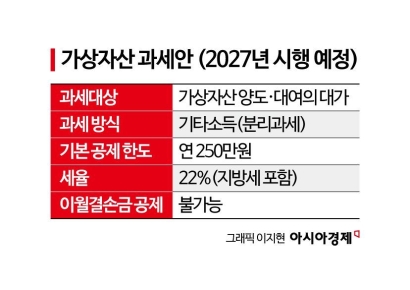 "Stocks Are Not Taxed, but Annual Crypto Gains Over 2.5 Million Won to Be Taxed Next Year... Investors Push Back"
- "Not Jealous of Winning the Lottery"... Entire Village Stunned as 200 Million Won Jackpot of Wild Ginseng Cluster Discovered at Jirisan
- "Even With a 90 Million Won Salary and Bonuses, It Doesn’t Feel Like Much"... A Latecomer Rookie Who Beat 70 to 1 Odds [Scientists Are Disappearing] ③
- "Rather Than Endure a 1.5 Million KRW Stipend, I'd Rather Earn 500 Million in the U.S." Top Talent from SNU and KAIST Are Leaving [Scientists Are Disappearing] ①
- "How Did an Employee Who Loved Samsung End Up Like This?"... Past Video of Samsung Electronics Union Chairman Resurfaces
In response, former lawmaker Geum asked, "There is already chaos over the prosecution alone, which has excessively strong authority, so why create another institution even more powerful than the prosecution while maintaining the prosecution's structural contradictions (monopoly of prosecutorial and investigative rights)?"
© The Asia Business Daily(www.asiae.co.kr). All rights reserved.







